The air inside a Boeing 787 is recycled, filtered, and pressurized, a marvel of modern engineering designed to keep three hundred strangers alive at thirty-five thousand feet. But filters have limits. Human breath does not. When Flight AC849 departed from London Heathrow, bound for the sterile, bustling terminals of Toronto Pearson, it carried more than just vacationers and business travelers. It carried a ghost.
A microscopic, airborne ghost.
Measles is not a "rash." It is not a nostalgic childhood rite of passage that our grandparents weathered with a bowl of oatmeal and a darkened room. It is a biological heat-seeking missile. It is one of the most contagious diseases known to science, possessing a reproductive number—the $R_0$—that dwarfs the seasonal flu or even the most aggressive strains of modern respiratory viruses. If one person has it, up to 90% of the people close to them who are not immune will also become infected.
On that flight, and on a subsequent journey—WestJet Flight 3542 from Toronto to Fredericton—the stakes were not theoretical. They were breathing. They were coughing. They were waiting in the customs line at Terminal 1.
The Anatomy of an Exposure
Consider the timeline. Public health officials don't sound the alarm for a sniffle. They do it because measles lingers. It hangs in the air like an invisible fog long after the infected person has walked away. If you walked through the arrivals hall at Pearson International Airport between 3:00 PM and 6:00 PM on that Tuesday, you weren't just walking through a building. You were walking through a potential cloud of viral particles.
The virus travels in tiny droplets, so light they defy gravity for hours. It lands on a handrail. It drifts into the ventilation gap of a seat back. It waits for a host.
For most of the passengers on those flights, the risk is a phantom. They are protected by the invisible shield of a vaccine they received decades ago, a small prick in the arm that taught their immune system how to recognize the invader. But for the others—the infants too young for their first dose, the cancer patients whose immune systems are suppressed by the very medicine saving their lives, or the few who never received the shot—the cabin of an airplane becomes a crucible.
The Waiting Game
The cruelty of measles lies in its patience. You do not wake up the next morning with the signature red splotches. Instead, there is a hollow period of silence.
For ten to fourteen days, the virus is busy. It is replicating. It is hijacking cells. During this "prodromal" phase, the symptoms look like a dozen other things. A high fever. A cough that won't quit. Red, watery eyes that sting in the light. It feels like a bad cold, a travel-worn exhaustion that you might shrug off as jet lag or a change in climate.
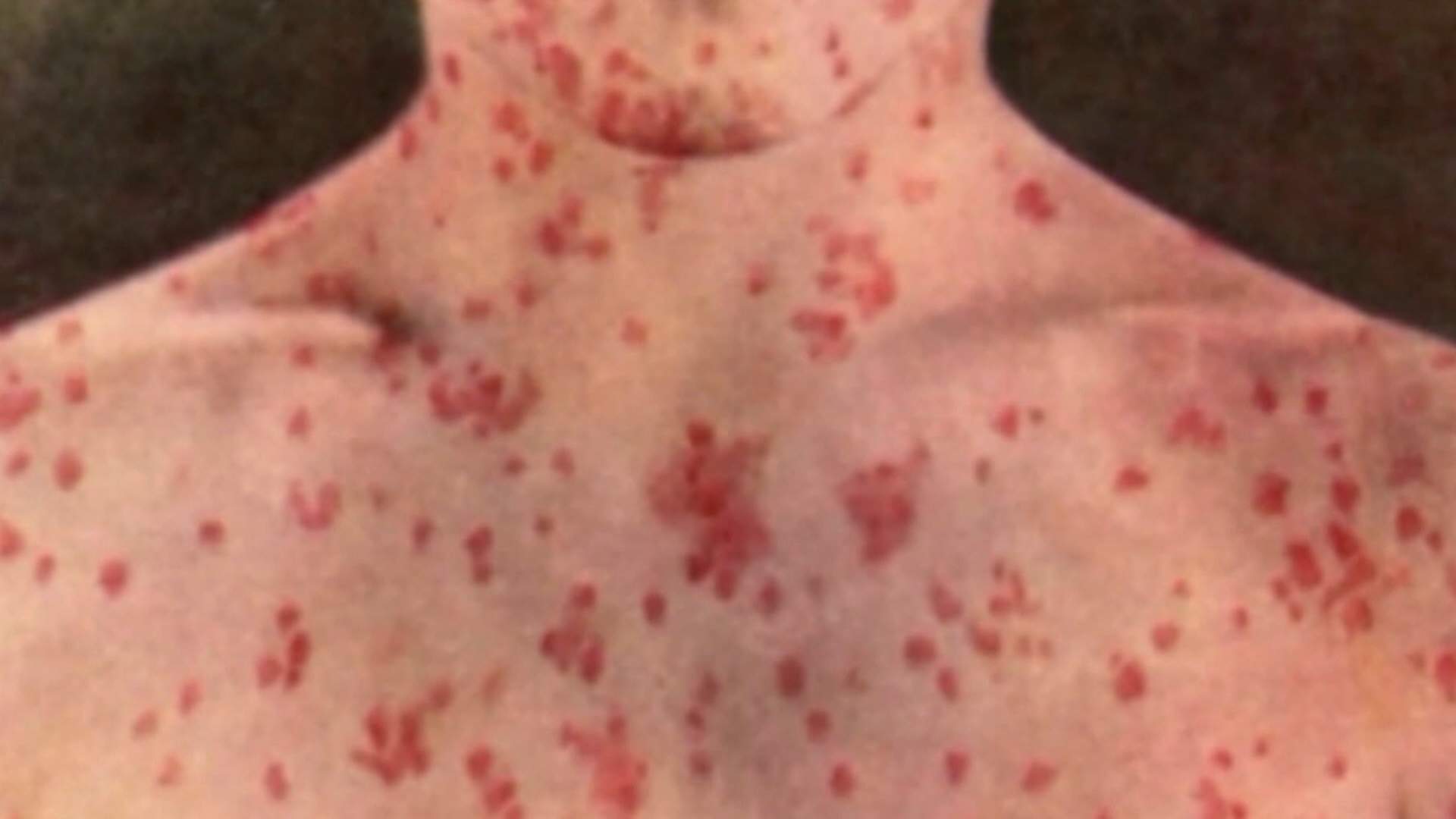
Then come the Koplik spots—tiny white grains of sand appearing inside the mouth, a grim herald of what is to come. Only then does the rash begin, starting at the hairline and creeping down the body like a slow-moving tide. By the time the rash appears, you have already been contagious for four days. You have already walked through the grocery store. You have already hugged your niece. You have already sat in a crowded doctor's office.
This is why the public health notice for the Pearson flights is so urgent. It isn't just about the passengers; it's about the web of human contact those passengers created the moment they stepped off the plane.
Why the Old Guard is Returning
There is a growing, dangerous amnesia regarding what measles actually does. Because we haven't seen it in our communities for years, we have started to believe it is harmless. We have forgotten the encephalitis—the swelling of the brain that can lead to permanent deafness or intellectual disability. We have forgotten the subacute sclerosing panencephalitis (SSPE), a rare but fatal disease of the central nervous system that can emerge years after a person "recovers" from measles.
The science is settled, yet the numbers are slipping. To maintain "herd immunity"—the collective shield that protects the most vulnerable among us—we need a 95% vaccination rate. When that number dips to 90% or 85%, the shield cracks. The invisible passenger finds a way in.
Health officials are now sifting through manifests, trying to reach people who sat in rows 10 through 20, or anyone who shared the recycled air of a regional turboprop. They aren't doing it to cause panic. They are doing it to stop a chain reaction. If you were on those flights, your responsibility isn't just to your own health; it’s to the person sitting next to you on the bus tomorrow morning.
The Weight of a Choice
The tragedy of an outbreak in an airport is its randomness. You don't choose who sits in the seat behind you. You don't know the medical history of the person who touched the kiosk screen before you checked in. We live in a world defined by our connections, our ability to traverse the globe in a matter of hours, and our shared spaces.
When we talk about "potential exposures," we are talking about the fragility of that connection. We are talking about the fact that a single person's decision—or a single gap in a public health net—can ripple across provinces and borders.
If you were at Pearson that afternoon, the advice is clinical but vital: check your records. If you were born before 1970, you are likely presumed immune through natural exposure. If you were born after, you need two doses of the MMR vaccine to be sure. If you aren't sure, you are a question mark in a very dangerous equation.
The passengers of AC849 and WS3542 are home now. They have unpacked their bags. They have shared stories of their travels. But for some, the most significant thing they brought back wasn't a souvenir or a memory. It was a ticking clock.
We watch the headlines and see names of flights and times of arrival, and it’s easy to look at them as data points. But each data point is a person. Each person is a potential bridge for a virus that doesn't care about borders, passports, or politics. It only cares about the next breath.
The ghost is out of the bottle. Now, we wait to see where it lands.
The most terrifying thing about an airborne virus isn't the symptoms it causes, but the way it turns our shared humanity—our proximity, our conversations, our crowded terminals—into a weapon against us.