The whistle blows, and the air doesn't just enter your lungs. It weighs them down. It is thick, tasting of salt and metal, clinging to the back of the throat like a damp wool blanket.
Consider a midfielder in the 75th minute. Let’s call him Elias. He is twenty-four, at the peak of his physical existence, a biological machine tuned for ninety minutes of explosive anaerobic output. In a standard climate, Elias’s body is a marvel of thermal regulation. As his internal temperature rises, his heart pumps blood toward the surface of his skin. Sweat beads, evaporates, and carries the heat away. The system holds.
But today, the air is saturated. The humidity sits at 85 percent, and the temperature is climbing past 34°C (93°F).
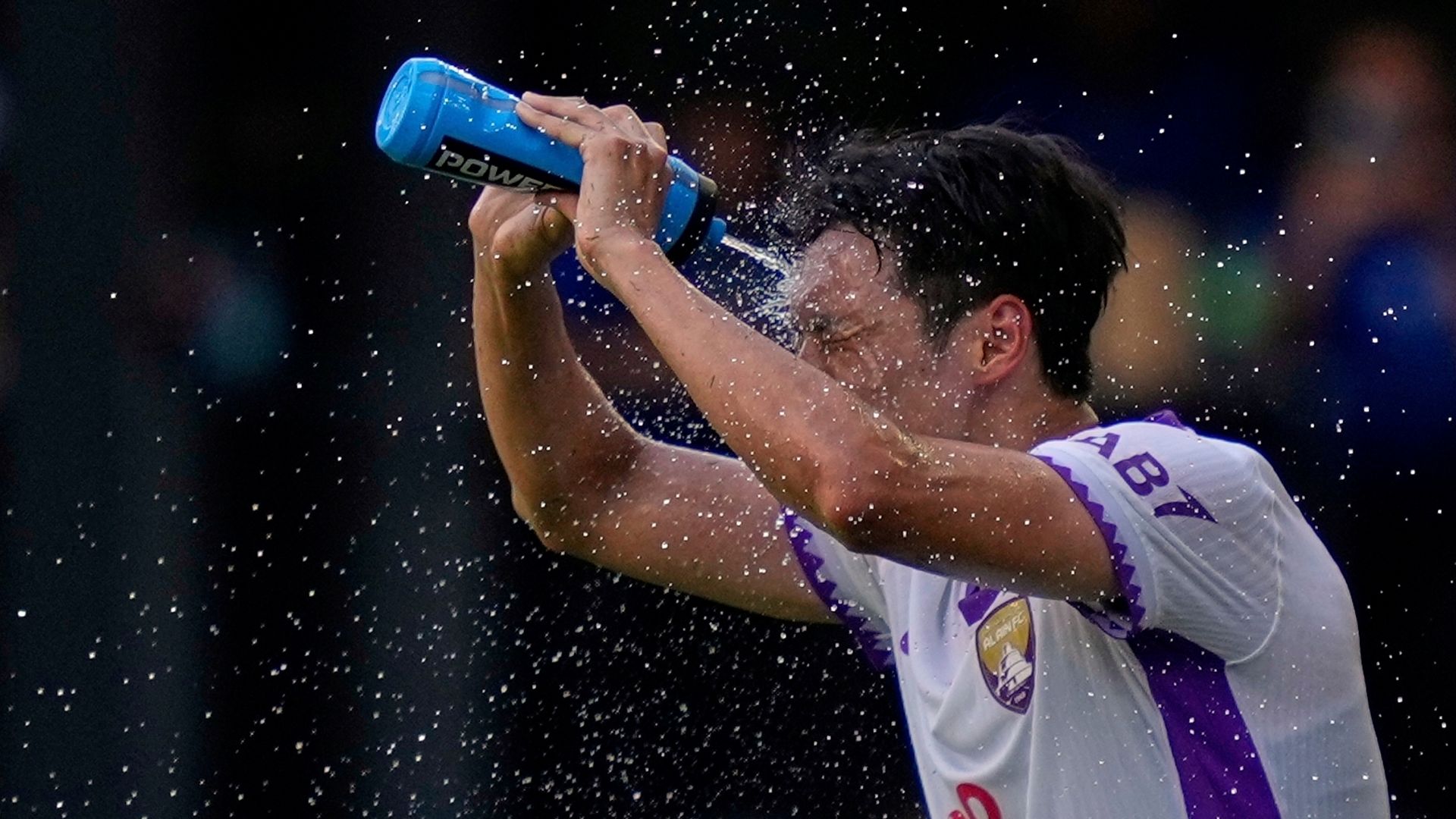
Elias is no longer just playing against the opposing team. He is fighting physics. When the air is already heavy with moisture, sweat cannot evaporate. It simply pools on the skin, a useless byproduct of a cooling system that has hit a hard mechanical limit. His core temperature begins a steady, creeping ascent. $38^\circ C$. $39^\circ C$. $40^\circ C$. At this threshold, the brain begins to prioritize survival over sport. The stride shortens. The vision blurs at the edges. The beautiful game becomes a desperate search for oxygen that feels like it’s being siphoned through a straw.
The Physics of the Breaking Point
Sports scientists often speak of the "Wet Bulb Globe Temperature" (WBGT). It sounds like a dry, academic metric, but for an athlete, it is the most honest referee on the pitch. Unlike a standard thermometer, the WBGT accounts for wind speed, cloud cover, and, most crucially, humidity.
When the WBGT hits 28°C (82.4°F), FIFA’s own guidelines suggest "cooling breaks." It is a polite euphemism for a biological emergency. When it hits 32°C, the risk of heatstroke isn’t just a possibility; it becomes a statistical probability for those pushed to their limits. Recent climate modeling suggests that future World Cup hosts could see conditions that routinely shatter these safety ceilings.
We are moving toward a reality where the greatest spectacles on earth are held in "uncompensable" heat. That is the scientific term for a situation where the body generates more heat than it can possibly dissipate. In this state, the internal organs—the kidneys, the liver, the heart—begin to bake.
The danger isn’t just for the twenty-two men or women on the grass. It extends to the 80,000 souls in the stands. A stadium is a concrete heat sink. It absorbs radiation all day and bleeds it back out at night. Fans, often dehydrated and fueled by adrenaline (and perhaps a few beers), become stationary targets for heat exhaustion. The spectacle requires a massive infrastructure of cooling, but even the most advanced stadium air conditioning cannot protect a supporter walking three miles to the gates in the midday sun.
A Game of Biological Chess
There is a cruel irony in how heat changes the way football is played. We value the "high press," the relentless energy, and the lightning-fast transition. Heat kills the art.
Tactics shift from ambition to conservation. Teams stop chasing. They sit deep. The pace of the game slows to a crawl as players subconsciously calculate how many sprints they have left before their nervous system flickers. You might see a world-class striker pass up a run into the channel not because they lack the will, but because their body has issued a "red alert."
If we look at the data from recent tournaments, the "heat tax" is visible in the physical metrics. Total distance covered drops. High-intensity sprints per game plummet. The game becomes a shadow of itself, a slower, more labored version of the sport we recognize. We are paying to see the best versions of these athletes, yet we are placing them in an environment that guarantees they can only offer a fraction of their potential.
The Myth of Acclimatization
The common counter-argument is that players will simply "get used to it."
It is a comforting thought, but it ignores the hard reality of human biology. While the body can adapt—increasing plasma volume and starting to sweat earlier—there is an absolute ceiling. You cannot "acclimatize" to a temperature that exceeds the body's ability to cool itself via evaporation. Once the ambient temperature and humidity reach a certain point, the heat gradient reverses. Instead of the body shedding heat into the world, the world begins to pour heat into the body.
Modern sports science has tried to bridge this gap with tech. We see ice vests, slushie machines in the dressing rooms, and sophisticated hydration salts. But these are bandages on a structural fracture.
The Hidden Cost of the Calendar
The pressure to host these events in specific windows—usually the Northern Hemisphere’s summer—is driven by the colossal gravity of European league schedules and broadcasting rights. Money, quite literally, dictates the climate in which the games are played.
We saw a radical shift with the 2022 tournament in Qatar, moving the entire global footballing calendar to the winter to avoid the lethal summer heat. It was a logistical nightmare that many vowed never to repeat. Yet, as global temperatures rise, the "safe" window for summer sports is shrinking. Regions that were once perfect for a July final are now entering the danger zone.
Imagine a World Cup hosted across North America or the Mediterranean where midday temperatures now regularly eclipse 40°C. The "standard" 3:00 PM kickoff becomes a liability. The 12:00 PM slot, designed for prime-time television in other time zones, becomes a death trap.
Beyond the Pitch
We must also look at the people who build these cathedrals of sport. The conversation around heat and the World Cup often centers on the million-dollar athletes, but the stakes are highest for the migrant workers and laborers who prepare the infrastructure.
For a construction worker, there are no "cooling breaks" mandated by a referee. There is no ice bath waiting in a climate-controlled locker room. The physiological toll of performing manual labor in 45°C heat for twelve hours a day is a different kind of violence. When we talk about "dangerous heat" at a World Cup, we are talking about a crisis that begins years before the first ball is kicked. It is a crisis of human rights as much as it is a crisis of athletic performance.
The invisible stakes are the lives of the vulnerable. If a world-class athlete with the best medical team on the planet is at risk of collapse, what hope does a laborer have? What hope does an elderly fan have in a crowded transport hub?
The Specter of the 2026 and 2030 Cycles
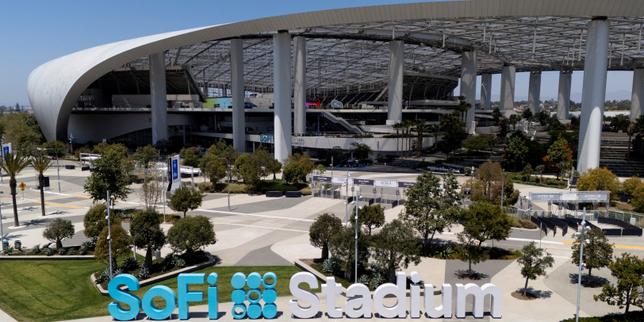
As we look toward future tournaments, the maps are turning red. The 2026 World Cup, spanning the vast geography of the United States, Mexico, and Canada, will encounter massive thermal variance. A game in the humidity of Miami or the desert heat of Monterrey is a different beast entirely than a match in the cool air of Vancouver.
This creates a competitive imbalance. A team that plays their group stages in the "cool" north and then travels to the "sweltering" south for a knockout game faces a physiological shock that no amount of training can fully mitigate. The luck of the draw becomes a matter of biological survival.
Then there is the 2030 bid, a multi-continental ambition. The carbon footprint of transporting millions of people across oceans only exacerbates the very problem—climate change—that makes the heat so dangerous in the first place. We are chasing the tail of a dragon that is growing larger with every rotation of the Earth.
The Final Whistle
Football is often called the beautiful game because of its simplicity. A ball, a pitch, and the human spirit. But the spirit is housed in a body made of water and protein, and both have a boiling point.
We are approaching a crossroads where the tradition of the "Summer World Cup" may have to be abandoned forever. We are entering an era where the selection of a host city won't be based on its stadiums or its culture, but on its "thermal safety."
The real opponent isn't the team in the other jersey. It isn't a bad refereeing decision or a missed penalty. It is the sun. It is the invisible, heavy hand of a changing atmosphere that doesn't care about the scoreline, the sponsors, or the glory of the trophy.
Elias, our hypothetical midfielder, finally goes to ground in the 88th minute. He isn't tackled. No one is within five yards of him. He simply stops. His knees give way because his brain has finally pulled the emergency brake. As the medics rush on with cold towels and water, the crowd cheers, thinking he’s just cramping, thinking he’s "giving his all" for the shirt.
They don't realize they are watching a man survive an environment that was never meant for him. They don't see the invisible opponent that has already won.