The steel lever clicks. It is a mundane, metallic sound heard millions of times a day across the globe. You hang up the nozzle, glance at the rising digits on the display, and wonder if you should have filled up yesterday. Most people see those numbers as a personal tax on their commute. They see a fluctuating price. What they don't see is the ghost of a drone over a desert three thousand miles away.
Economics likes to pretend it is a science of spreadsheets and cold calculus. It isn't. It is a visceral, blood-and-bone drama where a single decision in a command center can shift the cost of a loaf of bread in a quiet suburb. When the news cycles report that American strikes have targeted Iranian-backed interests, the immediate reaction is often political. But the secondary reaction—the one that actually keeps the world’s power brokers awake—is the math of fear.
The Strait of Uncertainty
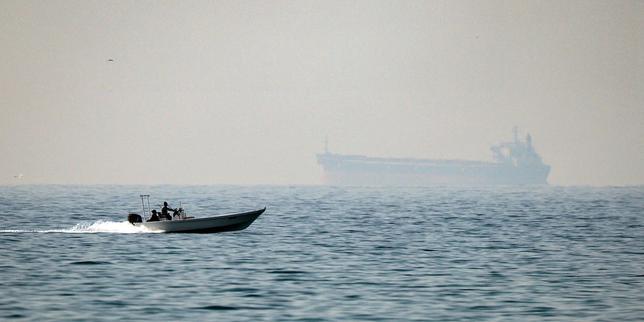
Consider a tanker captain named Elias. He isn't a politician. He is a man who worries about his crew’s coffee supply and the vibration in the ship's secondary engine. As he guides a vessel the size of a skyscraper through the Strait of Hormuz, he is sailing through a chokepoint that carries roughly a fifth of the world's total oil consumption.
If the geopolitical tension between Washington and Tehran reaches a boiling point, Elias isn't just navigating water. He is navigating a minefield of intent.
The logic of the market is simple: it hates a vacuum. When American missiles find their mark in response to regional provocations, the market doesn't just calculate the physical damage. It calculates the "what if." What if the response closes the Strait? What if the insurance premiums for tankers like Elias’s triple overnight? Those questions don't stay in the Middle East. They travel at the speed of light to trading floors in London and New York, and eventually, they settle in your gas tank.
The Fragile Chain
We live in a world of "just-in-time" logistics. We have traded resilience for efficiency. This means the cushion between "business as usual" and "economic panic" is thinner than it has ever been.
When the United States conducts strikes against Iranian-linked targets, it is often described as a "measured response." It is a surgical term that masks a messy reality. For the energy markets, there is no such thing as a surgical strike. Every action has a ripple.
Think of the global oil supply as a massive, pressurized pipe. Iran sits with its hand on one of the most sensitive valves. They don't even have to turn the valve to cause a spike in prices; they just have to look like they might. This is the psychological theater of energy security.
- The Speculation Tax: Traders aren't buying oil; they are buying the future of oil. If they sense blood in the water, they buy high to hedge against buying higher later.
- The Insurance Spike: Shipping companies aren't charities. If a route becomes a combat zone, the cost to protect that cargo sky-rockets.
- The Redirect: Ships may take the long way around. More fuel burned, more time lost, higher costs at the destination.
These aren't just bullet points. They are the reasons why a family might decide to skip a vacation or why a small trucking company goes under. The "fears" mentioned in news tickers are real anxieties felt by real people who have to balance a checkbook.
The Shadow of 1973
History is a heavy ghost. Whenever the words "Iran," "USA," and "Oil" appear in the same sentence, the collective memory of the 1970s stirs. Those who lived through the oil embargo remember the lines at the stations. They remember the sense of helplessness as a global engine sputtered.
Today, the United States is a much larger producer of its own energy, but the world is more interconnected than ever. We are not an island. A disruption in the Middle East sends a shockwave through the global price of Brent Crude, which dictates the price of gasoline regardless of where that gasoline was refined.
It is a strange, modern paradox. You can be standing in a field in Texas, surrounded by oil derricks, and still pay more for your fuel because of a drone strike in the Syrian desert. The price isn't set by the local supply; it is set by the global temperature of conflict.
The Human Toll of the Centavo
We often talk about oil in terms of dollars per barrel. But we should talk about it in terms of human energy.
Imagine a delivery driver in a city like Lyon or Chicago. For every ten-cent rise in the price of fuel, his margin for error shrinks. He works an extra hour to cover the difference. He stays away from his kids for an extra sixty minutes because of a geopolitical chess move made by people who will never know his name.
The Iranian government understands this leverage. They know that while they may not be able to win a conventional war against a superpower, they can inflict pain on the global voter. They can turn the heat up on the world's economy until the pressure becomes politically unbearable.
The American strikes are designed to deter, to say "enough." But the irony of deterrence in the energy sector is that the act of preventing a larger war can often trigger the very economic instability that everyone is trying to avoid. It is a high-stakes game of chicken played with the world’s credit cards.
Beyond the Ticker Tape
The headlines will tell you that "markets are volatile." It’s a sanitized word. Volatility means uncertainty. Uncertainty means fear.
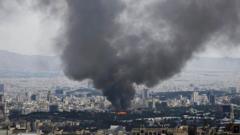
When you read about these strikes, try to look past the maps with red dots and the grainy thermal footage of explosions. Look instead at the invisible lines connecting those events to the grocery store shelf. The cost of transporting produce, the cost of manufacturing plastics, the cost of heating a home—these are all tethered to the stability of a region that has known very little of it.
We are all passengers on Elias’s tanker, whether we like it or not. We are all waiting to see if the next click of the steel lever at the pump will be a little louder, a little heavier, and a little more expensive than the last.
The real story isn't the explosion. It’s the silence that follows, as the world waits to see if the price of living just went up.
The sun sets over the Persian Gulf, casting long, amber shadows across the hulls of the ships waiting to pass. On the deck, a sailor lights a cigarette, unaware that his presence there is the only thing keeping a flickering light on in a house halfway across the planet. He is a tiny part of a massive, fragile machine that we only notice when it starts to break.