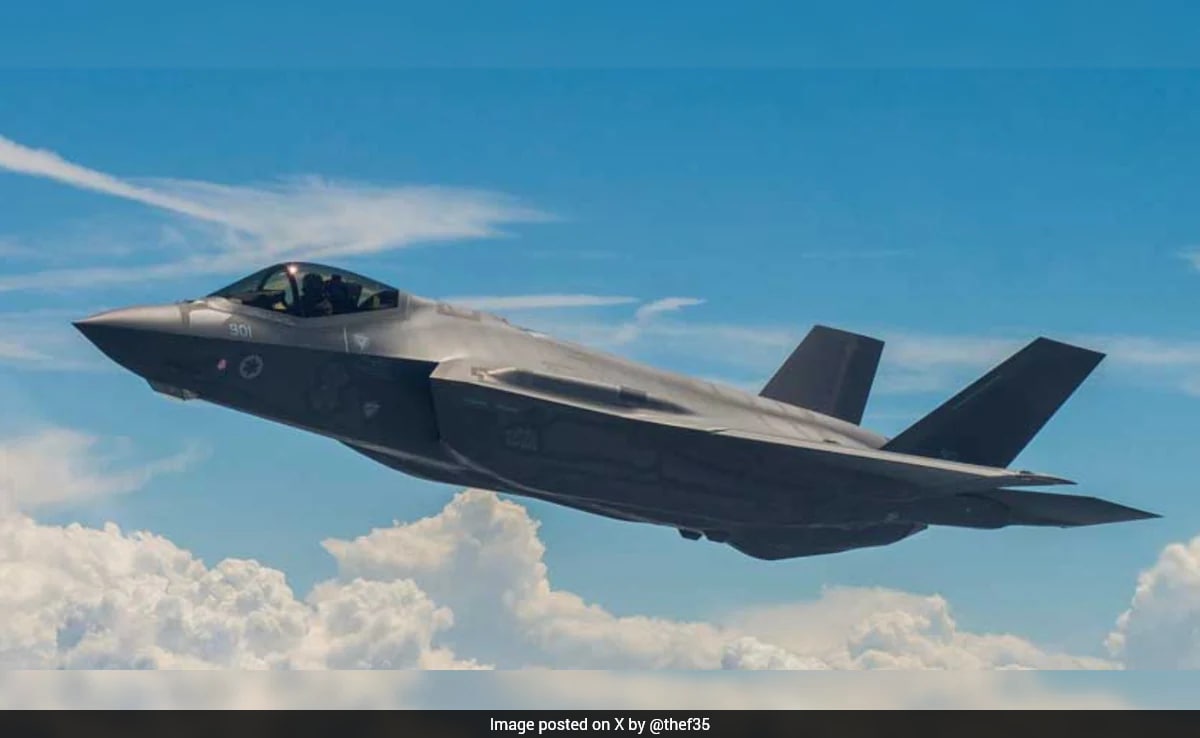
Reports of an Israeli F-35 Lightning II downing an Iranian fighter jet directly over Tehran represent more than a singular military engagement. This marks a fundamental breakdown in the air defense strategy that the Islamic Republic has spent billions to build. While official channels often trade in denial or hyperbole, the tactical reality suggests that the stealth capabilities of the Adir—Israel's customized F-35—have effectively rendered the airspace over the Iranian capital a permissive environment for the Israel Defense Forces.
The core of this escalation isn't just about a lost airframe or a pilot. It is about the failure of the Russian-made S-300 batteries and the indigenous Bavar-373 systems to provide the "impenetrable shield" promised by Iranian leadership. When a fifth-generation stealth fighter operates with impunity over a major adversary's seat of power, the psychological impact outweighs the kinetic damage.
The Technological Blind Spot
Iran’s air defense network relies on a patchwork of aging Western hardware from the pre-1979 era and modern Russian or domestic radar systems. On paper, this creates a multilayered defense designed to catch intruders at various altitudes. However, the F-35 was engineered specifically to exploit the gaps between these frequencies. It does not simply hide from radar; it manages its signature so that even if a blip appears, it is indistinguishable from atmospheric noise or a small bird until the engagement is already over.
The S-300, long considered the gold standard of regional air defense, struggles against the F-35’s low-observable profile. For a missile system to hit a target, it needs a "lock." Getting a lock on a platform that uses active electronically scanned array radar to jam and spoof incoming signals is like trying to grab smoke with a pair of tweezers. In the engagement over Tehran, the Iranian interceptor—likely an aging F-14 Tomcat or a Mig-29—was essentially flying blind against a ghost that knew exactly where it was.
Why the Engagement Happened Now
The decision to intercept and destroy a target over a densely populated capital is never made lightly. It is a loud, violent declaration of capability. Israel has historically preferred the "Campaign Between Wars" strategy, which involves quiet strikes on convoys in Syria or precision sabotage within Iranian borders. Taking the fight to the skies above Tehran shifts the goalposts.
It serves as a direct response to Iranian drone and missile exports that have fueled conflicts across the Middle East and Eastern Europe. By choosing a high-visibility target, Israel is signaling that the era of proxy-only warfare is fading. If Iran can reach out through its "ring of fire" allies, Israel can reach into the very heart of the clerical establishment.
The Problem with Proximity
Operating over Tehran presents unique risks for any pilot. The city is surrounded by mountains and packed with civilian infrastructure. Any debris from an aerial explosion falls on a metropolis of nearly nine million people. This suggests the Israeli pilot had high confidence in the specific theater of engagement. They weren't just passing through; they were asserting a presence.
The downed Iranian jet likely attempted a visual identification or a desperate scramble. In modern aerial combat, if you have to see the enemy with your eyes, you have already lost. The F-35 uses its sensor fusion to fire missiles from dozens of miles away, well before the opposing pilot even hears a warning tone in their headset.
The Intelligence Breach Behind the Strike
No fighter jet reaches the center of a hostile nation without a massive failure of that nation’s early warning systems. This implies more than just a radar glitch. It points toward a deep-seated intelligence rot within the Iranian military apparatus.
To fly an F-35 into that airspace, mission planners require precise data on "dead zones" in radar coverage. They need to know which batteries are down for maintenance and which commanders are slow to react. The fact that the jet was able to engage and depart indicates that the Israeli Air Force possessed a real-time map of the Iranian "electronic order of battle." This level of penetration suggests that the physical strike was merely the final step in a long-running cyber and human intelligence operation.
Hardware vs. Software
There is a common misconception that the F-35 is just a faster, stealthier airplane. It is actually a flying data center. During the encounter over Tehran, the aircraft was likely vacuuming up every radio frequency, cellular signal, and radar pulse in the vicinity. This data is fed back into a larger network, allowing the entire IDF to see the battlefield through the eyes of that single pilot.
Iran’s reliance on the Bavar-373 is an attempt to solve this through domestic manufacturing. While the Bavar is a respectable piece of engineering, it lacks the decades of combat-tested software refinement that the Aegis or Patriot systems possess. You cannot program your way out of a hardware disadvantage when the enemy’s software is rewritten every few months based on new data from the field.
The Geopolitical Ripple Effect
This event sends a chilling message to regional players. If the most defended city in Iran is vulnerable, then every nuclear site, every military base, and every government building is also vulnerable. For countries like Saudi Arabia and the UAE, who have watched the Iranian missile program with growing concern, this display of Israeli dominance changes the diplomatic calculus. It proves that the "shadow war" is no longer confined to the shadows.
Russia, too, finds itself in an awkward position. Its flagship export, the S-300 and the promised S-400, are being publicly humiliated. If their top-tier defense systems cannot stop a single F-35, their market share in the global arms trade will continue to crater. The Kremlin cannot afford to admit that its tech is a generation behind, yet the evidence falling from the sky over Tehran says otherwise.
The Escalation Ladder
We are now in uncharted territory. Traditionally, both sides have adhered to a set of unwritten rules to avoid a total regional conflagration. One of those rules was that Iranian soil—specifically its capital—was a red line for direct, overt kinetic action. That line has been erased.
The Iranian response is predictable: fiery rhetoric and perhaps a symbolic strike against a soft target. But internally, the panic must be immense. When the "invincible" defenses of the state are bypassed so easily, the legitimacy of the military leadership comes into question. They are left with a brutal choice: admit their vulnerability and upgrade their systems at a cost they cannot afford, or continue to pretend the sky is empty while it is being patrolled by their greatest rival.
The F-35 didn't just shoot down a jet. It shot down the illusion of Iranian air sovereignty. The hardware is broken, the sensors are blinded, and the geography that once protected Tehran has become a trap. Every radar operator in the country is now staring at a screen, wondering if the empty space they see is actually a vacuum or a pre-flight checklist being completed by a pilot they will never see.
Verify the status of regional transponders and satellite imagery over north-central Iran to see how the flight paths of civilian tankers have shifted in the last six hours.