The synchronized strikes launched by American and Israeli forces against Iranian infrastructure mark a definitive shift from shadow boxing to open, high-kinetic warfare. While the headlines focus on the roar of afterburners and the orange glow of explosions over Isfahan and Karaj, the actual success of this operation rested on a silent, pre-emptive dismantling of Iran’s integrated air defense systems. This was not a reactive skirmish. It was a calculated, multi-domain offensive designed to paralyze the Islamic Republic’s command and control before the first missile even left its rail. By the time Donald Trump issued his direct appeal to the Iranian people to reclaim their government, the tactical reality on the ground had already been fundamentally altered by a sophisticated blend of electronic warfare and precision munitions.
The Architecture of Paralysis
The sheer scale of the coordination between Washington and Tel Aviv suggests months of deep-tissue intelligence sharing. To understand how the strike succeeded, one must look at the "dead space" created in the minutes leading up to the kinetic impact. Iran relies heavily on a mix of aging Russian S-300 systems and indigenous upgrades like the Bavar-373. These are formidable on paper, but they are vulnerable to sophisticated jamming and "spoofing" techniques that flood radar screens with ghost targets.
Reports from the ground indicate that Iranian radar operators saw hundreds of incoming threats that did not exist, while the actual strike packages—likely a mix of F-35 Adirs and standoff cruise missiles—approached through narrow, scrubbed corridors. This is the essence of modern suppression of enemy air defenses (SEAD). You don't just blow up the radar; you make the operator doubt every flicker on their screen until the building starts shaking.
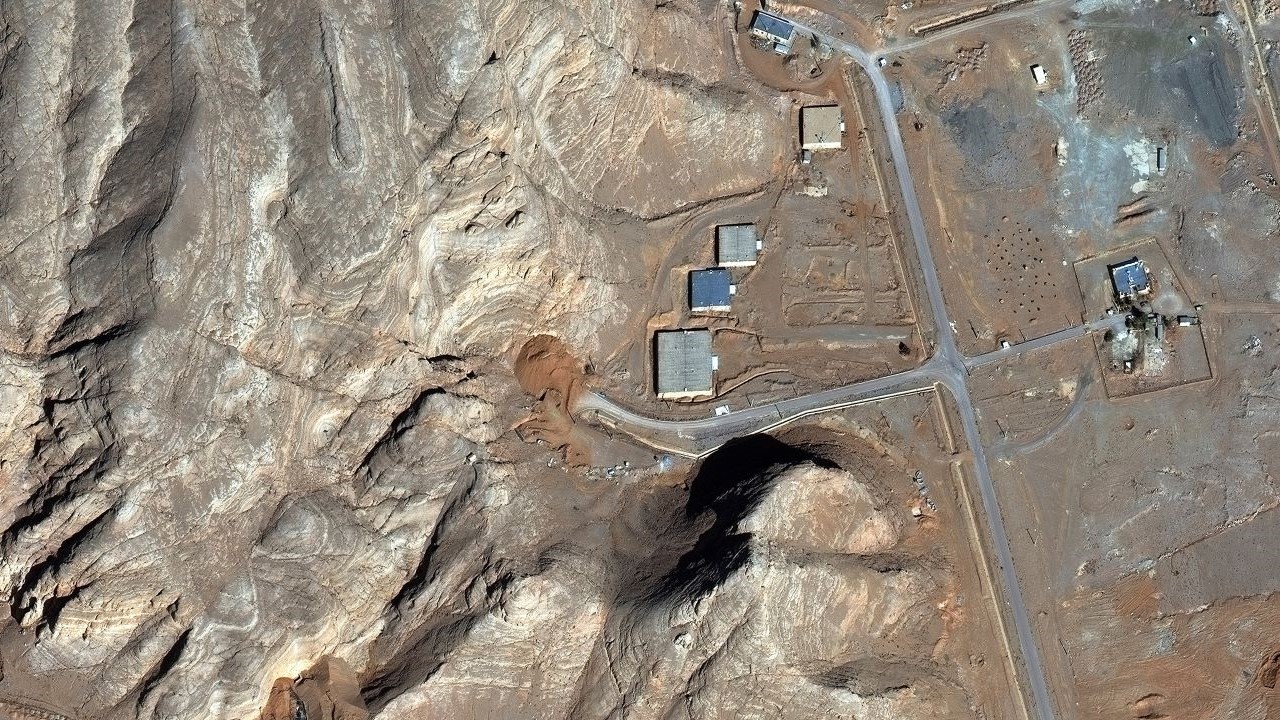
The targets were not chosen at random. Early assessments show a heavy focus on drone manufacturing hubs and ballistic missile storage facilities. By stripping away Iran’s ability to project power via its proxies, the US-Israeli coalition is effectively "de-fanging" the regime before moving to more sensitive internal nodes.
Trump and the Rhetoric of Regime Collapse
The political dimension of this operation is as aggressive as the military one. Donald Trump’s call for Iranians to "take over your government" is a departure from the traditional diplomatic caution seen in previous administrations. It signals a move toward explicit regime change as a stated objective, rather than a byproduct of economic pressure.
This rhetoric taps into a deep well of domestic resentment within Iran. The country has been a tinderbox for years, fueled by a collapsing rial, chronic mismanagement, and a geriatric leadership that seems increasingly out of touch with a tech-savvy youth population. However, history suggests that external calls for revolution can be a double-edged sword. While it emboldens the brave, it also allows the Islamic Revolutionary Guard Corps (IRGC) to brand any dissenter as a foreign agent, justifying even more brutal crackdowns.
The gamble here is that the military humiliation of the IRGC will break the aura of invincibility that keeps the current power structure intact. If the "Guardians" cannot even guard their own missile silos, the argument for their absolute authority begins to erode in the eyes of the rank-and-file security forces.
The Economic Aftershocks
War is expensive, but the disruption of energy markets is where the real pain is felt globally. Even though this strike was targeted, the proximity to the Strait of Hormuz makes every oil trader on the planet sweat. We are seeing an immediate spike in Brent Crude prices, a trend that will likely trickle down to every gas station in the West within a week.
Iran’s primary leverage has always been its ability to "turn off the lights" for the global economy by mining the Strait or attacking Saudi processing plants. By striking first, the US and Israel are betting they can suppress Iran's retaliatory capacity long enough to stabilize the markets. It is a high-stakes poker game played with the world's fuel supply.
The Role of Cyber Warfare
Beyond the physical explosions, a massive cyber offensive was likely synchronized with the kinetic strikes. Intelligence sources point to widespread outages in Iranian government communications and power grids in the hours following the initial attack. This isn't just about making life difficult; it’s about preventing the Iranian leadership from communicating with their regional proxies in Lebanon, Iraq, and Yemen.
In a modern conflict, the side that controls the flow of information wins. If a commander in the field cannot receive orders from Tehran, his unit becomes a liability rather than an asset. We are seeing the implementation of "Full Spectrum Dominance," where every possible avenue of resistance is smothered simultaneously.
The Regional Realignment
The silence from neighboring Arab capitals is deafening. In the past, a strike of this magnitude would have drawn immediate and sharp condemnation from across the Middle East. Today, the landscape is different. Many Gulf states view Iran as a greater existential threat than Israel. The Abraham Accords have created a quiet, pragmatic alliance based on shared security concerns.
- Saudi Arabia: While officially neutral, the Kingdom stands to benefit significantly from a weakened Iran.
- Jordan: Often caught in the middle, their primary concern is the spillover of refugees and the potential for domestic unrest.
- Qatar: Acting as the perpetual middleman, Doha is likely the only channel still open for any semblance of back-door diplomacy.
The Technical Edge
The weapons used in these strikes represent the absolute pinnacle of current military hardware. The F-35’s ability to act as a flying data hub—collecting, processing, and distributing targeting information in real-time—is the specific reason why Iran’s defenses failed.
$$K = \frac{1}{2}mv^2$$
Even a basic understanding of kinetic energy, as expressed in the formula above, explains why a precision-guided munition traveling at high velocity is so devastating to hardened bunkers. When you combine that physics with the stealth capabilities that allow a platform to get within range undetected, the defensive advantage vanishes. The IRGC spent decades building underground "missile cities," but those cities are only useful if you can see the enemy coming.
Proxies and the "Ring of Fire"
Tehran’s primary defense strategy has long been the "Ring of Fire"—a network of armed groups across the region designed to bleed its enemies through a thousand cuts. Hezbollah in Lebanon, the Houthis in Yemen, and various militias in Iraq are the teeth of this strategy.
The current strikes appear to have targeted the logistical spines that connect Tehran to these groups. If you can't fly the transport planes or move the convoys, the proxies are left stranded. The question now is whether Hezbollah will open a northern front in Israel to take the pressure off their patrons in Tehran. If they do, the conflict ceases to be a surgical strike and becomes a regional conflagration that no one, including the US, is fully prepared to manage.
Internal Iranian Dynamics
We cannot ignore the role of the Iranian regular army (the Artesh) versus the IRGC. There has long been a friction between the professional military and the ideologically driven Guards. In the wake of a massive security failure like this, those fissures often widen.
The IRGC gets the best equipment, the highest pay, and the most political power. The Artesh gets the hand-me-downs. When the bombs start falling, the professional soldiers often wonder why they are dying for a regime that prioritizes ideological purity over national competence. This internal tension is exactly what Trump’s rhetoric is designed to exploit.
Strategic Miscalculations
Every military operation carries the risk of unintended consequences. The primary danger here is "rallying around the flag." Even Iranians who loathe the mullahs may find themselves bristling at foreign missiles hitting their soil. National pride is a powerful anesthetic for political grievances.
Furthermore, if the strike fails to completely decapitate the IRGC's ability to respond, we could see a wave of asymmetric attacks. This includes everything from cyberattacks on Western infrastructure to "lone wolf" operations in Europe and the US. The "hard-hitting" nature of the strike is intended to deter, but in the twisted logic of Middle Eastern power politics, a failure to respond is often seen as a death sentence for a regime's credibility.
The Path Forward
The situation is fluid, and the coming 48 hours will determine the trajectory of the next decade in the Middle East. If the Iranian people do take to the streets, and if the security forces refuse to fire on them, we are looking at a geopolitical shift on par with the fall of the Berlin Wall. If, however, the regime manages to stabilize the situation and launch a successful counter-strike, the US and Israel will find themselves bogged down in a war of attrition that they have spent twenty years trying to avoid.
The technical superiority of the West is a proven fact. The psychological resilience of the Iranian state is the great unknown. As the smoke clears over the enrichment plants and the command centers, the world is waiting to see if the Iranian people will pick up the gauntlet thrown down by Washington.
Make no mistake: the "coordinated attack" was the easy part. The political fallout and the restructuring of a post-clerical Iran—should it come to that—is where the real heavy lifting begins. The missiles have done their job; now the diplomats and the citizens of Iran must do theirs.
Monitor the movements of the Iranian 14th Tactical Air Base and the IRGC's "Ansar-ul-Mahdi" security units over the next few hours for the first real signs of regime cohesion or collapse.