The clock on Marie’s wall in Little Haiti doesn’t just mark the hours. It counts down the remainder of a life built on borrowed time.
For eleven years, Marie has operated under a legal status known as Temporary Protected Status (TPS). It is a designation born of catastrophe—the 2010 earthquake that leveled Port-au-Prince—and maintained through a series of administrative renewals. It allowed her to get a Social Security number, a driver’s license, and a job as a nurse’s assistant. She bought a small house. She raised a daughter who is now a high school junior aiming for a pre-med track. To the neighbors, Marie is a fixture of the community. To the federal government, she is a guest whose invitation is currently being debated in the highest court in the land. Don't forget to check out our recent coverage on this related article.
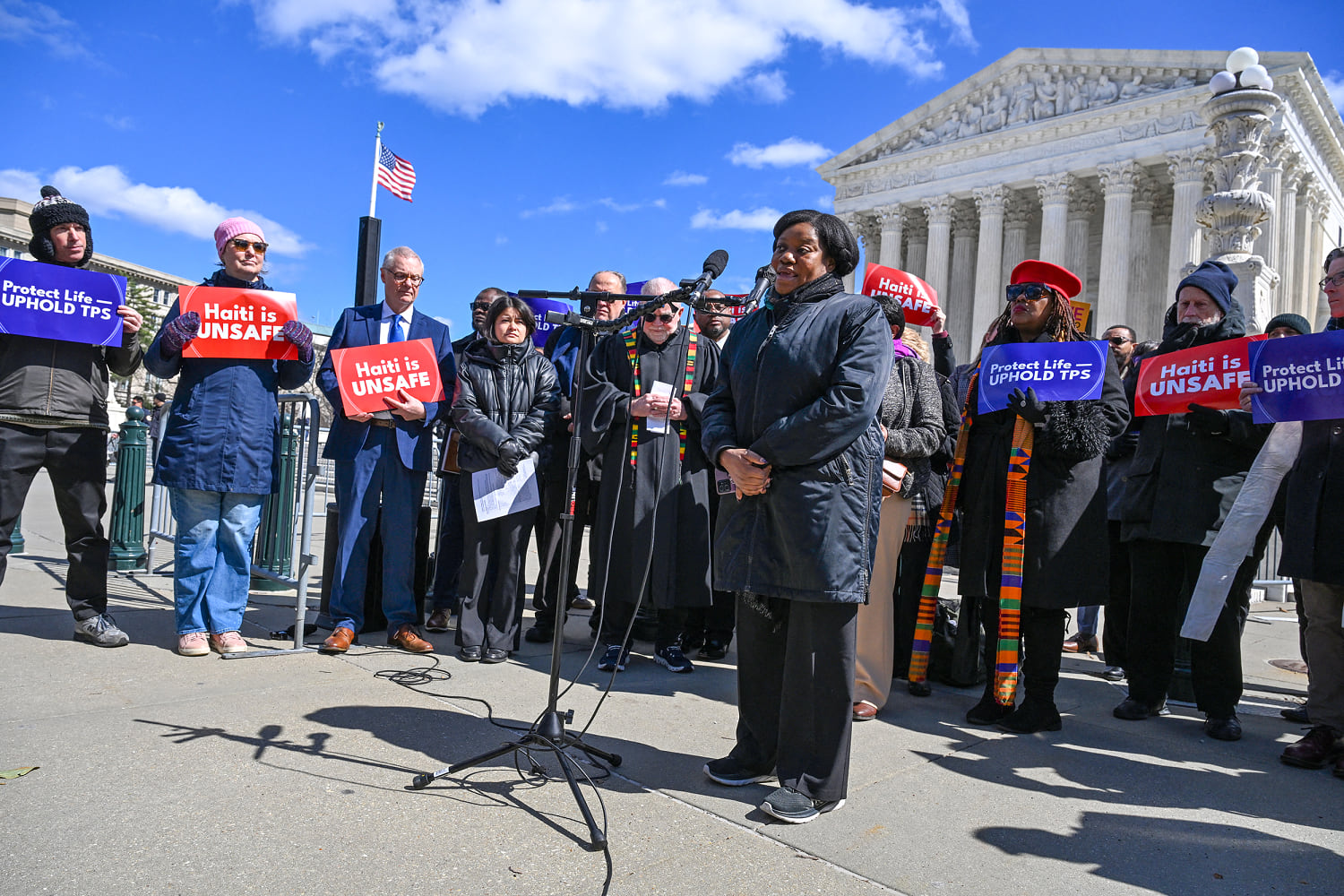
The Supreme Court is now weighing the executive branch’s power to strip these protections away from thousands of people like Marie, primarily from Haiti and Syria. This isn't just a technicality of immigration law. It is a fundamental question of whether the American government can unilaterally dissolve the lives of people who were invited to stay, worked for a decade, and did everything right.
The Mechanics of Limbo
TPS was never meant to be a path to citizenship. It was created in 1990 as a humanitarian safety valve. When a foreign nation is hit by a natural disaster, an epidemic, or a civil war, the U.S. can designate that country for TPS, allowing its citizens already in the United States to stay and work legally until the danger passes. If you want more about the background of this, The Washington Post offers an excellent breakdown.
The problem is that "temporary" is a relative term.
When a country like Syria is swallowed by a decade of grinding conflict, or when Haiti is battered by a succession of hurricanes and political assassinations following a generational earthquake, the "temporary" nature of the displacement stretches into decades. Children are born here. They become U.S. citizens. They grow up knowing only American schools and American dreams, while their parents continue to check a box every eighteen months, paying hundreds of dollars in fees, just to ensure they won't be torn from their homes.
The Trump administration argued that the law gives the executive branch near-total discretion. If the President decides a country has "recovered" enough, the status ends. Period. Lower courts have wrestled with this, pointing to evidence that the move to end protections was motivated by political agendas rather than factual assessments of the conditions in the home countries.
Consider the reality of the Syrian conflict. A "temporary" stay for a Syrian family might mean avoiding a city that has been reduced to rubble and a government that views returnees with suspicion or outright hostility. To remove protection is to issue a deportation order to a graveyard.
The Economic Ripple Effect
The argument for ending TPS often centers on a rigid interpretation of the word "temporary." But look at the ledger.
TPS holders from Haiti and Syria contribute billions to the U.S. GDP annually. They aren't just names on a ledger; they are the labor force in construction, healthcare, and hospitality. In Florida alone, the loss of Haitian TPS workers would cause an immediate contraction in the elder-care industry.
When a nurse like Marie is removed from her post, the hospital doesn't just lose a body. It loses a decade of institutional knowledge, a bilingual bridge for patients, and a taxpayer. The mortgage on her house goes into default. Her daughter, a citizen with a bright future, is suddenly the child of a fugitive or an orphan of the state.
The stakes are invisible because they are integrated. We don't see the TPS status when we get our vitals taken at the clinic or when our Amazon packages are sorted. We only see it when the system threatens to rip those threads out of the fabric.
A Question of Executive Whim
The legal battle at the Supreme Court level isn't just about immigration policy; it’s about the limits of administrative power. If the court rules that the President can end TPS for any reason, or no reason at all, it sets a precedent that affects every administrative protection currently in place.
It suggests that a person’s right to exist in their home of ten years can be extinguished by a memo.
There is a psychological weight to this. Living under TPS is like building a house on a frozen lake. You know the ice is thick enough to hold you today. You know it might hold you tomorrow. But you spend every spring listening for the first crack. You never truly unpack your soul because you don't know if you'll be allowed to keep it here.
The government’s lawyers argue that the judiciary has no business second-guessing the executive's decision to terminate a designation. They claim the law is written to give the Secretary of Homeland Security the final word. If they win, the "human element" becomes legally irrelevant. The court wouldn't have to look at the photos of the rubble in Aleppo or the gang-controlled streets of Port-au-Prince. They would only have to look at the statute.
The Human Cost of Consistency
Opponents of the extension argue that the law must be followed as written. "Temporary" means it must end eventually. They argue that by extending these protections indefinitely, the government is creating a back-door immigration system that bypasses the limits set by Congress.
There is a logical consistency to that argument, but it is a cold one. It ignores the fact that the U.S. government has, for decades, used TPS as a foreign policy tool. We have encouraged these people to stay. We have taken their taxes. We have relied on their work. To suddenly pivot and claim that the "temporary" nature of the deal was always the most important factor feels, to those living it, like a betrayal.
Imagine being told for twelve years that you are a valued member of the community, only to be told in the thirteenth year that your presence was a clerical oversight that is now being corrected.
The Syrian father who fled a chemical attack. The Haitian mother who survived a collapsing school. They are not asking for a handout. They are asking for the right to continue the lives they were told they could build.
The Shadow Over the Dinner Table
Back in Little Haiti, Marie sits down for dinner with her daughter. They don't talk much about the Supreme Court. The legal jargon of "judicial review" and "administrative procedure" doesn't fit well between the rice and beans.
But Marie sees her daughter’s college brochures on the counter. She sees the "Class of 2027" sticker on the fridge. And she feels the ticking of that invisible clock.
If the ruling goes against the TPS holders, the notices will start arriving in the mail. They won't be long letters. They will be short, dry, and standard—much like the articles written about them. They will inform Marie that her authorization to work has expired. They will tell her she has a certain number of days to "self-depart."
The tragedy of the TPS debate is that it treats human lives like inventory that has sat on the shelf too long. It assumes that a decade of roots can be pulled up without tearing the ground itself.
As the justices deliberate in their marble halls, the reality remains that for thousands of families, the American Dream is currently a month-to-month lease. They are waiting to see if the highest court in the land believes that a decade of work, community, and law-abiding life is enough to outweigh a change in political wind.
The clock keeps ticking. Marie keeps working. The ice remains frozen, for now.
But the sun is coming up, and no one knows if it brings a new day or a final thaw.