Public health officials are no longer just fighting a virus; they are fighting a massive, unbudgeted drain on the American economy. While the clinical symptoms of measles—high fever, cough, and the signature maculopapular rash—are well-documented, the financial wreckage left in its wake remains largely obscured from public view. Every single confirmed case of measles in the United States triggers an immediate, aggressive, and incredibly expensive logistical machine. We are talking about thousands of personnel hours, emergency procurement of vaccines, and the literal halting of local commerce.
The cost of a single case of measles can exceed $140,000 in direct public health response costs alone. When an outbreak hits a community with low vaccination rates, those numbers scale vertically. This isn't just about hospital bills. It is about the redirection of tax dollars from infrastructure and education into the bottomless pit of contact tracing and quarantine enforcement. We have traded the low-cost insurance of high vaccination rates for a high-stakes gamble that is currently failing.
The High Cost of the Investigation
When a clinician reports a suspected case of measles to a local health department, the clock starts. This is not a passive observation period. It is a forensic investigation.
Public health workers must reconstruct every movement the infected individual made during their infectious period, which begins four days before the rash appears. They interview family members, track down flight manifests, review security footage at grocery stores, and call every person who sat in a doctor's waiting room at the same time as the patient. Because measles is one of the most contagious diseases known to science—capable of lingering in the air for two hours after an infected person has left the room—the "contact list" for a single individual often runs into the hundreds or thousands.
The labor involved is staggering. Epidemiologists, nurses, and administrative staff are pulled from their regular duties. Programs designed to combat the opioid crisis or manage diabetes are put on hold because the measles response is an emergency. You cannot simply ignore a measles case; the exponential growth potential of the virus makes an immediate, "all-hands-on-deck" response mandatory.
Calculating the Productivity Drain
The economic impact extends far beyond the government’s balance sheet. When a school or a workplace is exposed, the quarantine protocols take a heavy toll on the private sector.
Unvaccinated individuals who have been exposed to the virus are generally required to stay home for 21 days. This is three weeks of lost wages for the worker and three weeks of lost productivity for the employer. For a dual-income household, a child’s exposure can force a parent to take unpaid leave, creating a sudden financial shock.
The Ripple Effect on Small Business
Consider a small local clinic or a boutique grocery store. If an exposure occurs there, the facility may be forced to close for deep cleaning, or its staff may be forced into quarantine. Unlike large corporations, these small entities often lack the liquidity to survive a multi-week disruption. The "invisible" cost of measles includes the lost revenue of the coffee shop next to the quarantined school and the canceled shifts of the hourly workers who can no longer show up.
The Long Term Medical Debt
While many people recover from measles without permanent injury, a significant percentage do not. Roughly one in five unvaccinated people in the U.S. who get measles will be hospitalized. This leads to immediate, massive medical bills.
More concerning are the complications. Pneumonia is the most common cause of death from measles in young children. Encephalitis, or swelling of the brain, can lead to permanent deafness or intellectual disability. The lifelong cost of caring for a child with a brain injury caused by a preventable virus is a figure that can reach into the millions.
Then there is the phenomenon of immune amnesia.
Recent research indicates that the measles virus doesn't just make you sick; it "wipes" the immune system’s memory. It destroys the antibodies that the body has spent years building up against other diseases like the flu, strep throat, and skin infections. For months or even years after a measles infection, a child is significantly more vulnerable to other illnesses. This leads to a second wave of medical costs, doctor visits, and missed school days that are rarely attributed to the original measles infection in public discourse, but are nonetheless caused by it.
The Strain on the Vaccine Supply Chain
The U.S. maintains a strategic reserve of vaccines, but localized outbreaks create sudden, sharp spikes in demand that can strain distribution networks. When a "hot zone" is identified, health departments must rapidly ship thousands of doses of the MMR (Measles, Mumps, Rubella) vaccine to the area.
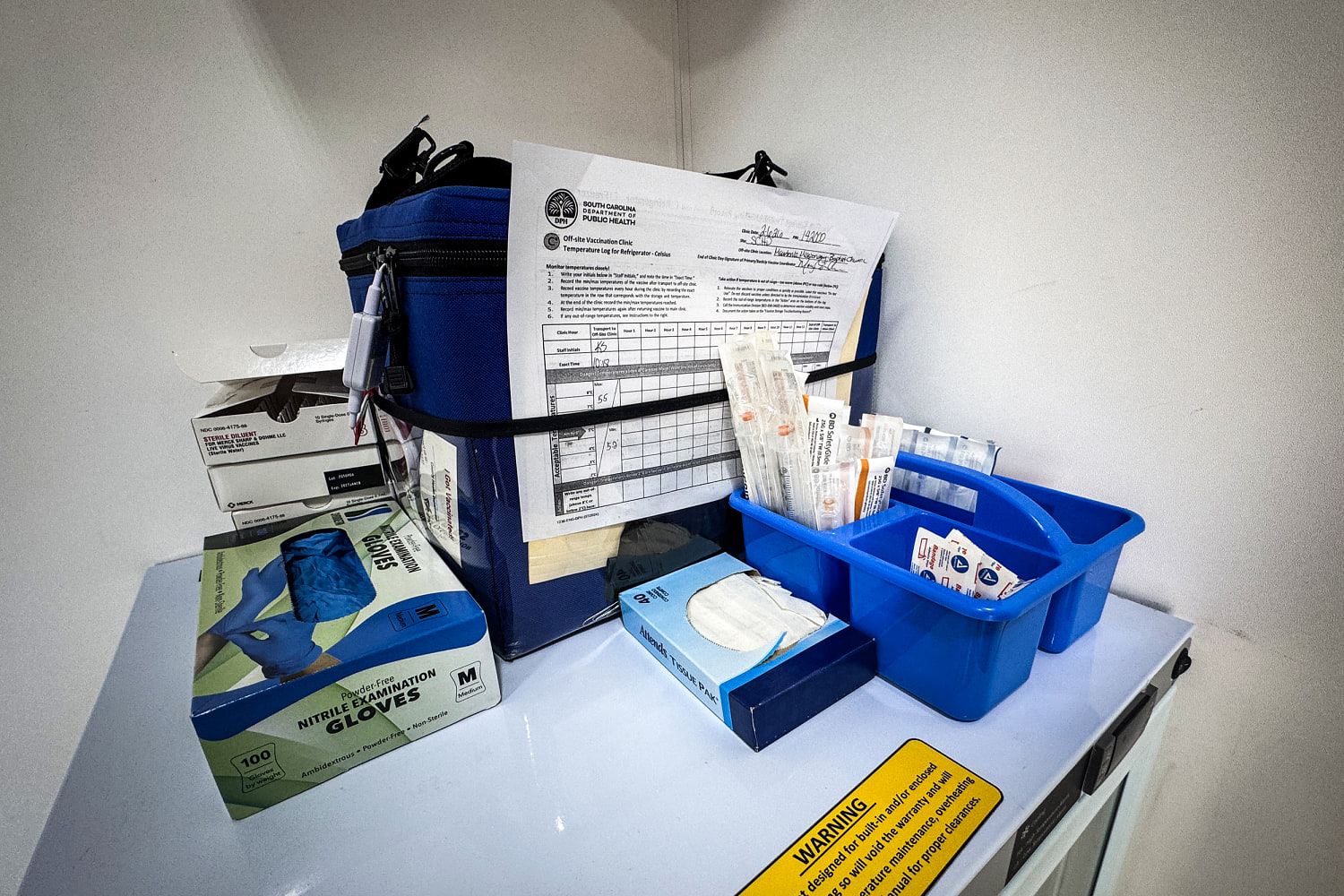
This logistical feat requires cold-chain integrity—the vaccine must be kept at specific temperatures from the factory to the arm. Maintaining this chain during an emergency response adds layers of expense, from specialized refrigeration units to the fuel for expedited transport. If the vaccine is not handled perfectly, it becomes useless, wasting both the medicine and the money used to procure it.
Public Trust and the Erosion of Authority
Perhaps the most difficult cost to quantify is the erosion of public trust in health institutions. Every time an outbreak occurs in a "pockets of low vaccination," it signals a failure of communication and community engagement.
The resources spent fighting misinformation are resources not spent on innovation. Health departments now employ social media monitors and "community liaisons" whose primary job is to debunk rumors that were settled decades ago. This represents a massive misallocation of intellectual capital. Instead of focusing on the next generation of medical breakthroughs, our brightest minds are stuck litigating the safety of a vaccine that has been proven safe by billions of doses over half a century.
The Inequity of the Burden
The costs of measles are not distributed evenly. The burden falls most heavily on the uninsured and the underinsured. While the public health response is funded by taxpayers, the individual recovery costs—and the potential for long-term disability—fall on the families.
In many cases, the communities with the lowest vaccination rates are not those with the least access to care, but those with the most "vaccine hesitancy." This creates a bizarre scenario where some of the wealthiest counties in the country are incurring public health costs that rival those of developing nations. It is a self-inflicted wound.
Direct Costs vs Indirect Costs
| Category | Type of Expense | Economic Impact |
|---|---|---|
| Public Health | Contact tracing, labor, vaccine clinics | High (Taxpayer funded) |
| Healthcare | Hospitalization, ER visits, complications | High (Insurance/Family funded) |
| Productivity | Quarantines, missed school/work | Moderate to High (Private sector) |
| Long-term | Immune amnesia, permanent disability | Extreme (Lifelong impact) |
The Reality of Subacute Sclerosing Panencephalitis
There is a rare but fatal complication of measles called Subacute Sclerosing Panencephalitis (SSPE). It is a progressive neurological disorder that emerges years after the initial infection.
The virus hides in the central nervous system, lying dormant until it begins to destroy the brain. There is no cure. SSPE is a death sentence that usually strikes in late childhood or the teenage years. The cost of hospice care and the psychological devastation for the family are immeasurable. Every time we allow the measles virus to circulate in a community, we are essentially planting seeds for these future tragedies.
The Resource Diversion Trap
In an era of tightening budgets, every dollar spent on a measles outbreak is a dollar not spent on the next pandemic threat. We saw during the COVID-19 era how quickly the healthcare system can be overwhelmed. Measles acts as a "stress test" that we keep failing.
When a hospital has to convert a wing into a negative-pressure isolation zone for measles patients, elective surgeries are canceled. When elective surgeries are canceled, the hospital loses its primary source of revenue. This creates a secondary economic shock to the healthcare system that can take months to stabilize.
The Myth of Natural Immunity
Arguments favoring "natural immunity" often ignore the sheer brutality of the price tag. While a person who survives a measles infection does have lifelong immunity, the cost of acquiring that immunity through infection is thousands of times higher than the cost of a $20 vaccine.
From a purely cold, analytical business perspective, the vaccine is one of the most successful products ever created. The return on investment for the MMR vaccine is estimated to be roughly $58 for every $1 spent when considering both direct and indirect costs to society. There is no other intervention in modern medicine that offers that kind of fiscal efficiency.
The Fractured Response System
The United States does not have a centralized national health service. Instead, it has a patchwork of state, county, and city health departments. This fragmentation makes the measles response even more expensive.
When an outbreak crosses state lines—as it often does when an infected person travels through a hub like O'Hare or Hartsfield-Jackson—the coordination between different jurisdictions creates a bureaucratic nightmare. Information sharing is slowed by differing software systems and legal frameworks, leading to duplicated efforts and wasted hours. This lack of a unified digital infrastructure for public health is a hidden tax on every American taxpayer.
The Immediate Financial Requirement
Addressing this crisis requires more than just "awareness." It requires a hard-nosed look at how we fund public health. Currently, funding is reactive. Money flows only when the sirens are blaring.
A proactive approach would involve sustained funding for immunization programs and a legal framework that holds entities accountable for the costs they impose on the public when they facilitate the spread of preventable diseases. If a private school chooses to waive vaccination requirements, should that school be liable for the hundreds of thousands of dollars the county spends when an outbreak occurs on its campus? This is a question the legal and insurance industries are beginning to ask.
The financial reality of measles is that we are paying for it one way or another. We can pay a small amount now for prevention, or we can continue to pay an exorbitant amount later for the cleanup.
Check your local health department's current immunization rates to see if your community is at risk for these hidden costs.