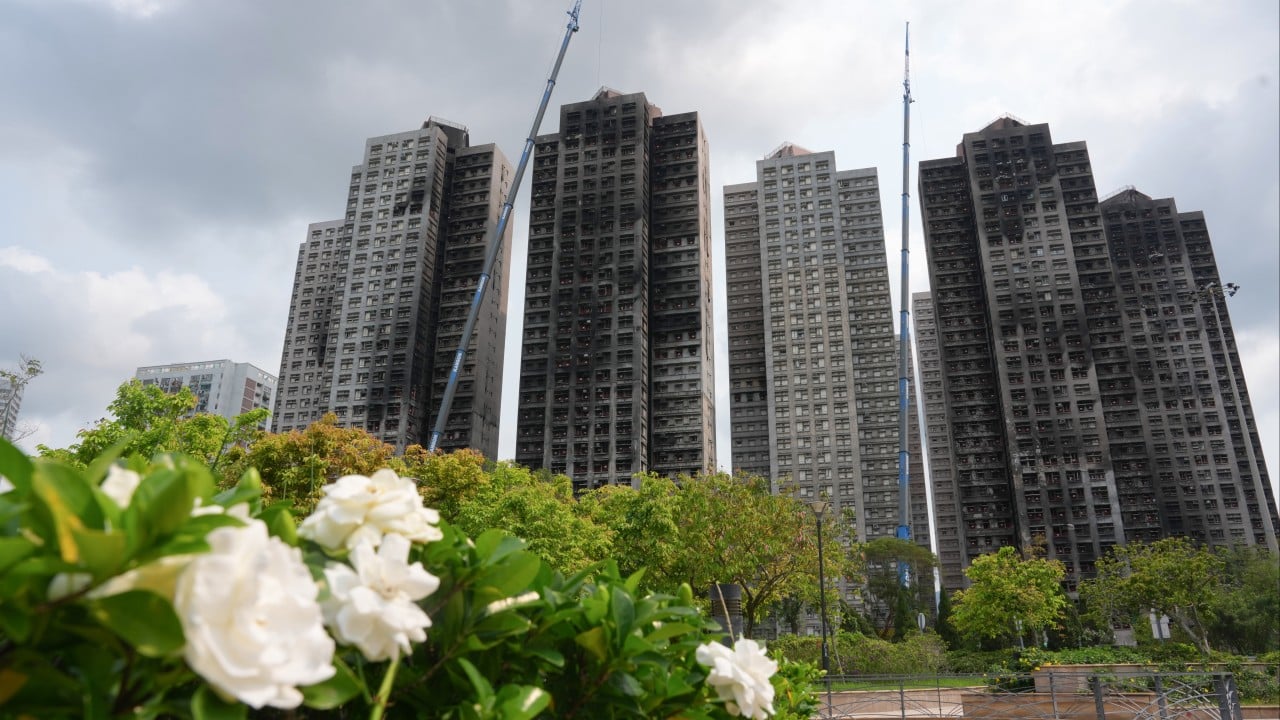
The integrity of public office rests on the clear separation between constituent service and the solicitation of political capital. When a district councillor faces a formal inquiry regarding fire safety protocols and the subsequent allocation of proxy votes, the core issue is not merely a question of ethical conduct, but a breakdown in the Standard Operating Procedures (SOPs) governing community management. The ongoing probe into the Tai Po fire incident highlights a critical friction point: the intersection of crisis management, administrative influence, and the legal frameworks of the Building Management Ordinance.
The Triad of Governance Risk in Local Administration
The situation in Tai Po serves as a case study for three specific vulnerabilities in the current district administration model. To analyze the testimony provided, one must categorize the events into a framework of operational risks that define how local officials interact with private residential entities.
1. The Crisis Response Variable
Public officials often intervene during emergencies—such as residential fires—to provide immediate relief. However, the risk arises when this intervention transitions from humanitarian assistance to administrative mediation. In the Tai Po inquiry, the councillor’s presence at the scene and subsequent involvement with the building’s owners' corporation (OC) created a perceived dependency. The mechanism at play is "reciprocal expectation," where the provision of rapid-response aid is later viewed as a debt to be repaid through political alignment or voting blocks.
2. The Proxy Vote as Local Currency
In high-density residential environments, the proxy vote is the primary unit of power for building management. It dictates the selection of contractors, the allocation of maintenance funds, and the overall direction of the OC. The allegation that benefits were exchanged for these votes points to a systemic flaw in how proxies are collected. If a councillor or their staff facilitates the gathering of proxies under the guise of "administrative help," the line between constituent service and electoral manipulation thins to the point of invisibility.
3. Oversight Asymmetry
Building management in Hong Kong is governed by the Building Management Ordinance (Cap. 344), but district councillors operate under a different set of guidelines provided by the Home Affairs Department. This inquiry exposes an asymmetry where a councillor can influence private corporate decisions (within an OC) without the same level of transparency required for public legislative actions.
Analyzing the Testimony: Logical Inconsistencies and Defense Frameworks
The defense offered by the councillor—that no benefits were exchanged—relies on a "Strict Separation" argument. This argument posits that the fire safety probe and the proxy vote collection were two independent events that happened to overlap in time and personnel. To evaluate the validity of this stance, we must apply a Causal Linkage Test.
The Temporal Correlation Problem
The fire occurred, a probe was initiated, and a vote for the OC leadership followed. In a data-driven analysis, the temporal proximity of these events creates a high correlation. To disprove causation (that the fire probe was used as leverage for the vote), the defense must demonstrate that the proxy collection followed a standard, pre-existing pattern of behavior that was independent of the crisis.
The councillor’s testimony centers on the assertion that his office was merely "facilitating communication." In organizational theory, "facilitation" is a neutral act, but in political science, it is often a "gatekeeping" function. By controlling the flow of information between the fire services department and the residents, a councillor occupies a position of information asymmetry. If the residents believe their safety or the outcome of an investigation depends on the councillor's favor, a "soft coercion" environment is established, even if no explicit quid pro quo is documented.
The Cost Function of Political Intervention
Every action taken by a district office has a cost, measured in man-hours and political capital. When a councillor allocates significant resources to a specific building’s fire probe, they are making a strategic investment. We can model this using a basic resource allocation formula:
$$R_a = (V \times P) + S$$
Where:
- $R_a$ is the Resource Allocation.
- $V$ is the perceived value of the constituent group (number of voters).
- $P$ is the probability of securing their loyalty (proxy votes/electoral support).
- $S$ is the social necessity or emergency weight of the event.
In the Tai Po case, if the value of $S$ (the fire emergency) was the sole driver, the councillor’s involvement should have diminished immediately following the stabilization of the site. Continued involvement in the internal voting mechanics of the building suggests that the variables $V$ and $P$ became the primary drivers of resource allocation. This shift represents a transition from public service to political asset acquisition.
The Structural Failure of the Building Management Ordinance
The inquiry inadvertently critiques the Building Management Ordinance (BMO). The BMO lacks a robust "Firewall Protocol" to prevent external political actors from influencing internal OC elections. This creates a vacuum where:
- Residents lack technical expertise: They rely on the district councillor for interpretation of fire safety codes and legal requirements.
- The Councillor provides "free" consultancy: This creates a debt of gratitude.
- The Proxy is the repayment: Because there is no financial transaction, the councillor can claim no "benefit" was received, bypassing traditional anti-corruption statutes that focus on monetary bribes.
However, in modern governance, influence and data are often more valuable than direct financial transfers. The collection of proxies provides a councillor with a database of residents, their unit numbers, and their contact details—a vital asset for any future election. The "benefit" is not a check; it is the infrastructure of a campaign.
Mitigation of Governance Risks in Local Probes
To prevent the recurrence of these allegations and to restore the integrity of the district council’s role in emergency response, a shift in operational transparency is required. This is not about individual ethics but about system design.
Implementing Mandatory Third-Party Mediation
In any residential crisis involving fire safety or structural integrity, the district councillor’s role should be limited to that of a referral agent. The actual mediation and technical advice should be handled by a neutral third party, such as a government-appointed professional building manager or a legal aid clinic, who has no stake in the building’s internal voting processes.
Digitalization of the Proxy System
The current paper-based proxy system is prone to "collection bias," where the person who reaches the resident first often secures the vote. Moving to a blockchain-verified or centralized digital voting platform for OCs would eliminate the need for councillors to "help" collect proxies. This removes the primary tool of leverage identified in the Tai Po probe.
Audit Trails for District Office Interventions
District offices should be required to maintain a public log of all interventions in private building management issues. This log should include:
- The trigger for intervention (e.g., a fire or a resident complaint).
- The specific advice given.
- Any staff time allocated to "assisting" with building meetings.
If the Tai Po councillor had been required to log every hour spent on the building's internal affairs, the disproportionate allocation of resources would have been flagged long before a judicial probe became necessary.
The Logical Conclusion of the Inquiry
The Tai Po fire probe is a symptom of a larger systemic issue: the professionalization of "neighborhood influence." When a public official claims that helping a building recover from a disaster has nothing to do with their attempt to control that building's administrative board, they are ignoring the fundamental reality of political psychology.
The inquiry must look beyond the absence of a "money trail." It must analyze the power trail. If the councillor’s actions resulted in a consolidated block of influence that served his political career, a "benefit" was indeed exchanged. The currency was simply not cash; it was control.
The strategic play for future district governance is the enforcement of a Strict Neutrality Clause. This clause would bar any district official who provides emergency relief or administrative aid to a building from participating in, or soliciting proxies for, that building’s management elections for a period of no less than 24 months. This cooling-off period would effectively decouple humanitarian aid from political opportunism, ensuring that fire probes remain focused on safety rather than seats.