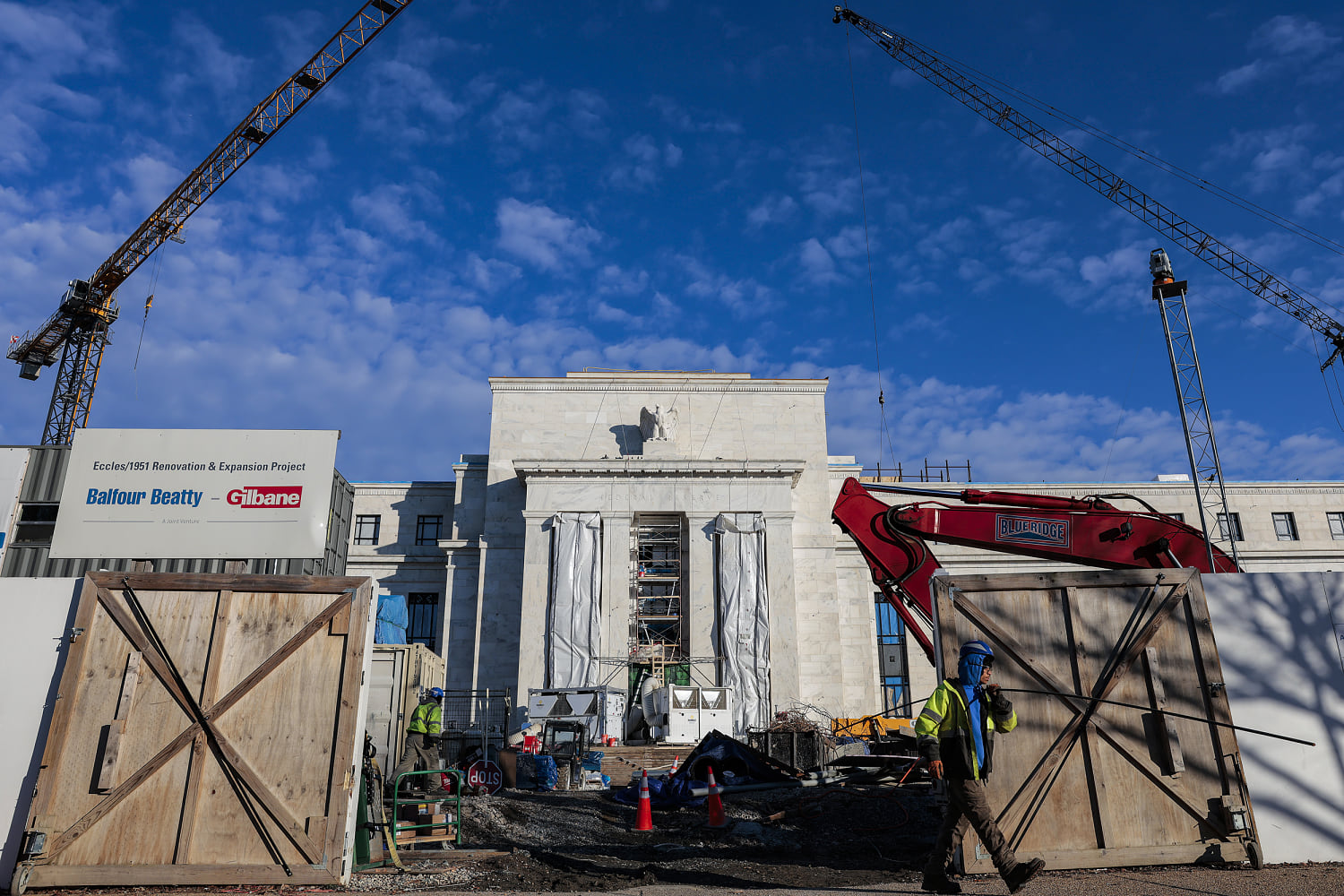
The physical renovation of the Federal Reserve’s Eccles Building has evolved from a standard infrastructure project into a primary site of institutional friction, signaling a breakdown in inter-agency transparency. When Department of Justice (DOJ) investigators attempt to gain physical access to a site under the guise of a "tour," it indicates that formal legal discovery has hit a terminal bottleneck. This maneuver reflects a shift from standard administrative oversight to a high-stakes jurisdictional battleground where the Fed’s unique quasi-independent status serves as a structural shield against executive-branch scrutiny.
The Architecture of Opacity
The current standoff is defined by the intersection of two distinct regulatory pressures: the multi-billion dollar renovation budget and an ongoing investigation into potential procurement irregularities. The Federal Reserve operates under a self-funding model, which historically isolates its operational spending from Congressional appropriations. This creates a "transparency gap" where the standard mechanisms of the Government Accountability Office (GAO) are often blunted by the Fed’s claims of institutional independence.
The DOJ’s interest in the renovations centers on three primary risk vectors:
- Contractual Inflation and Change Orders: Large-scale government renovations are susceptible to "scope creep" and non-competitive bidding processes. In the absence of external line-item oversight, the internal cost-benefit analysis for these renovations remains shielded from public view.
- Physical Security Protocols vs. Investigative Access: The Fed’s security apparatus is separate from the standard federal protective services. By citing security protocols, the Fed can legally restrict DOJ personnel from entering specific zones, effectively preventing the physical verification of project milestones or asset allocation.
- Jurisdictional Overlap: The Fed’s Inspector General (IG) technically holds the primary oversight mandate. However, when the DOJ intervenes, it suggests the IG’s internal audit has either failed to mitigate risk or has identified criminal liability that exceeds its internal remit.
The Cost Function of Institutional Delay
In any complex federal probe, time functions as a depreciating asset for the investigator and a defensive buffer for the subject. The Fed’s refusal to grant access—framed as a conflict over "tour" logistics—serves as a tactical stalling mechanism. Every month the probe stalls, the physical evidence at the renovation site changes. Walls are closed, wiring is hidden, and the audit trail for raw materials and labor hours becomes increasingly obscured.
This delay is not merely an administrative hiccup; it is a calculated deployment of Regulatory Capture via Infrastructure. By embedding the investigation within a long-term construction timeline, the Fed ensures that by the time investigators gain full access, the "renovations" will be a fait accompli. The cost of forensic deconstruction would be politically and financially prohibitive, leaving the DOJ with no choice but to rely on potentially sanitized documentation.
Structural Vulnerabilities in the Fed Oversight Model
The current friction highlights a fundamental flaw in the 1913 Federal Reserve Act regarding operational (non-monetary) accountability. While the Fed’s monetary policy independence is sacrosanct to prevent political interference with interest rates, this independence has bled into its administrative functions.
There is no logical economic or legal reason why a construction project in Washington D.C. should be treated with the same level of secrecy as the Federal Open Market Committee (FOMC) deliberations. This conflation of duties creates an "Autonomy Loophole" where the following variables remain unquantified:
- Vendor Selection Rationale: The criteria used to select lead contractors for the Eccles renovations have remained largely proprietary.
- Asset Tracing: Unlike a standard Department of Defense (DoD) or Department of State project, the Fed does not have to justify its renovation overhead to a House Appropriations subcommittee.
- The Auditor's Dilemma: The Federal Reserve’s IG also oversees the Consumer Financial Protection Bureau (CFPB). This dual mandate dilutes the resource allocation necessary to audit a multi-year, multi-billion-dollar physical renovation project effectively.
The Mechanism of the 'Stalled Probe'
A stalled probe at this level of government usually indicates a failure of Compulsory Process. If the DOJ is reduced to requesting "tours," it implies they lack the probable cause required for a search warrant but possess enough evidence of irregularity to justify a persistent presence.
This creates a stalemate. The Fed cannot outright refuse the DOJ without appearing to hide malfeasance, but it can "slow-walk" the logistics of access. The DOJ, conversely, cannot force entry without risking a constitutional crisis involving the independence of the central bank. The result is a theatrical display of bureaucracy where "site visits" become the primary currency of the investigation.
The friction is exacerbated by the Information Asymmetry between the two entities. The Fed holds the data regarding its own spending and site progress; the DOJ only has the tips and whistleblowers that sparked the initial inquiry. Without physical verification, the DOJ is forced to build a case based on paper trails that the Fed itself generates—a classic "closed-loop" system that is notoriously difficult to penetrate.
Strategic Pivot: The Escalation Ladder
To break the current stasis, the DOJ must move beyond the "renovation tour" strategy and engage in Aggressive Third-Party Verification. This involves shifting the focus from the Fed’s internal offices to the external contractors and subcontractors involved in the renovation.
- Subcontractor Squeeze: Most corruption in large-scale renovations occurs at the second or third tier of the supply chain. By issuing subpoenas to the private firms providing the steel, labor, and specialized security tech, the DOJ can bypass the Fed’s jurisdictional shields.
- Digital Forensic Parity: If physical access is denied, the DOJ must pivot to the digital blueprints and Project Management Information Systems (PMIS) used by the contractors. These systems often contain unedited logs of delays, cost overruns, and "adjustments" that do not make it into the Fed’s official reports.
- Legislative Pressure as a Catalyst: While the DOJ is an executive branch entity, its interests currently align with Congressional hawks who seek to limit the Fed’s operational autonomy. Threatening to testify before the House Financial Services Committee regarding "obstruction of site access" would put the Fed in a position where it must choose between granting a "tour" or facing a restrictive legislative audit.
The Fed is currently betting that the complexity of the renovation and the shield of "central bank independence" will outlast the DOJ’s investigative appetite. This is a high-stakes gamble. If the DOJ uncovers even minor evidence of procurement fraud after being repeatedly denied access, the resulting political fallout will likely lead to the very thing the Fed fears most: a permanent loss of administrative autonomy and the imposition of GAO oversight on all non-monetary spending. The Fed must now weigh the preservation of its renovation privacy against the long-term risk of a fundamental restructuring of its institutional independence.