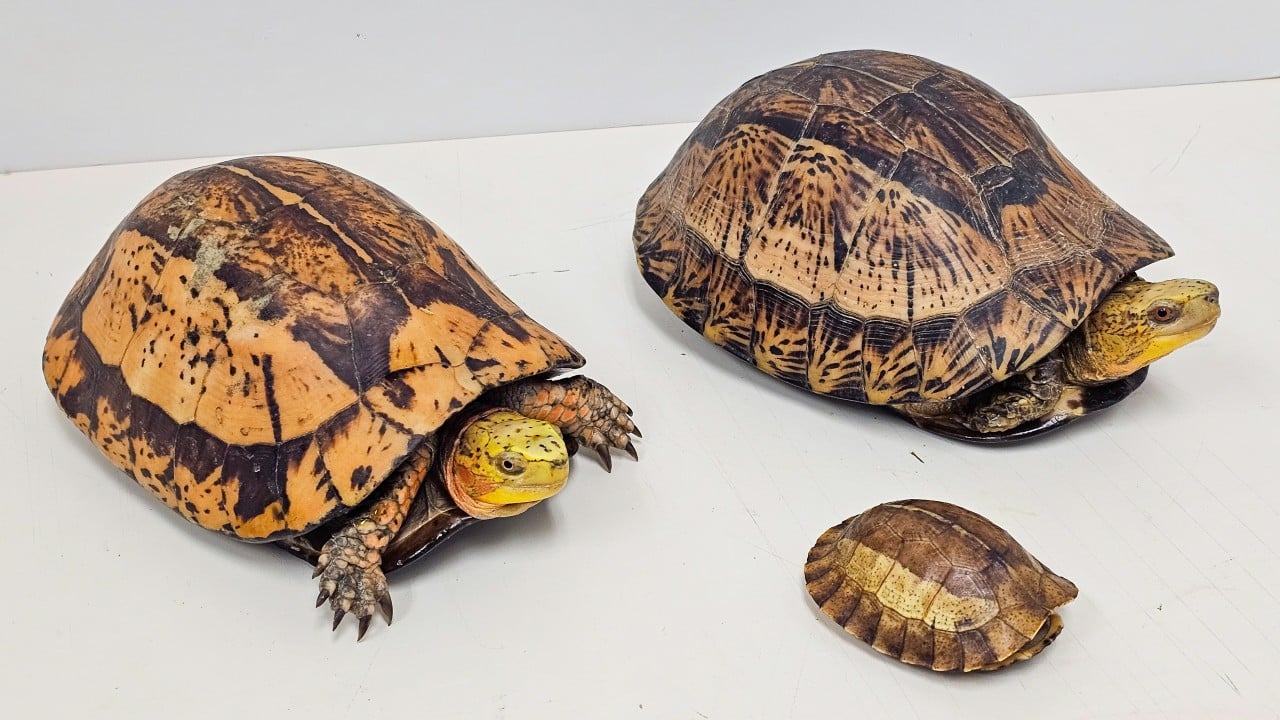
The discovery of 14 endangered reptiles within a Kwai Chung industrial unit is not merely a localized criminal incident; it is a data point confirming the evolution of high-margin biological smuggling into an asset-light, decentralized logistics model. When illegal trade migrates from traditional wet markets to high-density industrial hubs, it signals a shift in the risk-reward calculus of the "black supply chain." Smugglers are currently exploiting the structural anonymity of urban industrial zoning to minimize overhead while maximizing the survivability of high-value contraband.
The seizure in Kwai Chung involves a specific set of operational variables that define the modern wildlife trafficking landscape: the utilization of "grey-space" real estate, the leveraging of global logistics hubs, and the monetization of rare biological assets. To understand why this arrest occurred—and why the underlying system remains intact—one must analyze the mechanics of the trade through the lens of supply chain security and regulatory arbitrage.
The Anatomy of the Industrial Safehouse
Industrial units in Hong Kong, particularly in districts like Kwai Chung, provide three specific strategic advantages for the illicit reptile trade that traditional residential or commercial spaces lack.
Operational Obscurity and Acoustic Shielding
Industrial zones are high-noise, high-traffic environments where the movement of heavy crates and frequent vehicle access is the baseline. Unlike a residential apartment, where the smells or sounds of 14 large reptiles would trigger immediate neighbor complaints, an industrial unit allows for the installation of specialized HVAC systems and soundproofing under the guise of legitimate manufacturing or warehousing.
Logistics Fluidity
Kwai Chung’s proximity to one of the world’s busiest container terminals allows for a seamless "last mile" transition. Contraband can be moved from a shipping container to an industrial unit within minutes, reducing the window of vulnerability where the animals are exposed to public view or police checkpoints. The industrial unit acts as a buffer—a "de-risking" zone where the animals are stabilized and re-packaged for the final buyer.
Scale of Containment
Reptiles, particularly endangered species, require specific environmental controls:
- Thermal Regulation: Maintaining precise temperature gradients to prevent metabolic failure.
- Humidity Control: Essential for shedding and respiratory health in tropical species.
- Spatial Separation: Preventing cross-contamination or aggressive interactions between specimens.
The Kwai Chung site provided the square footage necessary to maintain these variables at a level of sophistication that suggests a commercial-scale operation rather than a hobbyist collection.
The Economic Drivers of Rare Reptile Trafficking
The 14 reptiles seized represent a high-density value concentration. Unlike ivory or rhino horn, which are dead commodities, live reptiles are "appreciating biological assets." Their value is dictated by three primary economic forces.
The Rarity Premium
The CITES (Convention on International Trade in Endangered Species of Wild Fauna and Flora) classification directly influences black market pricing. As a species moves from Appendix II to Appendix I, its scarcity is institutionalized. This creates a "supply-side shock" that drives prices exponentially higher. Smugglers anticipate these regulatory shifts, stockpiling species before international protections tighten, effectively front-running the law.
The Breeding Potential Multiplier
A single endangered reptile is worth its market price. A breeding pair, however, represents a perpetual revenue stream. The industrial setup in Kwai Chung suggests the potential for "laundering" through captive breeding. By producing offspring in a controlled industrial environment, traffickers can attempt to pass off "wild-caught" genetics as "captive-bred," which often carries a lower level of legal scrutiny and higher demand among collectors who prefer animals acclimated to captivity.
The Low-Volume High-Value Ratio
Compared to larger mammals, reptiles are highly portable. They have lower metabolic rates, meaning they can survive for extended periods in cramped, oxygen-depleted environments during transit. This makes the "cost of transport" significantly lower relative to the final sale price. The 14 reptiles in this case likely represented a potential street value in the hundreds of thousands of dollars, yet they could be housed in a space no larger than a standard office cubicle.
Regulatory Blind Spots in Industrial Zoning
The arrest of the 33-year-old suspect highlights a systemic failure in how urban centers manage "mixed-use" industrial spaces. The current regulatory framework is designed to detect fire hazards or labor violations, not the presence of illegal biological assets.
The Inspection Deficit
Hong Kong’s Buildings Department and Lands Department are currently overwhelmed by the sheer volume of subdivided units and illegal domestic dwellings in industrial buildings. Smugglers piggyback on this "noise." Enforcement agencies are looking for illegal "cages" for humans (subdivided flats) or unlicensed factories, which allows a well-maintained, quiet biological warehouse to remain undetected for months or years.
The "Sub-Lease" Layering
Traffickers rarely hold the primary lease on these units. They utilize a network of shell companies or "nominee" tenants to distance the criminal activity from the physical asset. This layering creates a legal bottleneck; even when a raid is successful, the trail often goes cold at a shell company registered in a different jurisdiction, leaving only the "handler" or "caretaker" (the 33-year-old in this instance) to face prosecution.
The Bio-Security Risk Matrix
Beyond the immediate legal violations, the Kwai Chung operation represents a significant, unquantified risk to urban public health. Industrial units are not equipped for the bio-containment required for exotic fauna.
Zoonotic Spillover Pathways
Endangered reptiles often harbor pathogens—bacteria, viruses, and parasites—that are non-endemic to the region. In a high-density industrial building, the waste management systems are shared. Improper disposal of biological waste from these 14 reptiles could introduce exotic pathogens into the local sewage system or vermin populations, creating a "silent" bio-hazard.
The Invasive Species Threat
If an industrial fire or structural failure had occurred, the escape of these reptiles into the Kwai Chung ecosystem would be catastrophic. The local environment is ill-equipped to handle non-native apex predators or specialized foragers, potentially leading to the displacement of indigenous species and the disruption of local biodiversity.
Tactical Recommendations for Enforcement
The current reactive model—relying on tips or incidental discoveries—is insufficient to dismantle the industrial smuggling network. A shift toward "predictive enforcement" is required.
Energy Signature Analysis
Reptile husbandry at an industrial scale is energy-intensive. Heating lamps, UV lighting, and specialized filtration systems operate on 24-hour cycles. By analyzing smart meter data for industrial units that show a constant, high-draw base load—distinct from the oscillating power usage of a manufacturing plant or the low usage of a standard warehouse—authorities can identify "high-probability" sites for biological hoarding.
Environmental Sensor Integration
Modern waste-water monitoring, used effectively during the COVID-19 pandemic to track viral loads in specific buildings, can be adapted. Monitoring for specific reptile DNA or high concentrations of exotic salmonella strains in industrial sewer lines would provide a non-invasive way to flag buildings being used for animal trafficking.
Supply Chain Interdiction of Husbandry Equipment
The purchase of high-end, commercial-grade reptile enclosures and life-support systems is a niche market. Implementing a "know your customer" (KYC) protocol for the sale of advanced herpetological equipment would force traffickers to use sub-standard gear—increasing the mortality rate of their "stock" and reducing the profitability of the enterprise—or risk exposure during the procurement phase.
The Kwai Chung seizure is a tactical victory in a losing strategic war. As long as the "industrial safehouse" remains a viable, low-risk component of the global trafficking architecture, the trade will simply relocate to the next vacant unit. True disruption requires a reclassification of industrial oversight, treating energy and biological signatures as primary indicators of criminal activity rather than secondary concerns.