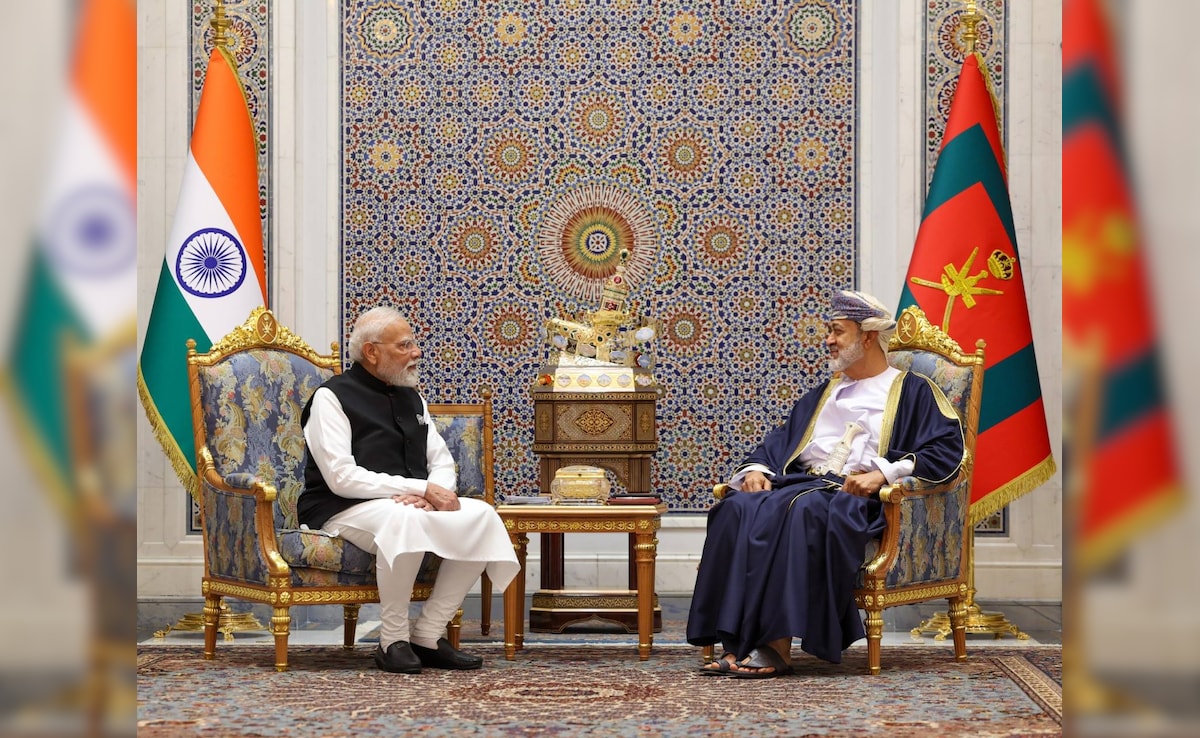
The arithmetic of Indian diplomacy in the Middle East has shifted from the boardroom to the bunker. Within a frantic 48-hour window this week, Prime Minister Narendra Modi engaged in a high-stakes telephonic marathon with leaders from Oman, Kuwait, Qatar, Saudi Arabia, and the UAE. While official communiqués highlight "shared concerns" over regional stability, the reality is a desperate scramble to insulation. New Delhi is currently staring at a nightmare scenario: the potential displacement of nearly 10 million citizens caught in the crossfire of a rapidly expanding US-Israel-Iran conflict.
This is no longer a localized skirmish. Following the weekend assassination of Iranian Supreme Leader Ayatollah Ali Khamenei and subsequent retaliatory strikes by Tehran, the Gulf is witnessing the systematic erosion of its "safe zone" status. When Modi spoke to Sultan Haitham bin Tarik of Oman and Kuwait’s Crown Prince Sheikh Sabah Al-Khaled on Tuesday, the subtext was clear. India is no longer just a bystander; its economic and human capital is now a primary casualty of the theater of war.
The Geography of Vulnerability
The Middle East is home to approximately nine million Indian nationals. This is not just a demographic statistic; it is a vital organ of the Indian economy. In the 2023–24 fiscal year, the UAE alone contributed 19% of India’s total inward remittances. Any sustained disruption to the Gulf's stability doesn't just threaten lives—it threatens the solvency of millions of households across Kerala, Tamil Nadu, and Uttar Pradesh.
The recent strikes on Doha and Dubai, once considered the untouchable hubs of global commerce, have shattered the illusion of Gulf neutrality. For India, the calculus is brutal. If the conflict escalates further, the logistics of a mass evacuation would dwarf the 1990 airlift from Kuwait. We are looking at a population the size of a small European nation currently living under a flight path of Iranian drones and Israeli interceptors.
Merchant Shipping and the Energy Lifeline
The Ministry of External Affairs (MEA) has taken an unusually sharp tone regarding maritime security. This isn't just about general "peace." It is about the fact that an Indian mariner was killed Monday when a drone boat struck an oil tanker off the coast of Oman.
India's energy security is tethered to the Strait of Hormuz. With Tehran now targeting US-linked assets and "merchant shipping" at large, New Delhi’s oil and gas supply chains are effectively under siege. The government's "deep anxiety" stems from the knowledge that India lacks the naval capacity to escort every commercial vessel through these contested waters.
The Tightrope Between Tehran and Tel Aviv
Modi’s diplomatic strategy has long been a masterclass in "de-hyphenation"—maintaining a robust strategic partnership with Israel while safeguarding deep energy and infrastructure ties with Iran. That bridge is now burning.
The Cabinet Committee on Security (CCS) met recently to address a sobering reality. India has spent years developing the Chabahar port in Iran to bypass Pakistan and reach Central Asian markets. Simultaneously, it has championed the India-Middle East-Europe Economic Corridor (IMEEC) alongside Israel and the UAE. One project is located in a country whose leadership has just been decapitated; the other passes through a region currently being pulverized by airstrikes.
Sovereignty as a Diplomatic Shield
In his calls with the leaders of Oman and Kuwait, Modi used a specific phrase: "violation of sovereignty and territorial integrity." This is a carefully chosen legalistic shield. By condemning the violations of Gulf nations' sovereignty, India is signaling to both Iran and the US-Israel coalition that the "neutral" states of the GCC must not be used as a playground for their proxy wars.
However, signaling is not a strategy. The "solidarity" offered to Kuwait and Oman is a verbal commitment in a region where the currency is currently kinetic. New Delhi is essentially asking the warring parties to respect the boundaries of the landlords while they burn down the neighboring house.
The Remittance Crisis and the Domestic Fallout
If the Gulf conflict transitions into a long-term war of attrition, the domestic impact on India will be immediate.
- Fuel Prices: Any spike in Brent crude will blow a hole in the Indian fiscal deficit.
- Employment: A mass return of the diaspora would create a sudden, massive surge in domestic unemployment.
- Social Stability: The states most dependent on Gulf money would face an overnight recession.
The Indian embassies in Muscat and Kuwait City are currently operating as 24/7 crisis centers. Advisories are being issued with increasing frequency, yet the reality remains that for many Indian workers, the risk of a drone strike is still outweighed by the financial impossibility of returning home to a jobless market.
India’s "dialogue and diplomacy" mantra is being tested to its absolute limit. It is a plea for a world that existed before Saturday’s strikes. As the conflict spreads to the holy month of Ramadan, the window for a negotiated de-escalation is closing. New Delhi is finding that in a multipolar world, being a "friend to all" provides very little protection when the missiles start flying.
The coming weeks will determine if India's Middle East policy was a visionary bridge to the future or a fragile structure built on ground that was never truly stable.


