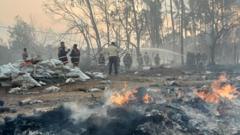
India is facing a deadly pattern of industrial negligence that nobody seems willing to fix. In less than 72 hours, two separate explosions at fireworks units have claimed at least thirteen lives. This isn't just a streak of bad luck. It’s a systemic failure. When a factory blows up in Virudhunagar, and then another follows in a different district just days later, you have to stop calling them accidents. They’re predictable outcomes of a culture that values cheap celebratory crackers over human life.
The most recent tragedy happened in the Ariyalur district of Tamil Nadu. At least seven people died instantly when a massive blast leveled a manufacturing shed. This followed a similar horror in the Virudhunagar district, the country’s main hub for firecrackers, where six workers lost their lives. We’re seeing a body count rise while the root causes—poor storage, lack of safety training, and illegal manufacturing—remain largely ignored by local regulators.
The Math Behind the Mayhem
Tamil Nadu produces nearly 90% of India's fireworks. It's a massive industry. But the pressure to meet demand, especially as festive seasons approach, leads to corners being cut. Most of these units operate as small, decentralized sheds. This is supposed to limit the damage if a fire starts. Clearly, it isn't working.
When you look at the chemistry involved, the risks are staggering. Workers handle volatile mixtures of sulfur, aluminum powder, and nitrates. In many of these smaller units, the handling is done manually. A single spark from static electricity or a dropped tool can trigger a chain reaction. The blast in Ariyalur was so powerful it didn't just kill the workers; it reportedly damaged nearby buildings and sent a plume of smoke visible for miles.
The state government usually responds with a familiar script. They announce compensation for the families—usually a few hundred thousand rupees. They order an inquiry. They might even arrest the owner if the unit was unlicensed. Then, the news cycle moves on, and the industry goes back to business as usual until the next shed ignites.
Why These Blasts Keep Happening
You might wonder why safety protocols aren't strictly enforced. The reality is that the fireworks industry is a labyrinth of licensed and unlicensed operators. Even licensed factories often sub-contract work to smaller, home-based units to avoid oversight. This "cottage industry" model makes it almost impossible for inspectors to track every batch of gunpowder.
- Chemical Volatility: Many units use potassium chlorate, which is actually banned for use in fireworks because it's too unstable. It’s cheaper than safer alternatives, so people keep using it.
- Overcrowding: Sheds meant for two workers often house six or seven to speed up production.
- Heat and Storage: Tamil Nadu is hot. Storing finished crackers in sheds that aren't temperature-controlled is a recipe for disaster. Friction or high ambient heat can be enough to start a fire.
Experts from the Petroleum and Explosives Safety Organization (PESO) have repeatedly pointed out that many units ignore the mandatory "safety distances" between buildings. When one shed goes, the others follow like a row of dominos. That’s exactly what happened in the recent Virudhunagar incident.
The Economic Trap for Workers
The people dying in these blasts aren't the wealthy factory owners. They’re daily wage laborers who don't have many other options. In districts like Virudhunagar, the firecracker industry is the primary employer. If you don't work in the sheds, you don't eat. This creates a power dynamic where workers are terrified to report safety violations. They know that if they speak up, the unit might get shut down, and they'll lose their livelihood.
I’ve seen this play out in various industrial sectors across India. Safety is viewed as a luxury, not a right. The workers often handle chemicals with their bare hands. They don't have protective gear. They certainly don't have insurance. When a blast occurs, the family loses their only breadwinner and is left at the mercy of government payouts that take months to arrive.
Stopping the Cycle of Death
If we want to stop writing about fireworks deaths every week, the approach has to change. We can't keep relying on "inspections" that everyone knows are often bypassed with a small bribe.
First, the industry needs a massive technological shift. Manual mixing of chemicals is a 19th-century practice that has no place in 2026. Automation for the most dangerous parts of the process—mixing and filling—would save lives. Yes, it requires investment. But how many more deaths can the industry afford?
Second, there needs to be a real crackdown on the sub-contracting model. Large, licensed manufacturers should be held legally responsible for the safety standards of any unit producing under their brand. If a "satellite" unit blows up, the primary license holder should face the consequences. This would force the big players to police their own supply chains.
The government also needs to move beyond just offering cash to grieving families. We need specialized burn centers in these manufacturing hubs. Many victims of these blasts die not from the initial explosion, but from severe burns and lack of immediate, high-quality medical care.
What You Can Do
As a consumer, your choices matter. The demand for "louder and brighter" often fuels the use of more dangerous, unstable chemicals.
- Buy from Reputable Brands: Stick to established manufacturers who are more likely to follow PESO guidelines.
- Check for QR Codes: Many legal fireworks now come with QR codes that verify their origin and the chemicals used.
- Advocate for Greener Crackers: Green crackers use less hazardous materials and have a lower risk of accidental ignition during production.
The thirteen people who died this week weren't just statistics. They were parents, children, and neighbors. Their deaths were preventable. We should be outraged that in a country capable of landing on the moon, we still can't figure out how to make a firework without killing the person who made it. It’s time to stop the "inquiries" and start the enforcement.