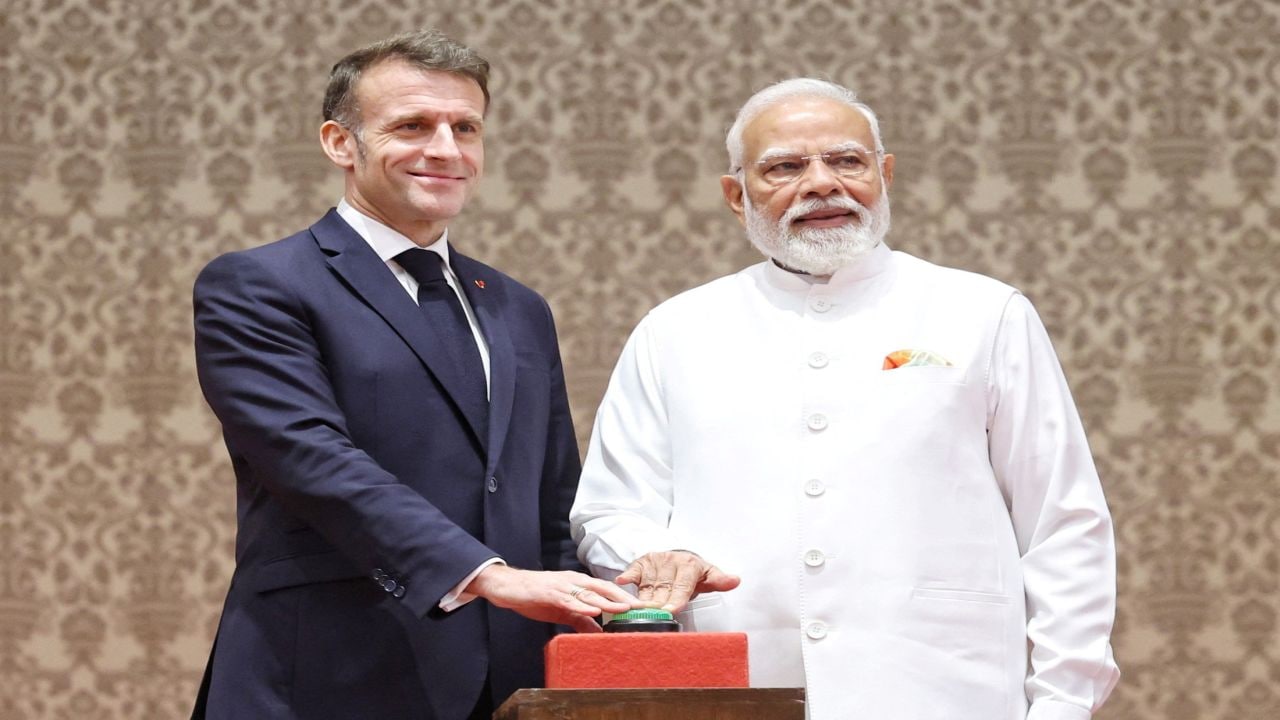
India and France just cleared the fog. If you've been tracking cross-border money moves between these two nations, you know the tax situation was a bit of a mess. Ambiguity kills deals. It makes CFOs nervous and sends investors running for safer, clearer harbors. That changed when both countries recently signed a protocol to amend their existing Double Taxation Avoidance Agreement (DTAA). This isn't just some dry bureaucratic handshake. It's a calculated shift to make sure businesses stop paying twice and start growing faster.
The core of the update centers on the Most Favoured Nation (MFN) clause. For years, there was a massive legal tug-of-war in Indian courts about whether lower tax rates granted to other countries should automatically apply to France. The Supreme Court of India eventually stepped in with a ruling that basically said, "No, you need a formal notification for that." This new protocol is that formal notification. It provides the legal certainty that was missing.
The end of the MFN uncertainty
Most people didn't realize how much the 2023 Supreme Court ruling in the Assessing Officer v. M.A.L. Japan case shook things up. Before that, many French companies operating in India were claiming a lower 5% tax rate on dividends, royalties, and fees for technical services. They did this by pointing to India’s treaties with countries like Slovenia or Lithuania.
The logic was simple. If India gave a 5% rate to a member of the OECD, France should get it too because of the MFN clause in the India-France treaty. The Indian tax authorities hated this. They argued that because those countries weren't OECD members when they signed their original treaties with India, the MFN benefit shouldn't trigger. The Supreme Court agreed with the tax office.
This left French firms facing unexpected tax liabilities and a mountain of paperwork. The new update fixes this by explicitly integrating these lower rates into the treaty text. We're moving away from "interpretative gymnastics" and toward a clear, codified 10% rate for royalties and fees for technical services (FTS). While it’s not the 5% some hoped for, it’s a stable, predictable 10% that won't get caught in a court battle.
Taxes on dividends and royalties under the new rules
You need to look at the numbers to see why this matters. Under the old framework, there was constant bickering over whether the rate should be 10% or 15%. Now, the protocol aligns the treaty with India’s domestic law changes, particularly the 2020 abolition of the Dividend Distribution Tax (DDT).
- Dividends: The tax rate is now capped at 10% if the recipient is the beneficial owner. This is huge for French parent companies with Indian subsidiaries. It ensures that profit repatriation doesn't get eaten alive by redundant levies.
- Royalties and FTS: These are also capped at 10%. In a world where French engineering and tech firms are heavily involved in Indian infrastructure and defense, this clarity is a win.
I've seen too many companies set aside massive "contingency funds" just in case a tax auditor decides to challenge a treaty benefit. That’s dead capital. It sits in an account doing nothing. By removing the "will they, won't they" aspect of treaty interpretation, that capital can actually go toward hiring or R&D.
Preventing treaty abuse and the MLI connection
Don't think this is a free-for-all for tax evaders. The update also brings the India-France DTAA in line with the Multilateral Instrument (MLI) standards developed by the OECD. This introduces the Principal Purpose Test (PPT).
Basically, if the main reason you set up a specific corporate structure is to get a tax benefit, the authorities can now deny that benefit. It’s no longer enough to just have a mailbox in Paris or Delhi. You need "substance." You need to prove that your business operations are real and that the tax perk is an incidental benefit of a legitimate commercial setup.
This is a global trend. India has been aggressive about cleaning up its tax network. We saw it with the Mauritius treaty and the Singapore treaty. France is just the latest piece of the puzzle. It’s about building a "clean" corridor for investment.
Why this moves the needle for tech and defense
France is India's second-largest defense supplier. We're talking about billions of Euros in Rafale jets, Scorpene submarines, and jet engines. These deals aren't just about hardware; they're about long-term technical support, software integration, and royalty payments for intellectual property.
When a French aerospace giant sends engineers to Bangalore to troubleshoot a turbine, the fees paid for those "technical services" are subject to tax. If the tax rate is uncertain, the French company simply bakes that risk into the price. India ends up paying more for its own defense. By capping and clarifying these rates, the "tax friction" in these strategic sectors drops significantly.
The practical reality for French SMEs
If you're a giant like Schneider Electric or Capgemini, you have an army of tax lawyers to figure this out. But for a French mid-sized tech firm looking to tap into the Indian talent pool, the previous ambiguity was a massive barrier to entry.
Small and medium enterprises (SMEs) don't have the stomach for a ten-year litigation battle in Indian courts. They want to know their exact tax liability on day one. This treaty update provides that "day one" certainty. It makes India look less like a legal labyrinth and more like a standard, predictable market.
What you should do now
If you're currently managing operations between these two countries, don't wait for your annual audit to check your compliance.
First, review your existing royalty and FTS agreements. Ensure your withholding tax rates match the updated 10% cap. If you were previously claiming a 5% rate based on an old MFN interpretation, you need to pivot immediately. The Supreme Court was clear, and this protocol reinforces that 5% is likely off the table for now.
Second, document your "substance." With the Principal Purpose Test now in play, make sure your corporate structure has a clear commercial rationale. Keep records of board meetings, local employees, and physical infrastructure. If an auditor knocks, "because it saves us 10% in tax" shouldn't be your only answer.
The India-France economic corridor is getting stronger, but it’s also getting more regulated. The days of "treaty shopping" are over. The era of transparent, high-value cross-border investment is what's left. Get your paperwork in order because the Indian tax department is getting much better at spotting inconsistencies.
Update your tax certificates (Form 10F and Tax Residency Certificates) and ensure your beneficial ownership documentation is bulletproof. The clarity is there—use it to your advantage before the next filing season hits.