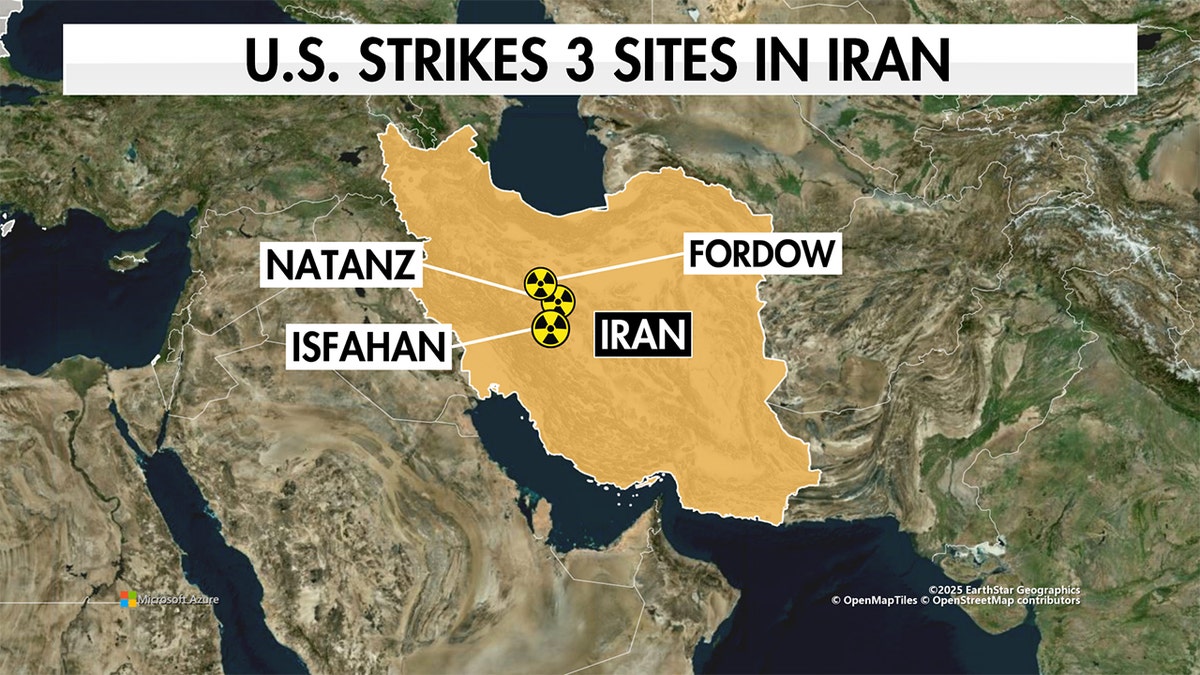
Five days into the most consequential air campaign of the century, the Pentagon is dusting off a rhetorical playbook from 2003. By framing the opening salvos against Iranian infrastructure as a modern iteration of "Shock and Awe," military planners are attempting to project an image of total dominance. However, the reality on the ground—and in the electromagnetic spectrum—suggests a much more grinding, complicated reality. Unlike the Iraqi integrated air defense systems of twenty years ago, which were centralized and brittle, Iran has spent decades preparing for this specific scenario with a decentralized, redundant, and deeply buried military architecture.
The core objective of the U.S. and its coalition partners during these first 120 hours has been the systematic "blind and bind" strategy. This involves the neutralization of long-range radar, the severing of fiber-optic command links, and the physical destruction of drone manufacturing hubs. While the sheer tonnage of ordnance dropped mirrors the intensity of the Baghdad strikes, the strategic outcome is far less certain. We are seeing a clash between high-altitude precision and low-earth-orbit persistence, but the "shock" part of the equation appears to be missing. Tehran has not collapsed; it has simply gone dark.
The Architecture of Defiance
To understand why the 2003 comparison fails, one must look at the geography of Iranian defense. Iraq was largely a flat desert where armor could sprint toward a capital. Iran is a fortress of salt deserts and jagged mountain ranges. Beneath these mountains lie "missile cities," hardened facilities that no amount of standard cruise missile fire can reach.
The U.S. Navy and Air Force have utilized a mix of B-21 Raiders and sea-launched Tomahawks to strike surface-to-air missile (SAM) sites along the coast. But these are the outer layers of a very thick onion. The internal layers are composed of mobile, domestically produced systems like the Bavar-373, which do not rely on a central "brain" that can be killed with a single strike.
This decentralization means that even if the central command in Tehran is severed, local commanders have the autonomy—and the standing orders—to launch retaliatory strikes. This is not a military that panics when the lights go out. It is a military that was built to operate in the dark.
The Drone Swarm and the Cost Curve
One of the most significant shifts in this conflict is the economic asymmetry of the engagement. The U.S. is using multi-million dollar interceptors to down "suicide" drones that cost less than a used sedan. On day three, a single Arleigh Burke-class destroyer reportedly expended nearly $40 million in missiles to neutralize a swarm of drones worth less than $500,000.
This is a mathematical war of attrition that the U.S. cannot win through traditional "Shock and Awe" tactics. The Iranian strategy is to bleed the carrier strike groups of their defensive magazines. Once those vertical launch cells are empty, the ships become vulnerable.
- Asymmetric Assets: Thousands of low-cost Shahed-type loitering munitions.
- Response: High-cost SM-2 and SM-6 interceptors.
- Result: A rapid depletion of high-end munitions that cannot be easily replenished at sea.
Logistics, not just firepower, will determine the victor of the second week. If the U.S. cannot establish a safe corridor for resupply ships, the initial "awe" of the air campaign will evaporate as defensive capabilities hit a hard ceiling.
The Cyber Front and the Silent Battlefield
While the world watches high-definition footage of explosions in Isfahan and Shiraz, the most brutal fighting is happening in the digital undergrowth. This is the first time we are seeing a full-scale deployment of offensive cyber capabilities against a mid-tier power with its own sophisticated hacking units.
The U.S. Cyber Command has reportedly targeted the Iranian power grid and the digital systems controlling the Strait of Hormuz. In retaliation, we have seen "wiper" malware attacks on regional port authorities and financial hubs in allied Gulf states. This isn't just about blowing things up. It’s about making the cost of the war unbearable for the civilian populations on both sides.
The problem with "Shock and Awe" in the digital age is that it works both ways. Iran’s ability to disrupt global oil markets through digital sabotage or physical mining of the Strait remains their "poison pill." Even if their air force is grounded and their navy is at the bottom of the Persian Gulf, a few keystrokes could send the global economy into a tailspin.
The Proxy Variable
The 2003 Iraq comparison ignores the "spider web" of regional proxies. Iran does not fight its wars alone. From Lebanon to Yemen to Iraq, the "Axis of Resistance" provides a depth of field that Saddam Hussein never possessed. On day four, we saw the first coordinated long-range strikes from Yemen-based militants targeting Red Sea shipping, forcing the U.S. to divert air assets away from the Iranian mainland.
This creates a "whack-a-mole" dynamic. For every radar site destroyed in Iran, a new threat emerges from a neighbor’s territory. This forces the coalition to spread its resources thin, diluting the impact of the primary offensive. The Pentagon is finding that it is much harder to shock a foe that is everywhere and nowhere at once.
Tactical Innovation vs. Traditional Might
We are observing several tactical anomalies in this conflict:
- Submerged Launchers: Iran is utilizing semi-submersible platforms to launch cruise missiles, making them nearly invisible to traditional satellite reconnaissance until the moment of ignition.
- GPS Spoofing: Massive electronic warfare suites have created "no-go zones" for precision-guided munitions over key Iranian cities, forcing pilots to rely on older, less reliable inertial navigation.
- Fiber-Optic Hardening: Unlike the radio-dependent militaries of the past, Iran has buried secure fiber-optic lines for its missile batteries, rendering jamming efforts largely ineffective for ground-to-ground assets.
These factors contribute to a "friction" that the original Shock and Awe doctrine never accounted for. The U.S. may have the bigger hammer, but Iran has turned the entire room into rubber.
The Intelligence Gap
Veteran analysts are concerned that the U.S. is overestimating the damage dealt. Battle Damage Assessment (BDA) is notoriously difficult in a mountainous country with extensive underground tunneling. When a satellite shows a "destroyed" factory, it may only be a shell. The real production might have moved two hundred feet underground months ago.
History is littered with examples of air campaigns that looked successful on paper but failed to break the will or the capacity of the target. In 1999, the bombing of Serbia was initially thought to have decimated their tank corps, only for the retreating army to pull hundreds of pristine, hidden tanks out of the woods once the ceasefire was signed. Iran has had decades to study those lessons.
The current conflict is not a sprint; it is a siege. The U.S. has achieved air superiority in the traditional sense—nothing moves in the sky without their permission—but they have not achieved "effect superiority." The Iranian government remains in control, the missiles are still being fueled in their silos, and the "shock" has been absorbed by a system designed from the ground up to survive exactly this.
The Strategic Bottleneck
The most pressing concern for the next 48 hours is the Strait of Hormuz. Roughly 20 percent of the world’s oil passes through this narrow waterway. Iran has threatened to turn it into a graveyard of tankers. If they succeed, the price of crude will skyrocket, and the political will in Washington and Europe will begin to crumble.
The U.S. must decide if it is willing to commit ground forces to secure the coastline—a move that would turn this from a "Shock and Awe" air show into a bloody, protracted land war. There is no middle ground. You cannot hold a strait from 30,000 feet.
As we move into day six, the narrative of a quick, decisive victory is fading. The flares over Tehran are bright, but they are not the end of the story. They are the beginning of a long, dark chapter that will test the limits of Western military technology and political resolve.
The machines are doing their job, but the math of the war is shifting against the aggressors. Success in the modern era isn't measured by how many buildings you level, but by how many of your own vulnerabilities you leave exposed in the process.
Stop looking at the explosions and start looking at the logistics.