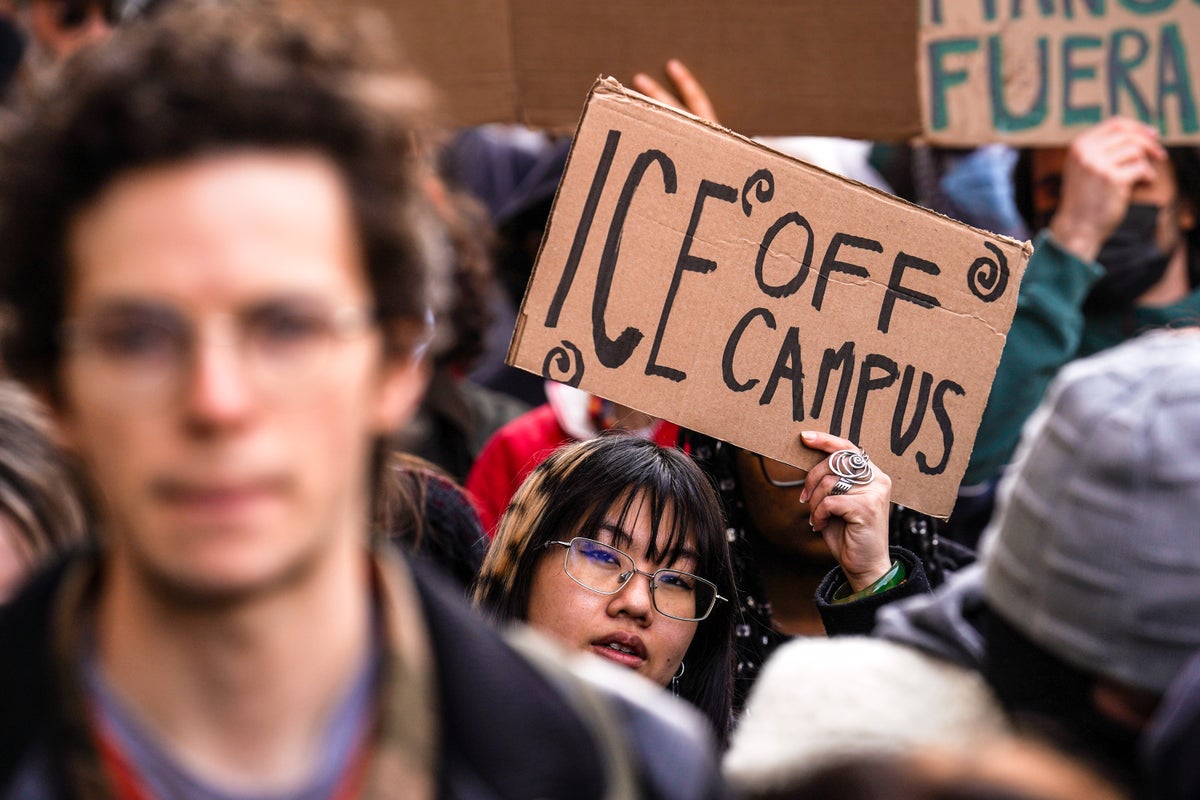
Imagine a knock at your door at 6:00 AM. You look through the peephole and see vests with "POLICE" in bold block letters. They tell you they're looking for a missing child. Most of us would open that door in a heartbeat. We want to help. We've been conditioned to trust that specific uniform in that specific crisis. But for a Columbia University student recently, that "police" search was a calculated lie. The "officers" were actually Immigration and Customs Enforcement (ICE) agents using a missing child as bait to gain entry without a warrant.
It's a gut-punch to the gut-level trust required for a functioning society. When federal agents use the nightmare of a missing kid to bypass the Fourth Amendment, they aren't just catching one person. They're breaking the system for everyone else.
The Missing Child Ruse and Why It Works
ICE agents have a long history of using "ruses" to conduct home arrests. It's actually part of their training. Because an administrative warrant—the kind ICE usually carries—doesn't give them the legal right to enter a private home, they need you to let them in voluntarily. To get that "consent," they lie.
In this recent case involving the Columbia student, agents didn't lead with "immigration." They led with a tragedy. They claimed to be local police investigating a missing child. By the time the target realizes the "police" are federal agents with a completely different agenda, they're already inside the "curtilage" of the home or the person has stepped outside into the street.
Honestly, it’s a brilliant tactic if your only goal is a high arrest count. It’s a disaster if your goal is public safety. Think about the long-term cost. If people start doubting whether the guy at the door looking for a kidnapped toddler is actually a cop, they won't open the door. The next time there’s a real missing child, the trail goes cold because the community is too terrified to talk.
The Legal Gray Area of Deception
You might think impersonating a police officer is a crime. For you or me, it absolutely is. For federal agents? It’s "operational tradecraft."
Court cases like Kidd v. Noem have challenged these practices, arguing that "consent" obtained through a lie isn't actually consent under the Fourth Amendment. If I tell you I'm a gas leak inspector to get into your house and then arrest you for something else, did you really "consistently" let me in? Most civil rights lawyers say no.
- Administrative vs. Judicial Warrants: Most ICE warrants are signed by an ICE official, not a judge. They don't allow for home entry.
- The Power of the Vests: Agents often wear gear that says "POLICE" in giant letters with "ICE" in tiny print on a shoulder patch. It’s meant to confuse.
- Plainclothes and Masks: The rise of masked, plainclothes agents makes it nearly impossible to tell the difference between a federal officer, a local cop, or a criminal.
This isn't just a "liberal city" problem. Law enforcement leaders across the country, including groups like the Police Executive Research Forum, have warned that this behavior kills the "community policing" model. When ICE "poses" as local police, the local police are the ones who lose their eyes and ears in the neighborhood.
How This Undermines Local Law Enforcement
Police departments spend decades trying to convince immigrant communities that they can report crimes without fear of deportation. They need people to report domestic violence. They need witnesses for homicides.
When ICE uses a "missing child" story as a tactical lie, they're effectively burning the bridge the local police spent years building. We’re already seeing the fallout. In some neighborhoods, 911 calls have plummeted. Not because crime went down, but because the fear of "fake" police went up.
There's also a terrifying physical risk. If you see a group of masked men in plainclothes trying to force their way into a neighbor's house claiming to be "police," and you don't believe them, what do you do? You might call the real police. Or, if you’re in a state with "stand your ground" laws, you might grab a weapon. We're heading toward a scenario where a tragedy occurs because no one can tell the "good guys" from the "bad guys."
The Surge of Civilian Impersonators
The confusion created by ICE’s tactics has opened a door for actual criminals. In 2025 and early 2026, there’s been a documented spike in "civilian" ICE impersonators. These are people with zero law enforcement authority who buy "POLICE" or "ICE" vests online to rob, kidnap, or extort people.
The logic is simple: if the real agents are masked and don't show ID, why would anyone question a criminal doing the same thing?
Legislators are finally trying to catch up. California’s "No Secret Police Act" (SB 627) was a direct response to this, attempting to ban the use of masks by federal agents during these operations. Similar bills are popping up in other states, but federal agents often argue they are exempt from state-level policing rules. It’s a jurisdictional mess that leaves the average citizen caught in the middle.
Protecting Yourself Without Escalating
If there’s a knock at your door and they say they're police looking for a child, you don't have to be a jerk, but you do have to be smart.
Don't open the door immediately. Ask them to slide their ID or a warrant under the door. A real judicial warrant will have a judge's signature and the specific address they are authorized to enter. If they say they are local police, you can tell them you're calling the local precinct to verify their identity before you open up. A legitimate officer might be annoyed, but they’ll understand the protocol.
If it’s ICE, and they don't have a warrant signed by a judge, you have the legal right to remain silent and keep the door closed. They’re hoping the "missing child" story will make you forget your rights. Don't let the adrenaline of a fake crisis dictate your legal safety.
The reality of 2026 is that the line between "federal enforcement" and "deceptive theater" has blurred. Until there’s a clear federal mandate requiring agents to be identifiable and honest about their agency, the burden of discernment falls on you. Stay calm, stay inside, and verify everything.
Check your local "Know Your Rights" cards and keep a copy near your front door. If an interaction happens, record it from a safe distance if you can. Documentation is often the only tool that works when the rules of the game are being rewritten on your doorstep.