The investigation into the murder of Arshiya Singh, a 21-year-old student of Indian origin, has moved from a standard homicide case into the murky waters of international symbolism and domestic extremism. What began as a tragic shooting in a Houston suburb has taken a sharp turn following FBI findings regarding the shooter’s attire and potential motivations. Law enforcement officials confirmed that the suspect, now identified as 23-year-old Connor Hilton, was wearing clothing prominently featuring the Iranian flag during the commission of the crime. This detail has transformed a local tragedy into a federal inquiry focused on radicalization and the strange intersection of disparate political ideologies.
A Random Target and a Calculated Attack
Arshiya Singh was a promising student at the University of Houston. She was doing what thousands of young adults do every evening—spending time with friends in a safe residential neighborhood. There was no known prior connection between her and Hilton. This lack of a personal link suggests that the violence was not a crime of passion or a private vendetta. Instead, investigators are looking at a pattern of behavior that suggests a young man looking for a target to validate a newfound, violent identity.
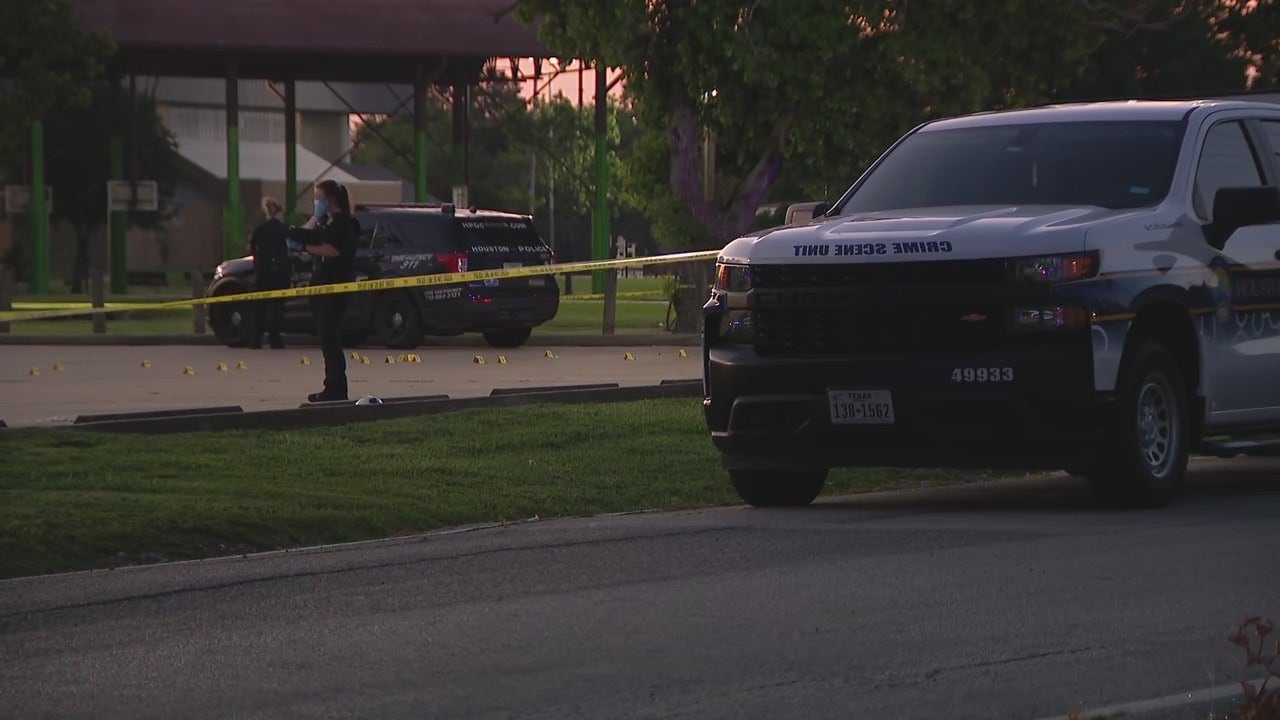
The shooting occurred with a precision that chilled the first responders who arrived on the scene. Witnesses described a suspect who appeared detached, almost clinical. When the FBI joined the local police department to process the evidence, the most striking piece of data wasn't the caliber of the weapon, but the jacket Hilton wore. It bore the official emblem of the Islamic Republic of Iran.
The Strange Symbolism of the Lone Wolf
It is rare for domestic shooters in Texas to align themselves with the Iranian state. Usually, radicalization in the United States follows a predictable path toward white supremacy or localized anti-government sentiment. However, the presence of the Iranian flag introduces a different, more complex variable. The FBI is currently scrubbing Hilton’s digital footprint to determine if this was a case of genuine political recruitment or a confused individual "shopping" for a radical aesthetic.
Terrorism analysts often see this phenomenon: an individual feels alienated and seeks out the most provocative symbols available to signal their break from society. By wearing the flag of a nation that has a historically adversarial relationship with the United States, Hilton was not just committing a crime; he was making a visual declaration of enmity.
Breaking Down the FBI Investigation
The federal involvement here is not incidental. While the local District Attorney handles the murder charges, the FBI’s Counterterrorism Division is investigating the "why." They are looking for "chatter." They are looking for encrypted messages. Most importantly, they are looking to see if Hilton was part of a broader network or if he was radicalized by propaganda available on the open web.
The Bureau’s interest suggests they see a potential for this to be classified as a hate crime or an act of domestic terrorism. To meet that legal threshold, they must prove that Hilton killed Singh to intimidate a specific population or to further a political agenda. The clothing choice is a significant piece of circumstantial evidence toward that end.
Evidence gathered from Hilton’s residence suggests a fascination with geopolitical conflict. Neighbors reported that he had become increasingly reclusive over the last six months, often seen wearing military-style gear. This slow descent into obsession is a hallmark of the modern "lone actor" profile.
The Victim and the Diaspora Response
Arshiya Singh’s death has sent shockwaves through the Indian-American community, particularly in Texas. For the Indian diaspora, this is not just another headline about American gun violence. It is a reminder of the vulnerability felt by international students and first-generation immigrants.
The Indian Consulate in Houston has been in constant communication with local authorities. They are demanding a thorough investigation into whether Singh was targeted specifically because of her ethnicity. If Hilton was indeed motivated by a skewed version of Iranian state ideology—which often positions itself against both Western and certain Eastern influences—the implications for communal safety are profound.
Understanding the Shift in Radical Profiles
For decades, the profile of a radicalized individual was static. Today, it is fluid. We are seeing a "salad bar" approach to extremism where individuals pick and choose grievances from different, often contradictory, ideologies. A person might embrace the aesthetics of a foreign theocracy while maintaining the habits of a Western suburbanite.
Hilton does not fit the traditional mold of a state-sponsored agent. He is a product of a digital environment where the most extreme symbols are easily accessible and divorced from their original context. The Iranian flag, in this instance, serves as a shorthand for "anti-establishment" or "adversary."
The Legal Road Ahead
Connor Hilton faces a litany of charges, including capital murder. In Texas, that carries the possibility of the death penalty. His defense team will likely point to mental health struggles, a common tactic when an act of violence seems otherwise inexplicable. However, the prosecution will point to the clothing and the premeditation involved in carrying a firearm to a public space as evidence of a clear, albeit warped, intent.
The presence of the FBI ensures that the digital forensic work will be exhaustive. Every "like," every "share," and every search query Hilton made in the months leading up to the shooting will be mapped out. If there is a link to foreign entities, this case moves from a Texas courtroom to the halls of the State Department.
Security Gaps in the Suburbs
This incident exposes a persistent flaw in how we monitor potential threats. Hilton was not on a "watch list." He had no significant criminal record that would have prevented him from obtaining the tools for this attack. The "soft targets" of the world—residential streets, university hangouts, suburban parks—remain incredibly difficult to protect from an individual who has decided to trade their future for a moment of televised infamy.
Police departments are now being forced to train officers not just in tactical response, but in the recognition of political iconography. If a suspect is wearing a specific flag or emblem, it changes the entire protocol of the arrest and the subsequent interrogation. It signals that the motive may be larger than the individual.
The International Friction Point
The timing of this revelation is particularly sensitive. Relations between the U.S. and Iran are perpetually strained, and the inclusion of Iranian symbolism in a violent American crime adds a layer of diplomatic complexity. While there is currently no evidence that the Iranian government had any direct hand in Hilton’s actions, the "branding" of the crime ensures that Tehran will be mentioned in every briefing.
This creates a feedback loop. Foreign adversaries often use domestic unrest in the U.S. as part of their own propaganda efforts. By using their symbols, Hilton has inadvertently (or intentionally) provided fodder for international narratives that paint America as a place of chaotic, unguided violence.
Hard Truths About Modern Radicalization
We have to stop looking for a logical thread in these attacks. There is no logic in a 23-year-old man from Texas donning the flag of a Middle Eastern nation to kill a student of Indian descent. It is a manifestation of a broken information ecosystem where young men find meaning in the most destructive places possible.
The investigation into Arshiya Singh’s death is no longer just about seeking justice for one family. It is an autopsy of a new kind of threat—one that is visual, digital, and completely unpredictable. The "why" may never satisfy the "how," but the jacket Hilton wore ensures that this case will be studied by federal analysts for years to come.
The FBI’s final report will likely detail a path of radicalization that happened entirely behind a glowing screen. It will show a series of missed signals and a slow-motion collapse of a young man’s grip on reality. For the Singh family, these details offer little comfort, but for a nation grappling with a rise in ideologically motivated violence, they are a necessary, if brutal, education.
Law enforcement agencies must now determine how many more individuals are currently sitting in suburban bedrooms, draped in the symbols of foreign conflicts, waiting for a reason to act. The Houston shooting wasn't an isolated burst of violence; it was a signal that the front lines of global tension have moved into our neighborhoods.
The federal government’s next step involves a deep dive into the specific online communities Hilton frequented. These forums act as incubators for the kind of hybrid radicalization seen in this case. Without a significant shift in how we monitor these digital fringe spaces, the Houston shooting will not be the last time an international flag is used as a shroud for a domestic atrocity.
Check the background of every "lone wolf" and you will find a trail of digital breadcrumbs that society chose to ignore until it was too late.
Would you like me to look into the specific digital platforms the FBI is currently monitoring for this type of hybrid radicalization?