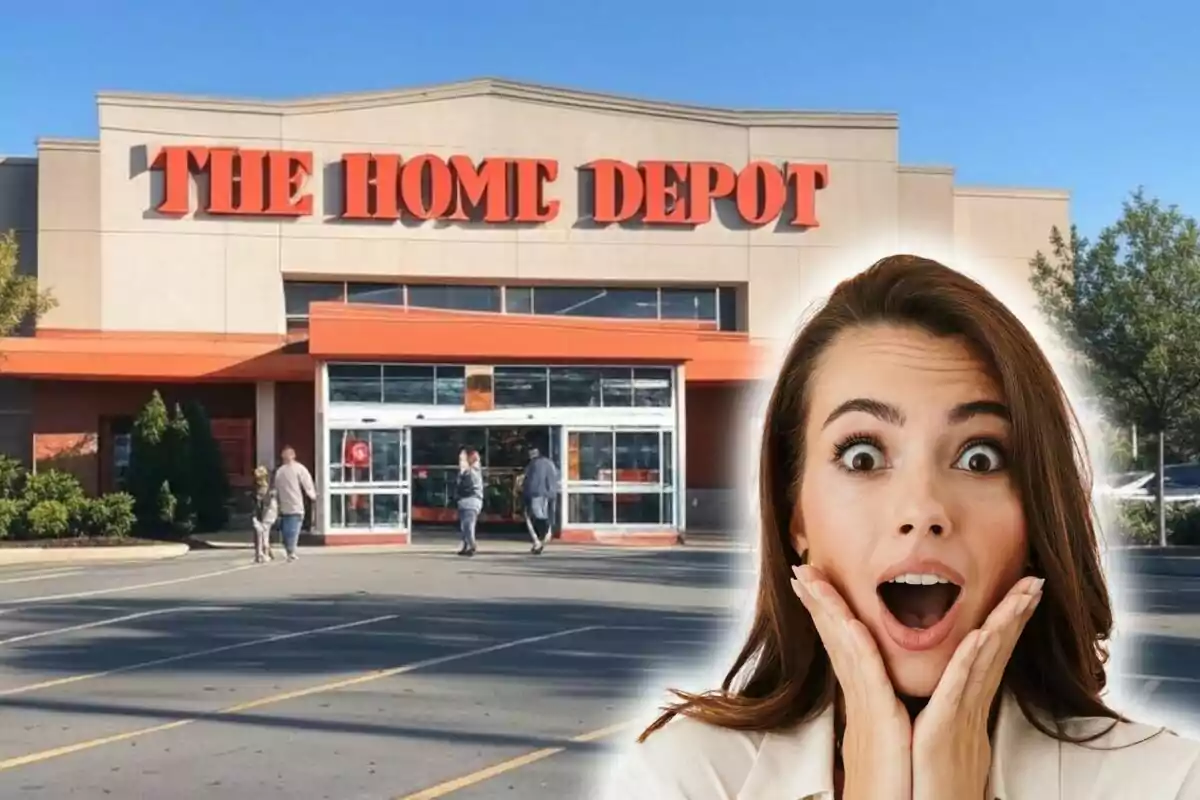
Wall Street is currently high on the fumes of Home Depot’s 2025 performance. The headlines are screaming about "resilience" and "unmatched scale." They point to a stellar fourth quarter and promise a 2026 that will break every record in the book. It’s a comfortable narrative. It’s also dangerously wrong.
The "best quarter of 2025" wasn't a sign of health; it was the final, desperate squeeze of a sponge that is bone dry.
If you’re looking at the top-line revenue and nodding along with the analyst consensus, you’re missing the structural rot underneath the orange apron. We are witnessing the peak of a cycle that has nowhere to go but down, driven by an unsustainable reliance on "pro" customers who are about to hit a brick wall of credit reality and a DIY segment that has finally learned how to say no.
The Pro-Heavy Trap
The bull case for Home Depot rests almost entirely on their capture of the professional contractor. The logic goes like this: as long as people need houses fixed, the Pros will buy from Home Depot.
I’ve spent fifteen years watching retail giants mistake "captured spend" for "brand loyalty." Home Depot didn’t win the Pro market because they have the best service; they won because they were the only ones with the inventory during the supply chain shocks of the early 2020s. That advantage has evaporated.
The 2025 numbers were propped up by a massive backlog of renovations and new builds that were financed when interest rates were still a joke. Those backlogs are gone.
Look at the underlying math of the Pro customer. The average small-to-mid-sized contractor is currently floating their business on a sea of high-interest credit. When the cost of servicing that debt rises faster than the margin on a kitchen remodel, the contractor stops buying $2,000 miter saws and starts scavenging.
The Cost of Complexity
Home Depot’s push into complex distribution centers for Pros—their "ecosystem" play—is a massive capital expenditure gamble. They are building a logistics network for a demand curve that is flattening.
- The Theory: Build it and the Pros will stay forever.
- The Reality: Logistics is a commodity.
Lowes is leaner. Local lumber yards are getting smarter. Amazon is lurking in the fasteners and small-tool aisle. By over-investing in specialized Pro fulfillment right as the housing market enters a multi-year stagnation phase, Home Depot is essentially building a 10-lane highway to a ghost town.
The DIY Death Spiral
While the Pro segment is the shiny object, the DIYer is the heartbeat of the store. And the heartbeat is skipping.
The 2025 growth wasn't driven by people wanting to paint their guest rooms; it was driven by inflation-adjusted ticket prices. People aren't buying more; they are just paying more for the same bag of mulch.
We’ve reached the "Substitution Threshold." This is the point where the average homeowner decides that the $80 gallon of premium paint isn't a necessity—it's a luxury they can defer.
The Maintenance Myth
Analysts love to claim that home improvement is "recession-proof" because homes always need maintenance. This is a fundamental misunderstanding of human psychology and household economics.
"Maintenance" is a sliding scale. A leaky faucet is a $15 fix. Replacing a deck is a $15,000 project.
Home Depot doesn't survive on the $15 washers. They survive on the $15,000 projects. In a cooling economy, the "need" for a new outdoor kitchen suddenly becomes a "want" that can wait until 2028. The 2025 surge was the last gasp of the "COVID-era" home equity withdrawal. People treated their houses like ATMs for five years. The ATM is now flashing "Insufficient Funds."
Why the "2026 Will Be Better" Narrative is Fraudulent
The competitor's claim that 2026 will be even better relies on a fantasy of falling rates and a rebound in home churn.
Let's dismantle that.
- The Golden Handcuffs: Anyone with a 3% mortgage is never moving. This kills the "turnover" market which drives 30% of Home Depot's big-ticket sales.
- Inventory Bloat: Home Depot is sitting on mountains of inventory that they bought at peak prices. To move it in a slow 2026, they will have to slash margins.
- The Tech Debt: Despite their "One Home Depot" strategy, the in-store experience remains a chaotic mess of understaffed aisles and broken SKU-tracking.
I have seen companies like Sears and Kmart ignore these exact signals. They focused on "improving quarters" while the foundational shift in consumer behavior was already five miles down the road. Home Depot isn't Sears—not yet—but they are currently repeating the mistake of believing their own press releases.
The Mathematics of Decline
Consider the impact of the Operating Margin.
$$\text{Operating Margin} = \frac{\text{Operating Income}}{\text{Net Sales}}$$
In a rising-cost environment where sales volume is stagnant, the only way to keep the Operating Margin high is to cut labor. Go into any Home Depot today. You can’t find an employee who knows the difference between a PEX pipe and a PVC joint. This erosion of expertise is a "hidden cost" that doesn't show up on a Q4 earnings call but shows up in the 2-year customer retention data.
You cannot run a technical retail business with a skeleton crew of revolving-door teenagers and expect to maintain a premium valuation.
The Real Question You Should Be Asking
Instead of asking "How much will Home Depot grow?", you should be asking: "How much of Home Depot's current valuation is based on a world that no longer exists?"
The world of cheap money, endless home equity, and zero competition in the Pro space is over. The "best quarter" of 2025 was the peak of the mountain. Everything from here is a descent.
If you want to understand the future of retail, stop looking at the spreadsheets and start looking at the empty carts in the lumber aisle. The pros are nervous. The homeowners are broke. The orange giant is standing on a foundation of sand.
Sell the hype. The reality is going to hurt.


