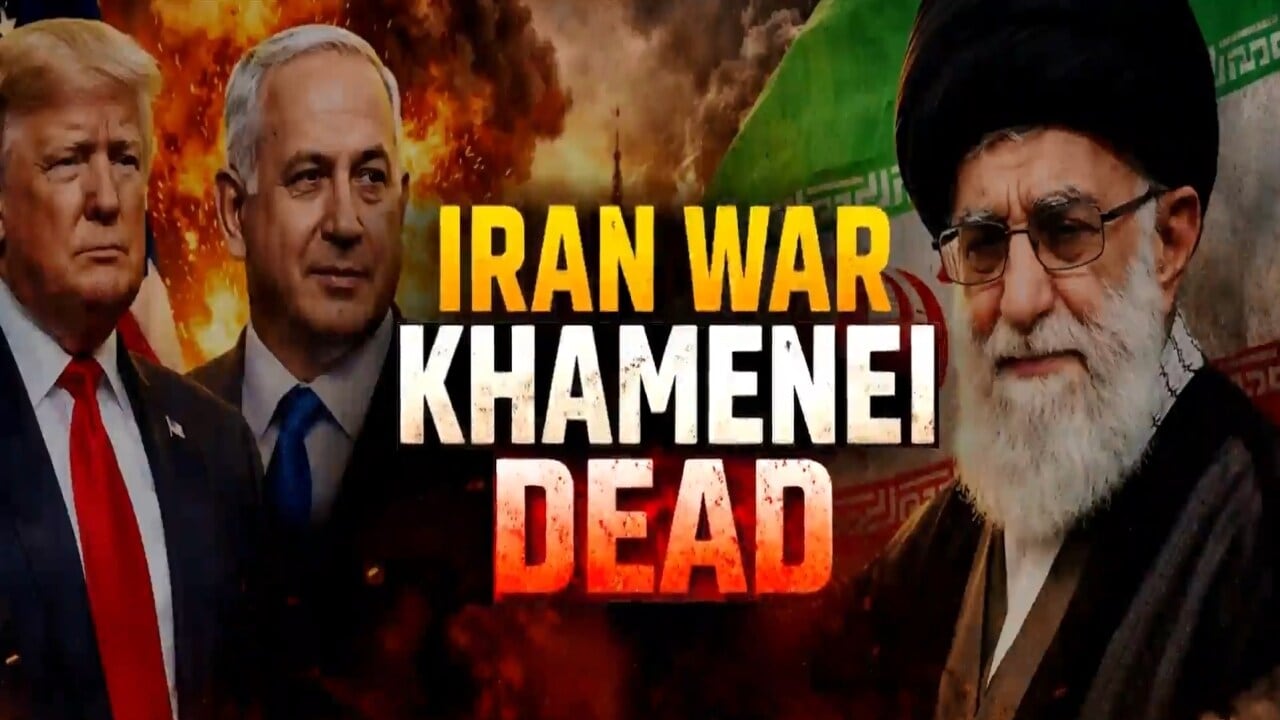
In the sterile, fluorescent-lit briefing rooms of Western intelligence agencies, the conversation usually circles around a single, morbid hypothetical. They look at the grainy satellite photos of the sprawling complex in North Tehran and ask the same question: what happens if the old man finally stops breathing?
The world treats the potential death of Iran’s Supreme Leader, Ayatollah Ali Khamenei, as a definitive end-point. There is a persistent, almost seductive logic to the idea that if you remove the architect, the building must collapse. It is a clean narrative. It fits neatly into a two-minute news segment. But power, especially the kind forged in the furnace of the 1979 Revolution, does not behave like a house of cards.
Power in Iran is more like a pressurized gas. If you puncture the container, it doesn’t just vanish. It expands. It rushes into every available crack in the floorboards.
Consider a mid-level officer in the Islamic Revolutionary Guard Corps (IRGC), parked in a nondescript office in Isfahan. For him, the Supreme Leader is not just a theological figurehead. He is the seal on a contract that guarantees the IRGC’s grip on the black market, the ports, and the missile silos. To this officer, the removal of the leader isn't an opportunity for a democratic spring. It is a signal to tighten the grip.
When a centralized authority is threatened or removed, the peripheral muscles of the state—the security apparatus and the hardline clerics—don't suddenly find a conscience. They find a survival instinct.
The Myth of the Vacuum
We often imagine a power vacuum as a quiet, empty space waiting for something better to fill it. In reality, a vacuum is a violent physical force. It sucks in the nearest, heaviest object. In Tehran, that object is the IRGC.
Decades of sanctions and shadow wars have turned the Iranian state into a dual-layered entity. On the surface, you have the "elected" government, a thin veneer of bureaucracy that argues over bread prices and water rights. Beneath that lies the deep state: a sprawling conglomerate of military might and industrial wealth that answers only to the Office of the Supreme Leader.
If the Leader is killed, the deep state doesn't go to a funeral. It goes to war.
Strategic experts often point out that Khamenei has spent thirty years acting as a master balancer. He is the arbiter between the pragmatists who want to keep the oil flowing and the ideologues who want to see the world burn. He is the friction that keeps the gears from spinning too fast. Remove that friction, and the machinery of the IRGC is free to accelerate toward its most radical impulses.
The Ghost is Harder to Kill
History is littered with the corpses of leaders whose deaths became more useful than their lives. Martyrdom is the primary currency of the Shiite faith. It is the narrative engine of the entire region.
Imagine the propaganda posters appearing on the walls of Mashhad within three hours of a targeted strike. The image of a fallen leader doesn't inspire a white flag. It creates a religious obligation for vengeance. For a population that is deeply divided—many of whom despise the regime’s morality police and economic mismanagement—an external assassination provides the one thing the regime currently lacks: a unifying grievance.
Nothing heals internal fractures like an external enemy.
The student in Tehran who was protesting for "Woman, Life, Freedom" six months ago might still hate the regime. But when a foreign missile hits the heart of her capital, the conversation changes. The state stops being a domestic oppressor and starts being a national defender. It’s a psychological pivot that hardliners have exploited for a century.
The Geometry of Survival
We should look at the numbers, but not the ones on a balance sheet. Look at the numbers of the Basij, the paramilitary volunteer force. There are millions of them. They are woven into the fabric of every village and every factory. They are the eyes and ears of a system that is designed to survive the loss of its head.
The Iranian constitution has a built-in "fail-safe" for succession. An 88-member body known as the Assembly of Experts is tasked with choosing the next leader. While we wait for white smoke to rise from that chamber, the IRGC will be the ones holding the matches.
The transition would likely move toward a more military-centric autocracy. The "clerical" nature of the state might remain as a costume, but the heart would be pure steel. A younger, more aggressive generation of IRGC commanders—men who didn't live through the revolution but were forged in the proxy wars of Syria and Iraq—would likely take the reins. These men do not share the cautious, long-game patience of the current Supreme Leader. They are more prone to miscalculation.
They are more comfortable with the brink.
The Cost of the Invisible Stake
What we miss in the analysis is the human element of the rank-and-file. The IRGC isn't just an army; it’s an employer. It controls the construction firms, the telecoms, the border crossings. For the millions of Iranians whose livelihoods depend on the IRGC's sprawling corporate empire, the "killing of the Supreme Leader" isn't a political event. It is a threat to their survival.
The invisible stake is the economy of the black market. If the Leader falls, the IRGC’s power to enforce those contracts, to protect those assets, is what drives their response. This is not a ideological fight alone; it is a fight for the ledger.
The result of an assassination is rarely a transition to something more peaceful. Instead, it is the hardening of a fist.
The West has a historical habit of thinking that decapitation leads to a corpse. In the Middle East, decapitation often leads to a hydra.
The shadow of the Supreme Leader is long. It stretches across the Levant, from the bunkers of Hezbollah to the deserts of Yemen. His death, by natural causes or by an act of war, will not retract that shadow. It will only make the darkness more unpredictable.
As the sun sets over the Alborz Mountains, casting a blood-red glow on the rooftops of Tehran, the question isn't whether the regime will break. The question is how much more of the world it will take with it if it does.
The crown of Tehran isn't made of gold. It’s made of the collective fear of a million men who have everything to lose. And fear, unlike a king, never truly dies.