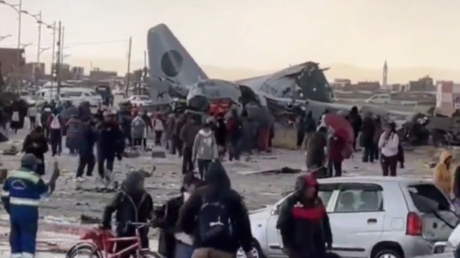
When a military-grade transport plane clips a power line and belly-flops onto a public highway, the immediate focus is usually on the wreckage, the casualties, and the traffic jam. But when that aircraft is packed with pallets of physical currency, the story shifts from a tragic accident to a window into a hidden financial plumbing system that the modern world forgot existed. On paper, we live in a world of digital ledgers and encrypted transfers. In reality, the gears of international security and regional stabilization are still lubricated by cold, hard cash.
The recent crash of a cargo plane laden with millions in banknotes highlights a vulnerability in how governments move wealth through high-risk zones. It wasn't a bank heist or a cinematic plot. It was a logistical failure of a standard operating procedure that happens every day. While the public sees a freak accident, industry insiders see the inevitable friction of "bulk currency movement," a necessity in regions where the banking grid is either non-existent or untrusted.
The Physicality of Power
Digital money is a luxury of the stable. In a conflict zone or a collapsing economy, a digital balance is just numbers on a screen that can be turned off by a hostile regime or a severed fiber-optic cable. This is why military transports are frequently used as armored couriers.
Moving money this way is a massive security headache. You aren't just dealing with the weight of the paper—which is significant—but the "signature" the mission leaves behind. A plane carrying $100 million in $20 bills weighs roughly five tons. That weight affects fuel consumption, climb rates, and maneuverability. When a pilot is fighting a mechanical failure or poor visibility, those extra tons of "paper" become a liability that dictates whether the plane clears the treeline or ends up scattered across a four-lane interstate.
The decision to move cash via military assets instead of private contractors like Brink’s or G4S usually comes down to sovereign immunity and firepower. A private contractor needs local permits, customs clearances, and has limited rules of engagement. A military flight operates under different legal protections, allowing it to bypass the bureaucratic red tape that often slows down the movement of capital.
Why the Highway Became a Vault
Airports are controlled environments. Highways are chaos. When an emergency landing happens on a public road, the primary goal is saving the crew, but the secondary goal—securing the cargo—immediately creates a standoff.
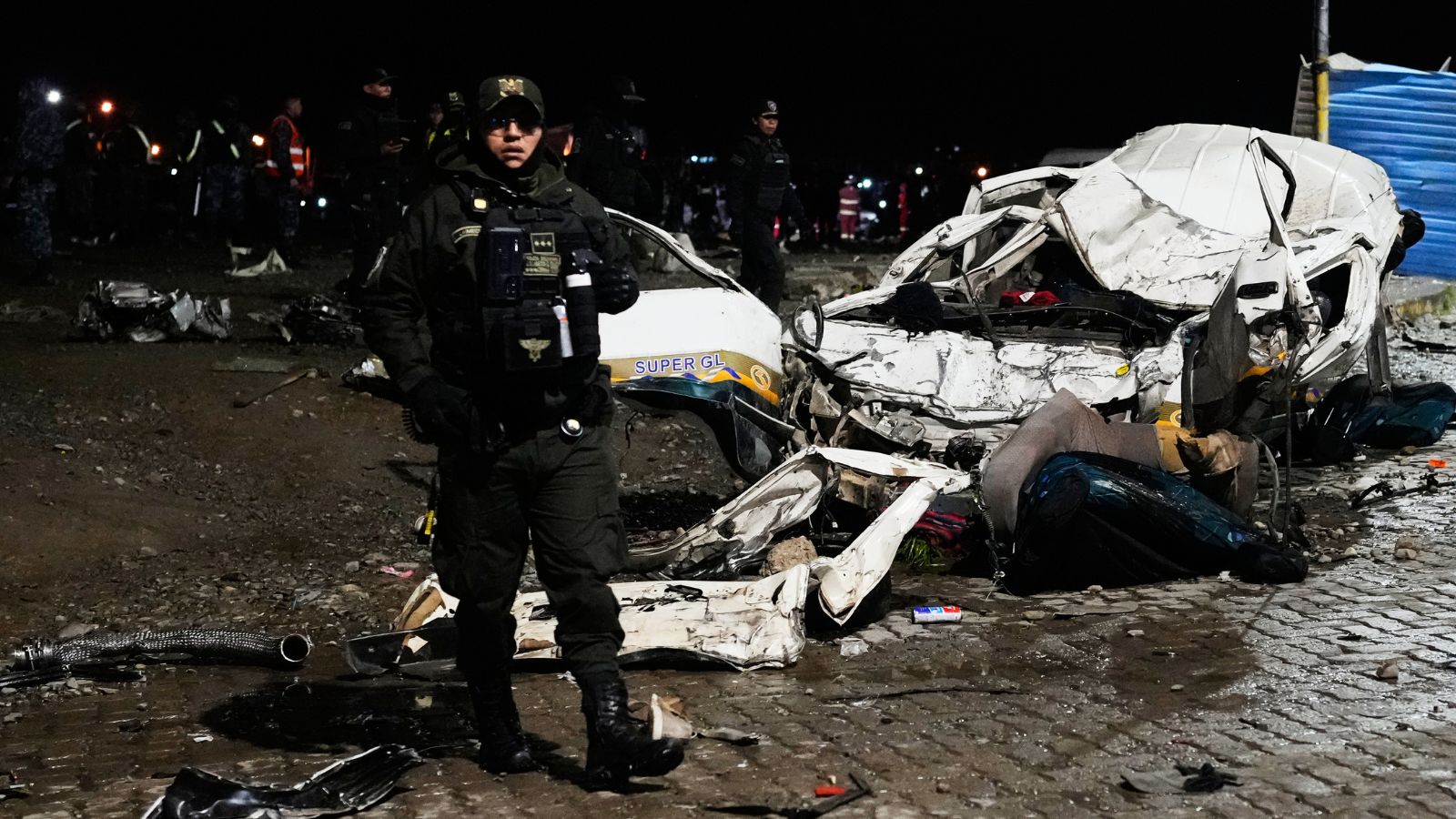
Eyewitness footage from the crash site showed a frantic scramble, not just by first responders, but by security details trying to establish a perimeter around a debris field littered with legal tender. This is the nightmare scenario for any treasury department. Once the "seal" of the aircraft is broken, the chain of custody is technically compromised.
- The Perimeter Problem: Unlike a standard crash, a cash-heavy wreck requires an immediate military or high-level police lockdown to prevent looting.
- The Accountability Gap: In the confusion of smoke and fire, tracking every bundle is impossible. History shows that in these incidents, a "shrinkage" of 5% to 10% is common and often written off as "destroyed in the fire."
- The Intelligence Risk: It’s not just about the money. The serial numbers, the destination, and the denominations tell a story about what the government is planning to do next in a specific region.
The Architecture of the Shadow Transfer
To understand why this plane was in the air, you have to look at the "Contractor Economy." In places where the US or its allies operate, they often pay local militias, intelligence assets, and construction crews in cash. This isn't necessarily because the transactions are illicit, though some certainly are. It’s because the local economy operates on a "cash-is-king" basis.
If you want a local warlord to secure a supply route, he doesn't want a wire transfer to a Swiss account that might be frozen by the next round of sanctions. He wants pallets of shrink-wrapped $100 bills delivered to a tarmac.
This creates a constant loop of high-value flights. The crash on the highway was a statistical certainty. When you fly enough hours with heavy, volatile cargo in aging airframes, the math eventually catches up to you. The aircraft in question was a veteran of the skies, a workhorse that had been pushed past its ideal service life—a common theme in military logistics where "mission-ready" is often a polite way of saying "barely functional."
The Failure of Redundancy
In high-stakes logistics, there is a concept called the "Single Point of Failure." In this case, the failure wasn't just the engine or the pilot’s visibility. It was the reliance on a single airframe to move a critical mass of assets without a "chase" element or a secondary landing plan that avoided civilian infrastructure.
Critics of these operations argue that we should be using "central bank digital currencies" or other trackable methods. But those critics don't understand the ground reality. You cannot buy loyalty in a desert with a QR code. The physical presence of the money is the message. It is a tangible proof of commitment and power.
The Cleanup and the Cover-up
Within hours of the crash, the narrative began to shift. Official statements focused on the "heroic efforts" of the pilots to avoid populated areas. While likely true, this framing also serves to distract from the question of why a plane-load of cash was flying over a civilian highway in the first place.
Recovery teams at the site weren't just looking for flight recorders. They were using industrial vacuums and specialized teams to reclaim every scrap of paper. Money that is partially burned can still be exchanged at a central bank, provided a certain percentage of the note is intact. This makes the crash site a literal gold mine for anyone who can slip past the cordons.
The "lost" money from these types of incidents rarely stays lost. It often ends up in local black markets, causing localized inflation or funding the very groups the original mission was designed to bypass. It is the ultimate irony of military-financial logistics: the more you try to control the flow of wealth, the more likely you are to leak it into the wrong hands when things go wrong.
A System in Decay
This crash is a symptom of a broader decay in the global logistics chain. We are relying on 40-year-old airframes to perform 21-century missions. The demand for physical currency movement is increasing, not decreasing, as global instability rises and people lose faith in digital banking systems during crises.
We are seeing a return to "hard" assets. Whether it is gold, cash, or physical commodities, the world is moving away from the "frictionless" digital dream and back toward the heavy, dangerous reality of physical transport.
The highway crash was a mess of metal and money, but more importantly, it was a warning. As long as we rely on physical tokens of power to manage global affairs, we will continue to see these "unthinkable" accidents. The next one might not happen on a remote highway. It might happen in a city center, and the cargo might be something far more volatile than paper.
Investigate the maintenance logs of the specific tail number involved. You will likely find a history of "deferred maintenance" and "operational waivers" that allowed a compromised plane to stay in the air because the mission was deemed too important to delay. That is where the real story lies—not in the fire on the asphalt, but in the signatures on the maintenance forms weeks before the engines failed.