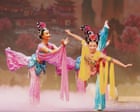
The Sydney Lyric Theatre is currently standing at the center of a geopolitical firestorm that has little to do with ticket sales and everything to do with international intimidation. When the venue’s management received letters demanding the immediate cancellation of the Chinese dance troupe Shen Yun, the pressure didn’t come from local activists or disgruntled patrons. It came from the Chinese Consulate. The threats were described as "outrageous" by theater leadership, but for those who follow the intersection of arts and global power, this is a familiar script. The objective is simple: to use corporate pressure to erase a specific cultural narrative from Western stages.
This isn't a mere spat over a performance schedule. It is a calculated test of Australian sovereignty and the resilience of its cultural institutions. By refusing to buckle, the Sydney Lyric has drawn a line in the sand, signaling that the right to perform—and the right of an audience to watch—is not up for negotiation with foreign entities.
The Mechanics of Transnational Repression
To understand why a dance troupe causes such a massive diplomatic tremor, one must look at what Shen Yun represents to the Chinese Communist Party (CCP). The group is closely affiliated with the Falun Gong spiritual movement, which has been banned in China since 1999. The performances often include vignettes depicting the persecution of practitioners within the mainland. To Beijing, these performances are not art; they are "anti-China" propaganda.
The strategy used against the Sydney Lyric follows a predictable pattern of transnational repression. First comes the "soft" approach: letters to the venue and local government officials suggesting that hosting the group will damage "bilateral relations." If that fails, the tone shifts. The threats become more explicit, often hinting at economic repercussions or vague safety concerns. In some international cases, theater managers have reported their families in China being harassed or their websites being hit with coordinated cyberattacks.
Sydney is currently the frontline. The theater’s refusal to blink is a rare moment of institutional backbone in an industry that often prioritizes "market access" over ideological consistency.
The Economic Mirage of Artistic Compliance
For years, the entertainment industry operated under a quiet assumption. If you wanted to do business in the massive Chinese market, you had to follow the "Three Ts" rule: no talk of Tibet, Taiwan, or Tiananmen. Shen Yun adds a fourth "T" to that list. The fear is that by hosting a group that criticizes the CCP, a theater or a city might find itself blacklisted.
However, the economic threat is often more of a ghost story than a reality for individual venues. While a major film studio might lose hundreds of millions if a movie is blocked in China, a local theater like the Sydney Lyric relies on its domestic audience. The "outrageous" threats are designed to create a sense of generalized fear, hoping that the mere headache of a diplomatic row will be enough to make a manager say, "It’s just not worth the trouble."
When a venue gives in, it sets a dangerous precedent. It tells a foreign power that the cultural life of an Australian city can be edited from an office in Canberra or Beijing. The Sydney Lyric’s leadership recognized that the cost of compliance—losing their reputation for independence—was far higher than the cost of defiance.
A History of Quiet Surrender
The Sydney incident is notable because it is public. Most of the time, this kind of pressure happens in shadows and whispers. In 2014, a theater in Spain canceled a Shen Yun performance at the last minute, citing "technical difficulties." Later, recordings surfaced of Chinese officials claiming credit for the cancellation. Similar stories have emerged from South Korea, Thailand, and even parts of the United States.
By bringing these threats into the light, the Sydney management has stripped the CCP of its most effective tool: the "technicality." When a theater claims a show was canceled due to a "scheduling conflict" or "renovations," it allows the censors to win without leaving fingerprints. By calling the threats "outrageous" and refusing to move, the Sydney Lyric has forced the issue into the realm of public debate, where the bullying tactics are far less effective.
The Audience as a Political Act
Attending a show like Shen Yun in Sydney has now become an inadvertent political statement. People who might have simply wanted to see traditional acrobatics and colorful costumes are now participating in a defense of free expression. This is the ultimate irony of the CCP’s pressure campaign: by trying to suppress the group, they have significantly raised its profile and imbued the performance with a sense of urgency.
The theater’s defiance also places the Australian government in a delicate position. If a foreign consulate is actively threatening a local business over its programming, it ceases to be a commercial matter and becomes a diplomatic one. It raises questions about how much influence a foreign government should be allowed to exert on the streets of Sydney.
Beyond the Red Silk
The core of the performance—the "5,000 years of civilization" that Shen Yun claims to represent—is a direct challenge to the CCP's own cultural narrative. The party spent decades, particularly during the Cultural Revolution, trying to dismantle the very traditions that Shen Yun now exports to the West. The conflict is a battle for the soul of Chinese identity. Is it defined by the party, or is it something older, spiritual, and independent?
This is why the stakes are so high for the Chinese Consulate. Every ticket sold in Sydney is a vote for a version of China that doesn't need a Politburo to exist.
The Fragility of Cultural Autonomy
We often take for granted that the arts are a safe space for expression. We assume that if a show is legal and the check clears, the curtain goes up. The Sydney standoff proves that cultural autonomy is actually quite fragile. It requires constant maintenance and, occasionally, a willingness to tell a powerful entity to go away.
The theater industry is watching this play out with bated breath. If the Sydney Lyric successfully hosts the run without incident, it provides a blueprint for other venues worldwide. It shows that the "outrageous" threats are often empty, and that the public will support institutions that stand their ground.
The real danger isn't the threat itself. It’s the "pre-emptive cringe"—the tendency of organizations to censor themselves before a threat is even made, just to avoid potential friction. The Sydney Lyric has chosen to stand tall, proving that some things, like the integrity of a stage, are not for sale.
Check the local performance schedule and see the reality for yourself.