Lebanon’s fragile political balance just hit another wall. The Lebanese government recently attempted to assert its sovereignty by restricting unauthorized military activities, a move that directly targets the operational freedom of non-state actors. Hezbollah didn't take it well. The group’s leadership quickly condemned the decision, labeling it a betrayal of the "national resistance" logic that has defined Lebanese politics for decades. This isn't just a spat over paperwork. It’s a fundamental clash between a state trying to act like a state and a powerful militia that's grown used to running its own foreign policy.
The government’s directive aims to centralize control over weapons and tactical decisions within the Lebanese Armed Forces (LAF). In theory, that's what any normal country does. In practice, Lebanon isn't any normal country. Hezbollah argues that the state isn't strong enough to defend its borders alone and that its military wing is a necessary deterrent against external threats. By trying to ban their activities, the government isn't just following international pressure—it's poking a hornet's nest that could destabilize the entire Mediterranean coast.
Why Hezbollah Refuses to Stand Down
The logic behind Hezbollah's resistance to these government mandates is rooted in its historical identity. Since the 1980s, they’ve positioned themselves as the only shield against foreign incursions. When the Lebanese government decides to "ban military activities" not sanctioned by the official army, it essentially tells Hezbollah to dismantle its core reason for existing.
Hezbollah’s leadership issued a sharp rebuke, claiming the move serves foreign interests—specifically those of Western powers and regional rivals. They see this as a "capitulation" rather than a sovereign policy shift. To them, the government is trying to trade Lebanese security for diplomatic points with the international community. It’s a classic power struggle. On one side, you have the Prime Minister and the cabinet trying to prove to the UN and donor nations that they can govern. On the other, you have a group that holds the actual physical power on the ground and doesn't feel like sharing.
The Breakdown of Central Authority
What's actually happening in Beirut? It’s a slow-motion collision. The government’s decision was largely driven by a need to comply with international resolutions, like UN Security Council Resolution 1701, which calls for the disarming of all non-state groups in Lebanon. But passing a law is easy; enforcing it against the most heavily armed non-state actor in the world is a different story.
- The Lebanese Armed Forces (LAF): Caught in the middle. They receive training and equipment from the US and France but can't afford a civil war with Hezbollah.
- The Political Class: Divided as always. Some see the ban as a necessary step toward economic recovery and international trust. Others fear it will spark internal conflict.
- The Public: Exhausted. Most Lebanese citizens are more worried about the collapse of the Lira and the lack of electricity than they are about high-level military decrees.
Hezbollah’s condemnation wasn't just a press release. It was a warning. By publicly slamming the decision, they’re signaling to the government that any attempt to move against their infrastructure—be it rocket sites or communication networks—will be met with fierce resistance. They’ve done it before. Back in 2008, when the government tried to shut down Hezbollah's private telecommunications network, the group took to the streets of Beirut and paralyzed the city in days. Nobody in the current cabinet wants a repeat of that.
International Pressure versus Local Reality
The West keeps pushing Lebanon to "regain its sovereignty." It’s a nice phrase for a policy paper, but it ignores the reality on the ground. The US and its allies have conditioned certain types of financial aid on the government’s ability to control its territory. This creates a trap for Lebanese officials. If they don't act, the money stops. If they do act, they risk a domestic explosion.
Hezbollah knows this. They use the threat of internal instability as a shield against these international pressures. By condemning the ban, they’re telling the world that the Lebanese government doesn't have the authority it claims to have. It’s a public humiliation of the state. It forces the Prime Minister to choose between looking weak to his people or looking incompetent to his international backers.
The Economic Fallout of Military Friction
You can't separate these military bans from the economic disaster in Lebanon. Foreign investors won't touch a country where the government and its largest political party are at odds over who gets to fire missiles. Every time a new decree is issued and then ignored, the "sovereignty gap" widens. This gap is where investment goes to die.
When Hezbollah condemns these decisions, it sends a ripple through the financial markets. It tells the world that the rule of law is still secondary to the rule of the gun. The government wants to show that it can provide a stable environment for rebuilding the port of Beirut and revitalizing the banking sector. But as long as Hezbollah operates a state-within-a-state, those goals remain fantasies.
What This Means for Border Stability
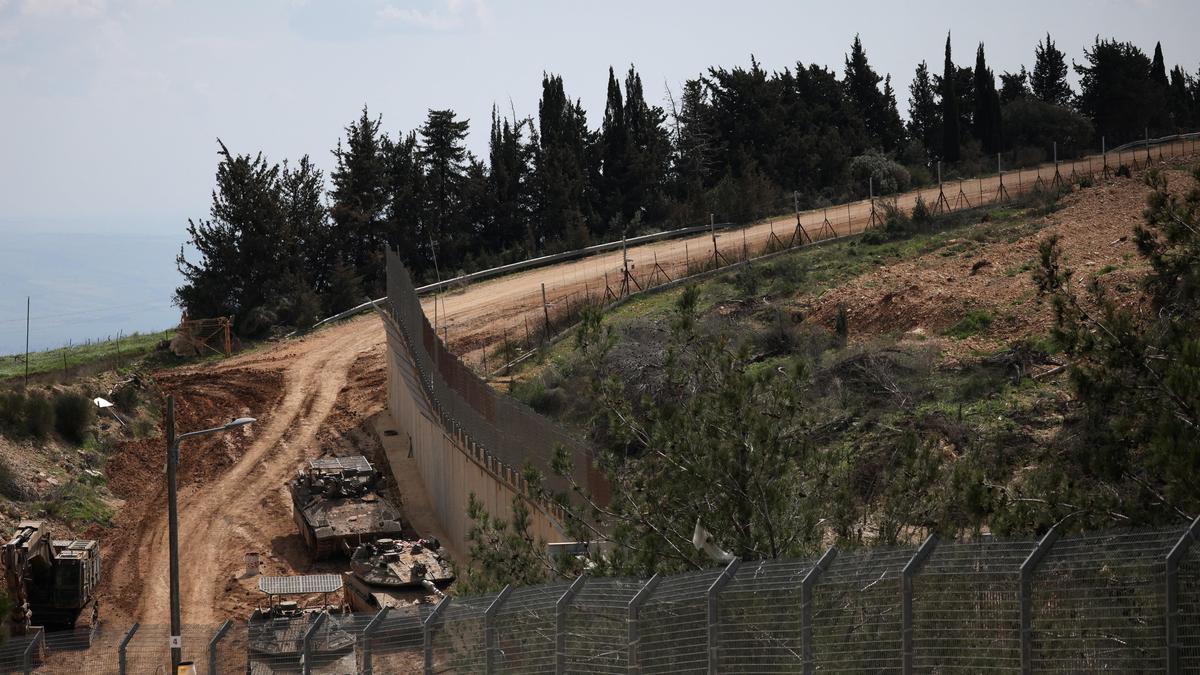
The ban specifically targeted military activities in the south, the traditional flashpoint. This area is supposed to be under the exclusive control of the LAF and UNIFIL (UN peacekeepers). Hezbollah’s presence there is the worst-kept secret in the Middle East. By condemning the government’s ban, they’re effectively saying they will continue to operate in the border regions regardless of what the cabinet in Beirut says.
This creates a massive risk of miscalculation. If the government tries to enforce the ban, even in a small way, it could lead to skirmishes between the army and the militia. If they don't enforce it, they prove the decree was a bluff. Either way, the "ban" has mostly served to highlight how little control the Lebanese state actually has over its own security policy.
The Myth of the "Unified State"
Lebanon’s current situation proves that "sovereignty" isn't something you can just declare. You have to be able to project it. The government’s attempt to ban military activities was a desperate play for legitimacy that mostly backfired. Instead of showing strength, it gave Hezbollah a platform to remind everyone who really holds the cards.
The group’s rhetoric emphasizes that they are "protecting" Lebanon from the state’s own weaknesses. It’s a circular argument that’s hard to break. The state is weak because Hezbollah has usurped its functions, and Hezbollah keeps its functions because the state is weak. This standoff isn't going anywhere soon.
Moving Forward in a Fragmented Country
If you're watching Lebanon, don't expect this decree to change anything overnight. It’s a symbolic move that lacks an enforcement mechanism. The government will likely continue to issue statements that please the international community, while quietly avoiding any direct confrontation with Hezbollah’s military wing. It’s a survival strategy.
For anyone tracking regional stability, the focus should be on the LAF. Watch how they interact with Hezbollah on the ground. If the army starts actually blocking roads or seizing shipments, then the government’s ban has teeth. Until then, it’s just more political theater in a country that’s already seen too many acts.
Keep a close eye on the upcoming parliamentary discussions regarding the defense strategy. That’s where the real negotiation—or the real breakdown—will happen. If the government can't find a way to integrate Hezbollah's role into a state-led framework, these bans will remain nothing more than ink on paper while the real power stays in the hands of those with the hardware.