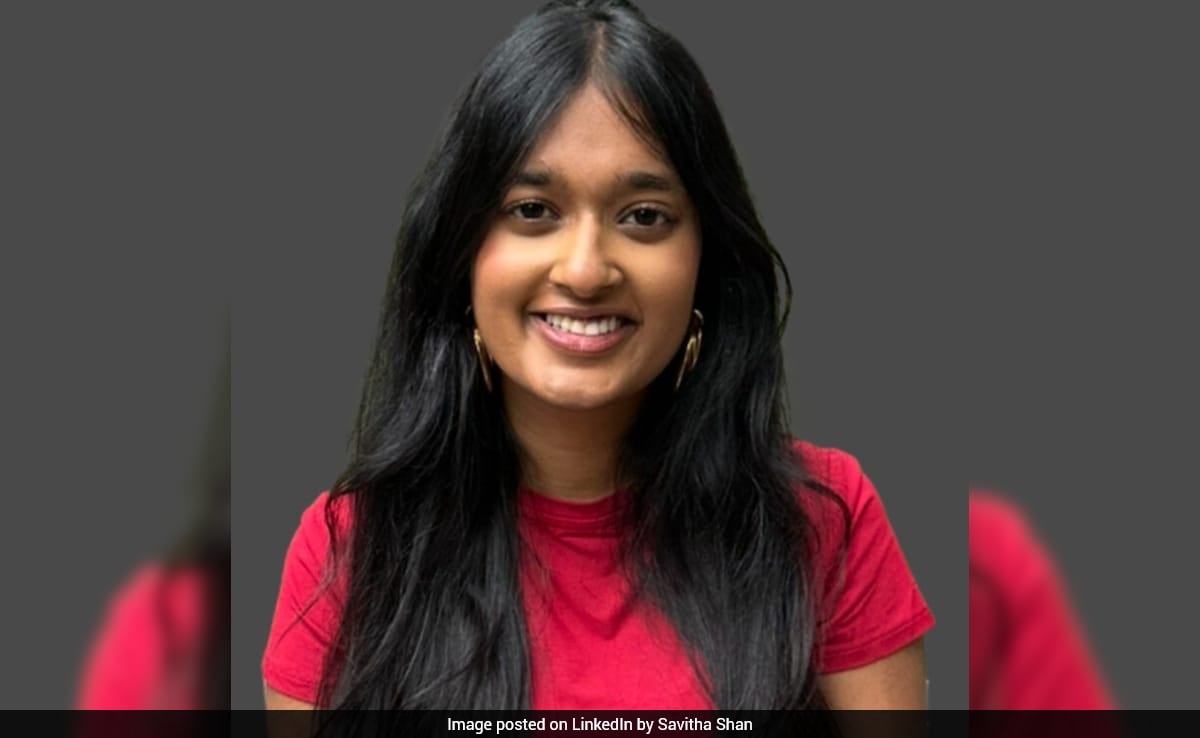
A lecture hall feels like one of the safest places on earth until it isn't. When news broke that Savitha Shan, a bright 20-year-old Indian-origin student, lost her life in a senseless shooting in Texas, the shockwaves didn't just hit her family. They ripped through the University of Texas at Austin and the global student community. We aren't just talking about another statistic in a headline. We're talking about a "superstar" student who had her entire life mapped out before it was violently erased.
Savitha wasn't just attending classes to get a degree. She was a force of nature in the Cockrell School of Engineering. Her professors describe her as someone who didn't just understand complex variables but brought a specific kind of energy to the room that made everyone else want to work harder. It’s the kind of loss that leaves a physical void in a classroom.
A Life Defined by Ambition and Brilliance
If you look at the trajectory Savitha was on, it’s clear she was destined for something massive. Being an Indian-origin student in a high-stakes engineering program often comes with immense pressure, but those who knew her say she carried it with a smile that felt genuine, not forced. She was a top-tier performer, the kind of student who mentors others without being asked.
Her professor’s tribute wasn't the standard corporate PR fluff you see after a tragedy. It was raw. He called her a "superstar," a term not used lightly in academia. It refers to that rare mix of intellectual firepower and the emotional intelligence to lead a team. She was deeply involved in campus life, contributing to research that actually mattered.
The tragedy occurred in a residential area of Austin, a place where students should feel secure walking home from a late-night study session. Texas has seen its fair share of gun violence, but when it hits a campus community specifically targeting the "best and brightest," the conversation shifts from policy to personhood. Who was she? She was a daughter, a researcher, and a future innovator whose contributions to the field of engineering were cut short before she could even graduate.
Why the Indian Diaspora is Mourning Together
This hits home for the Indian community in a very specific way. Parents send their children across oceans or across state lines with the belief that education is a sanctuary. When a student like Savitha is killed, that belief breaks. The Indian-origin community in Texas is tight-knit, and the outpouring of grief shows how much she represented the "American Dream" in its purest form.
She wasn't just a face in the crowd. Savitha was a symbol of what happens when talent meets opportunity. Her death isn't just a local news story; it’s a global reminder of the precariousness of life for international and minority students in urban environments. We see this pattern too often. A bright light is extinguished, a vigil is held, and the world moves on. But the people in Savitha's department aren't moving on that easily.
The Reality of Campus Area Violence
We have to talk about the location. Austin is often touted as a tech mecca and a safe haven for students, yet the surrounding areas of major universities are increasingly becoming hotspots for random acts of violence. Savitha’s death happened off-campus but in an area heavily populated by students. This creates a terrifying gray zone where university police and city police have to coordinate, often leaving gaps in actual protection.
The shooting wasn't just a "Texas problem." It’s a systemic failure to protect young people in pursuit of an education. When a professor has to write a eulogy for a student who should have been sitting in the front row of his next lecture, the system has failed.
- Security presence in student-heavy residential zones needs to be proactive, not just reactive.
- Mental health support for the surviving students who witnessed or were affected by this is non-negotiable.
- Transparency from local law enforcement regarding the motives and the suspects is the only way to provide any semblance of closure.
Honouring a Legacy Beyond the Tragedy
How do you honor someone like Savitha Shan? You don't do it by just sharing a hashtag. You do it by acknowledging the sheer amount of work she put into her twenty years of life. She was a scholar. She was a pioneer for women in STEM. She was a daughter whose parents are now facing the unimaginable.
The University of Texas at Austin has a responsibility to ensure her name isn't forgotten. Whether that’s through a scholarship in her name or improved safety measures that actually work, something has to change. The "superstar" label her professor gave her shouldn't be a footnote. It should be the headline.
If you're a student or a parent, the best thing you can do right now is demand better communication from campus authorities. Check in on your friends. Don't walk alone at night, even in areas that feel "safe." The reality is that the world is less bright today without Savitha’s contributions.
Check your local campus security apps and ensure you have emergency contacts set up on your phone. Push your university administration for better lighting and increased patrols in off-campus housing areas. Real change only happens when the grief turns into a demand for better standards. Savitha deserved to finish her degree. She deserved to change the world. Since she can't, the responsibility falls on us to fix the environment that took her away.