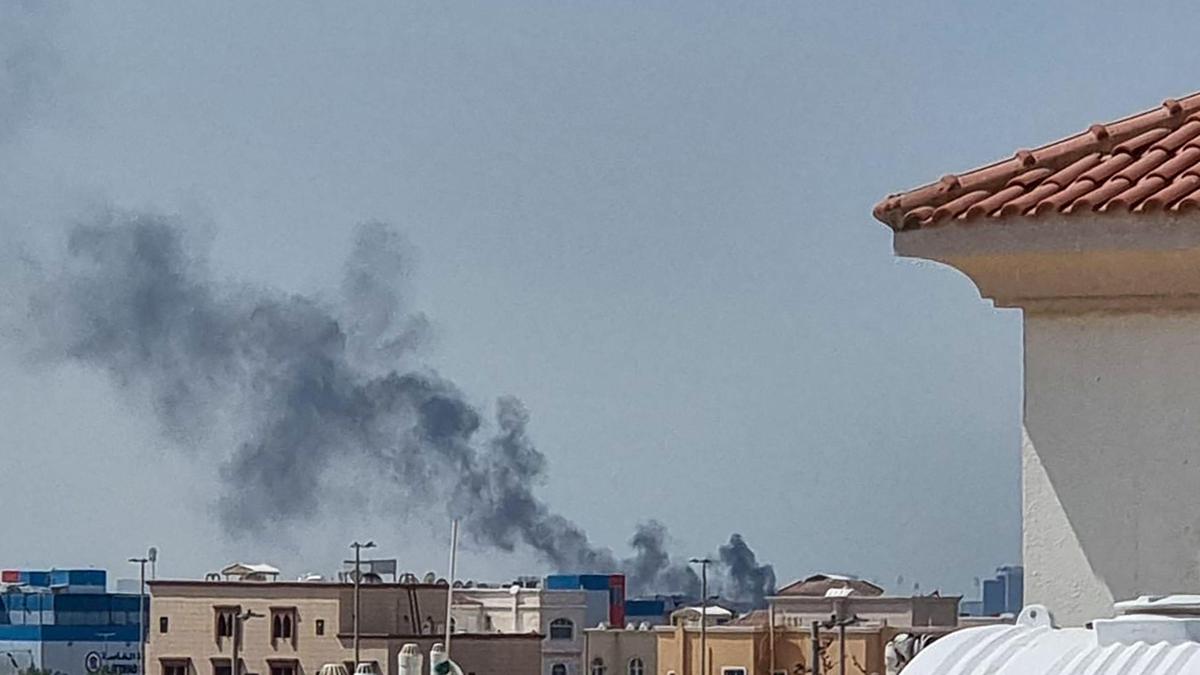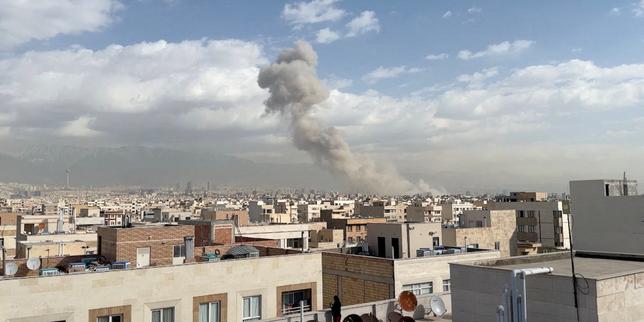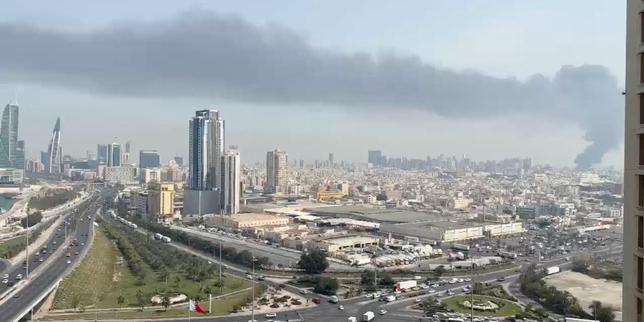
The explosions rocking the outskirts of Al Dhafra and Al Udeid aren't just military strikes. They’re the sound of a decade-long strategy hitting a brick wall. For years, the wealthy monarchies of the Persian Gulf played a sophisticated double game: hosting the very American bases that threaten Iran while simultaneously sending "brotherly" diplomatic signals to Tehran. That era of having it both ways is officially over.
As of March 2026, the Gulf is no longer a spectator. It's a target. Following the massive US and Israeli strikes against Iranian infrastructure, Tehran has stopped pretending that "host" nations are neutral. By hitting American facilities in Qatar, Bahrain, and the UAE, Iran is making a brutal point. If you house the spear, you're part of the wound. You might also find this connected article interesting: Strategic Asymmetry and the Kinetic Deconstruction of Iranian Integrated Air Defense.
The Myth of the American Security Umbrella
We've been told for decades that the US presence in the Gulf is a stabilizing force. Tell that to the residents of Manama or Doha waking up to intercepted missile debris. The recent "12-Day War" in June 2025 and the current March 2026 escalation have exposed a terrifying reality: American bases, once seen as shields, have transformed into magnets for Iranian retaliation.
Gulf leaders aren't stupid. They see that despite the billions spent on Patriot batteries and THAAD systems, the sheer volume of Iranian "smart" drones and low-cost missiles can overwhelm even the best defenses. It’s a math problem. When a $2 million interceptor is used to down a $20,000 drone, the defender loses the war of attrition before it even starts. As extensively documented in detailed reports by BBC News, the implications are worth noting.
Why Neutrality is the Only Rational Choice
You might wonder why Saudi Arabia or the UAE don't just go all-in with the US to crush the Iranian threat once and for all. The answer is simple: they have too much to lose. Unlike the US, which is thousands of miles away, Riyadh and Abu Dhabi share a neighborhood with a wounded, desperate, and heavily armed neighbor.
- Economic Diversification at Risk: Programs like Saudi Vision 2030 require massive foreign investment. Investors don't put money into countries where missiles are landing near airports.
- Infrastructure Vulnerability: A single lucky strike on a desalination plant in the UAE could leave millions without water in days. The "Aramco" attack of 2019 was just a trailer for what a full-scale Iranian "forward deterrence" strike looks like.
- Energy Chokepoints: Roughly 25% of global seaborne oil passes through the Strait of Hormuz. Iran has already begun "Smart Control" exercises there, effectively holding the global economy hostage.
The Failure of the Abraham Alliance
There was a lot of talk about an "Abraham Alliance"—a regional NATO-style pact between Israel and the Gulf states. On paper, it makes sense. In reality, it’s been a disaster for Gulf optics. The Israeli strikes on Doha in late 2025 killed the narrative that this alliance was purely defensive.
Instead of drawing closer to Israel, we're seeing a surprising "alliance of necessity" within the Gulf itself. Despite their internal rivalries, Saudi Arabia and the UAE are finding common ground in one area: refusing to let the US use their airspace for offensive strikes. They’ve told Washington "no" more times in the last six months than in the previous sixty years.
Diplomacy as a Weapon of Survival
Don't mistake this for a love affair with Tehran. The Gulf states don't trust the Islamic Republic. They're using diplomacy as a tool of self-preservation. When Crown Prince Mohammed bin Salman calls the Iranian president to offer support after an Israeli strike, it’s not about friendship. It’s about signaling to Tehran: "Don't hit us; we aren't the ones pulling the trigger."
Oman and Qatar have doubled down on their roles as the region's switchboards. They're the ones passing messages in the middle of the night to prevent a miscalculation from turning into a regional firestorm. They know that if the US and Iran go to total war, the Gulf states will be the "scapegoats" caught in the crossfire.
The Immediate Next Steps for Regional Stability
If you're looking at how this ends, don't expect a grand peace treaty. Expect a messy, tense stalemate. To survive 2026, Gulf capitals are moving toward:
- Hard Neutrality: Publicly condemning any use of their territory for offensive operations to avoid being "legitimate targets" under Iranian doctrine.
- Autonomous Defense: Investing in their own domestic drone and missile defense industries to reduce reliance on the slow-moving US "security umbrella."
- Direct Tehran Channels: Bypassing Washington entirely to negotiate local de-escalation agreements that keep oil flowing even when the rhetoric heats up.
The days of the Gulf being a passive American aircraft carrier are gone. These nations are now acting like the middle powers they've become—prioritizing their own skyscrapers and oil terminals over Washington’s strategic ambitions. It's a cold, calculated shift that marks the true end of the post-Cold War era in the Middle East.