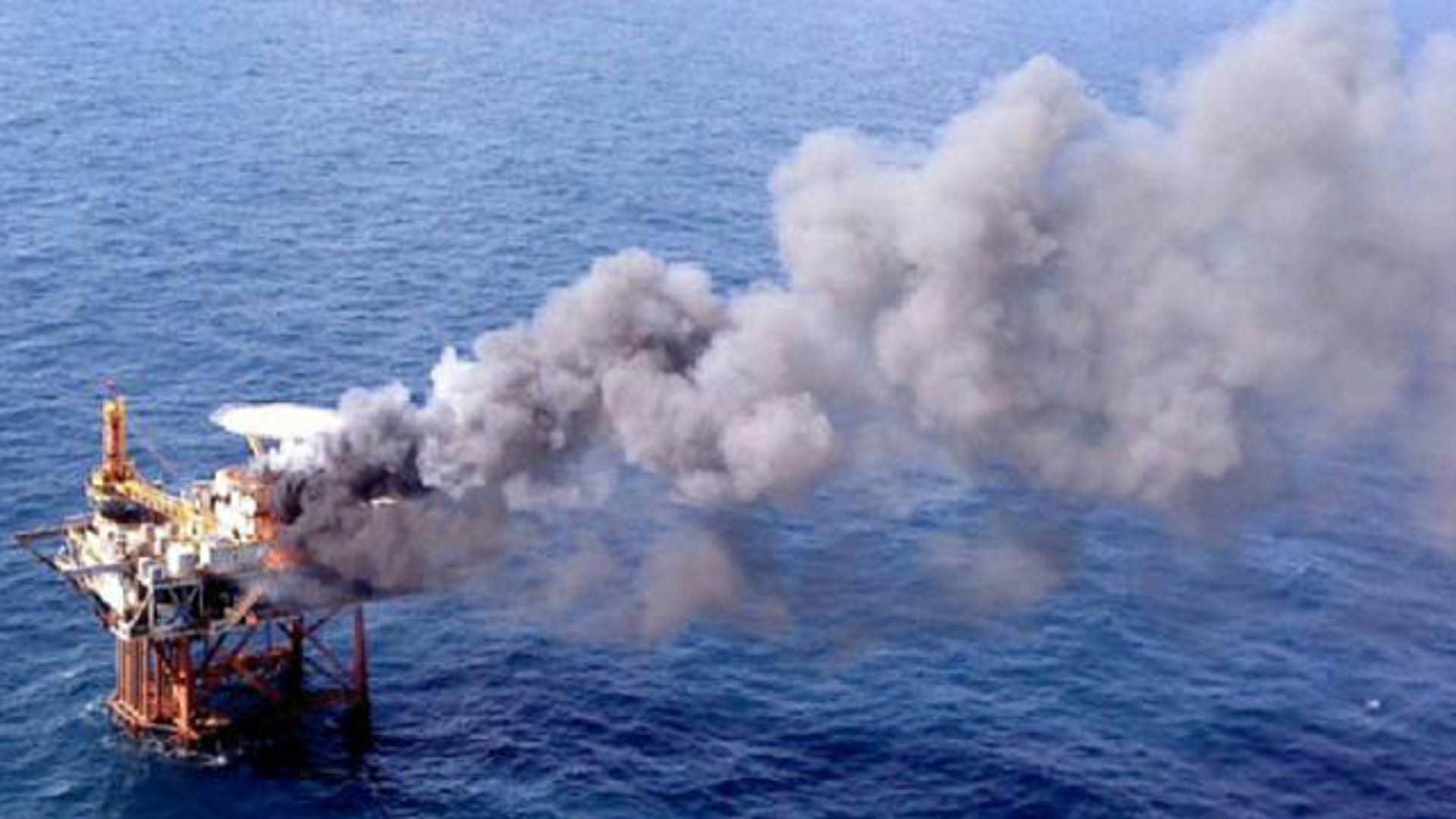
The headlines are screaming about a regional apocalypse. "Explosions across Qatar, UAE, and Kuwait." Panic in the energy markets. Analysts on cable news are dusting off their "World War III" graphics. They are looking at the fire, but they are missing the thermostat.
If you believe this is an uncontrolled spiral into chaos, you are reading the wrong map. What we are witnessing isn't the breakdown of order in the Middle East; it is the birth of a terrifyingly precise, kinetic diplomacy. These strikes aren't meant to destroy the infrastructure of the Gulf—they are meant to recalibrate the cost of silence.
The "lazy consensus" says Iran has lost control or is lashing out in a desperate, final stand. That narrative is comfortable. It makes us feel like the "rational" West is the only adult in the room. It’s also dead wrong.
The Myth of the "Indiscriminate" Strike
Mainstream reporting treats these explosions as if someone threw a grenade into a dark room. They use words like "unprecedented" and "chaotic."
Look at the data. Look at the targets.
In the UAE and Qatar, the "explosions" are hitting peripheral nodes, secondary processing units, and logistics hubs. If Tehran wanted to turn the global economy off, they wouldn't be hitting a storage tank in Sharjah or a desalination plant’s backup generator. They would be vaporizing the Ras Laffan terminal or the Strait of Hormuz’s primary shipping lanes.
They haven't.
This is surgical signaling. By hitting high-visibility, low-fatality targets, the Iranian Revolutionary Guard Corps (IRGC) is demonstrating a level of ISR (Intelligence, Surveillance, and Reconnaissance) that should terrify every defense contractor in Bethesda. They are threading the needle between "enough damage to spike insurance premiums" and "not enough damage to trigger a U.S. carrier strike group."
I have watched energy analysts miss this point for twenty years. They assume every explosion is a failure of deterrence. In reality, these strikes are a form of communication. When the diplomatic channels are choked with sanctions and rhetoric, the only language left is kinetic.
The Air Defense Fallacy
We have spent billions of dollars sold on the promise of "Total Air Superiority" and "Integrated Missile Defense." The Patriot, the THAAD, the Iron Dome—we’ve been told these are the impenetrable shields of the modern age.
The current strikes in Kuwait and Qatar have exposed the Patriot battery for what it actually is: a legacy tool struggling in a swarm world.
The "experts" will tell you the hit rate is still high. They’ll point to 80% or 90% interception stats.
The math of the defender is a losing game.
Consider the cost-exchange ratio. An Iranian-made Shahed-style loitering munition costs roughly $20,000 to $50,000 to produce. A single interceptor missile from a Patriot system (PAC-3) costs approximately $4 million.
$$\text{Cost Ratio} = \frac{$4,000,000}{$20,000} = 200:1$$
You don't need to be a math genius to see the end of this movie. You don't have to "defeat" an air defense system; you just have to bankrupt it. The explosions we are seeing aren't just hitting physical targets—they are hitting the credibility of the Western defense industry.
The Gulf states are realizing that their "security umbrella" is made of expensive paper. Every explosion that makes it through isn't a fluke; it's a demonstration that the offense has finally, permanently outpaced the defense.
The Energy Market’s False Bottom
The knee-jerk reaction to explosions in Kuwait and Qatar is to watch the Brent Crude ticker. The price jumps 5%, the pundits talk about "supply shocks," and everyone waits for the dip.
But the real story isn't the price of oil. It’s the sovereign risk profile of the region.
For the last decade, the UAE and Qatar have positioned themselves as the world’s safe havens—the Switzerland of the sand. They built a "lifestyle and logistics" brand on the bedrock of absolute stability. You invest in Dubai because it’s the place where nothing ever happens.
These strikes have shredded that brand.
Even if the physical damage is repaired in forty-eight hours, the psychological damage to the "safe haven" thesis is permanent. Multinational corporations are currently looking at their "Regional Headquarters" in Doha and asking if a 200:1 cost-ratio drone swarm is a risk they can mitigate.
The "unconventional truth" here? The attackers don't want the oil to stop flowing. They want the investment to stop flowing. If you can make a CEO in London or New York second-guess a thirty-year infrastructure project because of a "managed" explosion, you’ve won. You’ve successfully decoupled the Gulf’s economic future from Western security guarantees.
Dismantling the "Proxy" Narrative
Every major outlet refers to these strikes as "Iran’s retaliatory strikes." It’s a convenient shorthand. It’s also a gross oversimplification of the new "Hybrid Command."
The era of a central state pushing a button and a proxy firing a rocket is over. We are now in the age of distributed intent.
In my time analyzing regional militias, I’ve seen the shift from "command and control" to "intent and capability." These groups—whether in Yemen, Iraq, or elsewhere—no longer wait for a telegram from Tehran. They share a common tech stack, a common target list, and a common ideological vector.
When you see explosions in three different countries simultaneously, don't look for a single "War Room" in Iran. Look for a decentralized network that has figured out how to use the "Internet of Things" for warfare.
The "People Also Ask" crowd wants to know: "Will the U.S. intervene?"
The answer is: Intervene against what? How do you launch a counter-strike against a ghost? If the launch sites are mobile, the drones are 3D-printed, and the "commanders" are teenagers in a basement three borders away, your billion-dollar carrier group is a blunt instrument looking for a fly to swat.
The Strategy of Forced Neutrality
Why Kuwait? Why Qatar?
They aren't the primary enemies of the "Resistance Axis." In fact, Qatar has spent billions acting as the region’s mediator.
That’s exactly why they are being hit.
The goal of these explosions is to end the era of "Middle-Groundism." The attackers are telling the Gulf states: Your neutrality is no longer a shield. You cannot host U.S. bases and call yourself a mediator. You cannot fund Western defense contractors and call yourself a bystander.
This is a brutal, kinetic demand for a new regional architecture. It’s a message that says the old rules—where you could buy your way out of a regional conflict—are dead.
The Brutal Reality of the "New Normal"
Stop waiting for the "peace deal" that puts the genie back in the bottle. It doesn't exist.
We are entering a period where "low-level" kinetic activity is a permanent feature of the landscape. The explosions aren't the prelude to a war; they are the war. It’s a war of attrition, played out in 24-hour news cycles and insurance premiums.
The downside to my perspective? It’s grim. It admits that the "stabilizing" forces of the last fifty years are currently being humiliated by cheap, mass-produced technology and a more sophisticated understanding of psychological warfare.
But ignoring the nuance—ignoring the fact that these strikes are calibrated, cost-effective, and strategically brilliant—is a recipe for being blindsided when the "controlled" fire finally hits something that can't be put out.
The status quo isn't being challenged. It’s being dismantled, one "small" explosion at a time.
Burn your old maps. The geography of power has changed.
The drones are already in the air, and they don’t care about your "red lines."
Accept that the era of the "safe" Middle East was a thirty-year anomaly, and act accordingly.
Short the stability. Hedge the shield.
The thermostat is in hands you don't recognize.
Get used to the heat.


