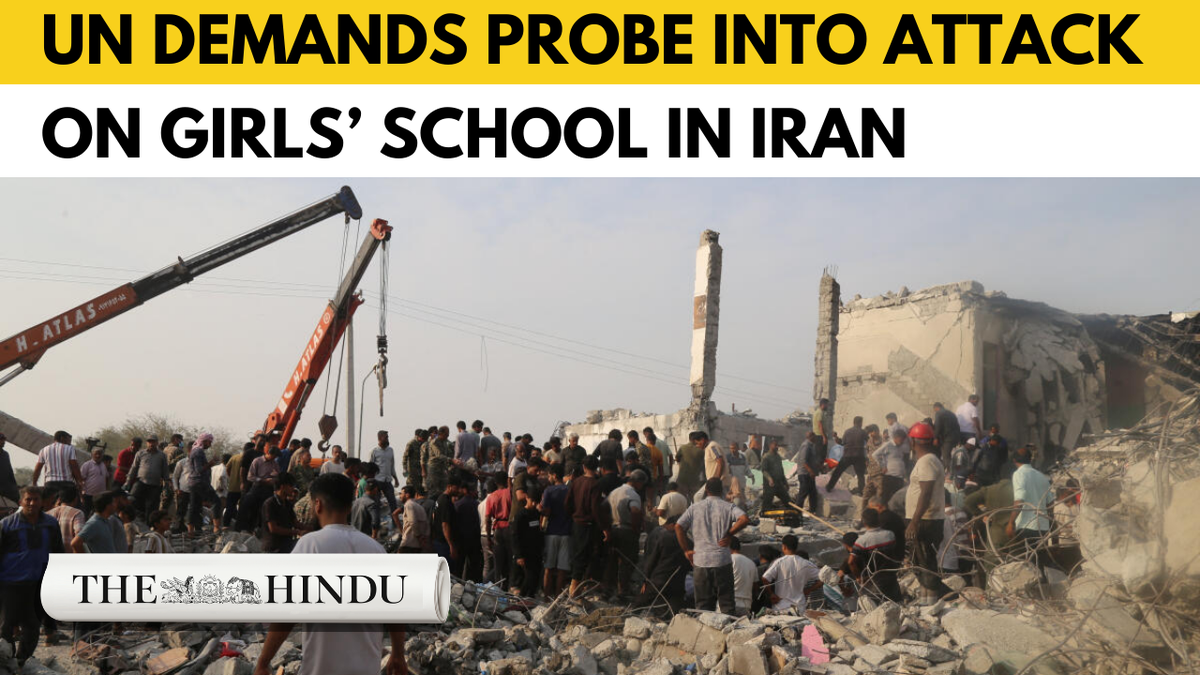
The standard script for a school attack follows a predictable, nauseating rhythm. First, the grainy video surfaces. Then, the "global alarm" sounds. Finally, the UN issues a sternly worded demand for "accountability." We have been watching this play out for decades, yet we refuse to admit the glaring truth: this cycle of performative outrage is not a solution. It is a vital part of the perpetrator’s ecosystem.
When a school is hit in a conflict zone, the international community treats it like a localized tragedy that can be solved with more observers or sharper legal rhetoric. That is a fantasy. In the modern theater of asymmetrical warfare, a school is not just a building. It is a high-yield asset for psychological leverage. By treating these attacks as "senseless acts of violence," we ignore the brutal, cold logic that makes them effective.
The Accountability Trap
The UN’s call for accountability is the ultimate bureaucratic anesthetic. It suggests that if we can just identify the commander who signed the order, or the pilot who pulled the trigger, justice will be served and the behavior will stop.
I have spent years watching how international law operates in active war zones. Accountability is a lagging indicator. It happens years after the blood has dried, usually in a quiet courtroom in The Hague that has zero deterrent effect on a warlord or a desperate insurgent group facing an existential threat today.
When the UN demands accountability, they are essentially asking the fox to investigate why the henhouse is empty. In most regions where schools are targeted, the state itself is either the perpetrator or so deeply compromised that "investigation" is just a euphemism for a cover-up.
Why Condemnation is a Commodity
To a terrorist cell or a rogue state, a UN condemnation isn't a "shaming" mechanism. It is a confirmation of impact.
- Visibility: You cannot buy the kind of global reach a UN press release provides.
- Polarization: Attacks on schools force neutral populations to take sides, destroying the middle ground where peace actually grows.
- Resource Diversion: Each attack forces the opposition to divert combat troops to guard schools, thinning their front lines.
We are feeding the monster by giving it exactly what it wants: our undivided, horrified attention and a platform on the world stage.
The Myth of the "Safe School" Declaration
There is a popular push for various "Safe Schools Declarations" where nations pledge not to use educational facilities for military purposes. It sounds noble. In practice, it’s a target list.
Imagine a scenario where a guerrilla force is fighting a technologically superior army. If the guerrilla force knows the army has pledged to never strike a school, where do you think they will store their munitions? Where will they sleep? By "protecting" these spaces through international decree, we inadvertently turn them into the most valuable tactical real estate on the map.
The moment a combatant steps foot inside a school to use it as a shield, the "sanctity" of the building is gone. Yet, the media rarely focuses on the provocation; they focus on the strike. This lopsided reporting creates a massive incentive for "human shield" tactics. If you want to stop school attacks, you have to stop rewarding the strategic use of schools as military assets.
The Data We Ignore
We love to cite the number of schools destroyed, but we rarely talk about the educational vacuum that precedes the violence.
Real-world data from conflict zones shows that school attacks are often the symptom of a collapsed social contract, not the cause. When the local economy fails and the state stops providing basic security, the school becomes the only visible representative of "the system." Attacking it isn't an act of random cruelty; it’s a calculated strike against the state’s legitimacy.
If you want to protect children, you don't do it with a UN resolution. You do it by making the school a low-value target.
Decentralization Over "Hardening"
The "experts" will tell you we need to harden schools—fences, guards, cameras. This is a Western solution applied to a global problem. In a high-intensity conflict, a fence is just something for a tank to drive over.
The real way to disrupt this cycle is through radical decentralization.
- Mobile Learning: If the physical building is the target, move the education.
- Digital Resiliency: Hardened, offline servers and mesh networks allow students to learn from basement shelters or remote villages without gathering in one place.
- Discreet Infrastructure: Stop building massive, brightly colored "UN-funded" school complexes that can be seen from five miles away.
We continue to build centralized targets because it looks good in a brochure and allows NGOs to point at something tangible. It’s vanity masquerading as philanthropy.
Stop Asking for Accountability
Stop asking for "investigations." Stop asking for "justice" from systems that are fundamentally broken.
Start asking why we continue to provide the media oxygen that these attackers breathe. Start asking why we prioritize the survival of the institution of the school over the actual safety of the students.
If a building is a magnet for bombs, stop putting children in the building. It is a harsh, uncomfortable reality, but it is more moral than sending another "strongly worded letter" while the rubble is still smoking.
The global community isn't failing to stop school attacks because it lacks the will; it’s failing because it’s addicted to the moral high ground of the aftermath. We would rather weep over a tragedy than do the dirty, logistical work of making that tragedy impossible to stage.
You want to save the students? Burn the script. Stop the cameras. Move the desks.
Stop giving the killers a stage, and they will stop looking for a performance.