The air in Kiryat Arba doesn’t move like the air in Tel Aviv. It is thick with the scent of rosemary and exhaust, salted by a tension that feels as ancient as the limestone hills. Here, in the settlement of Givat Ha’avot, the distance between a domestic dispute and a geopolitical crisis is usually measured in centimeters.
For decades, the United States maintained a deliberate, studied distance from these hills. To the rest of the world, these outposts are illegal under international law—a collection of red-tiled roofs that complicate the already frayed map of a potential two-state solution. To the people living in them, they are home. To the Palestinians living in the valley below, they are a tightening noose. And now, for the first time, the American flag has a new, semi-permanent place to wave among them.
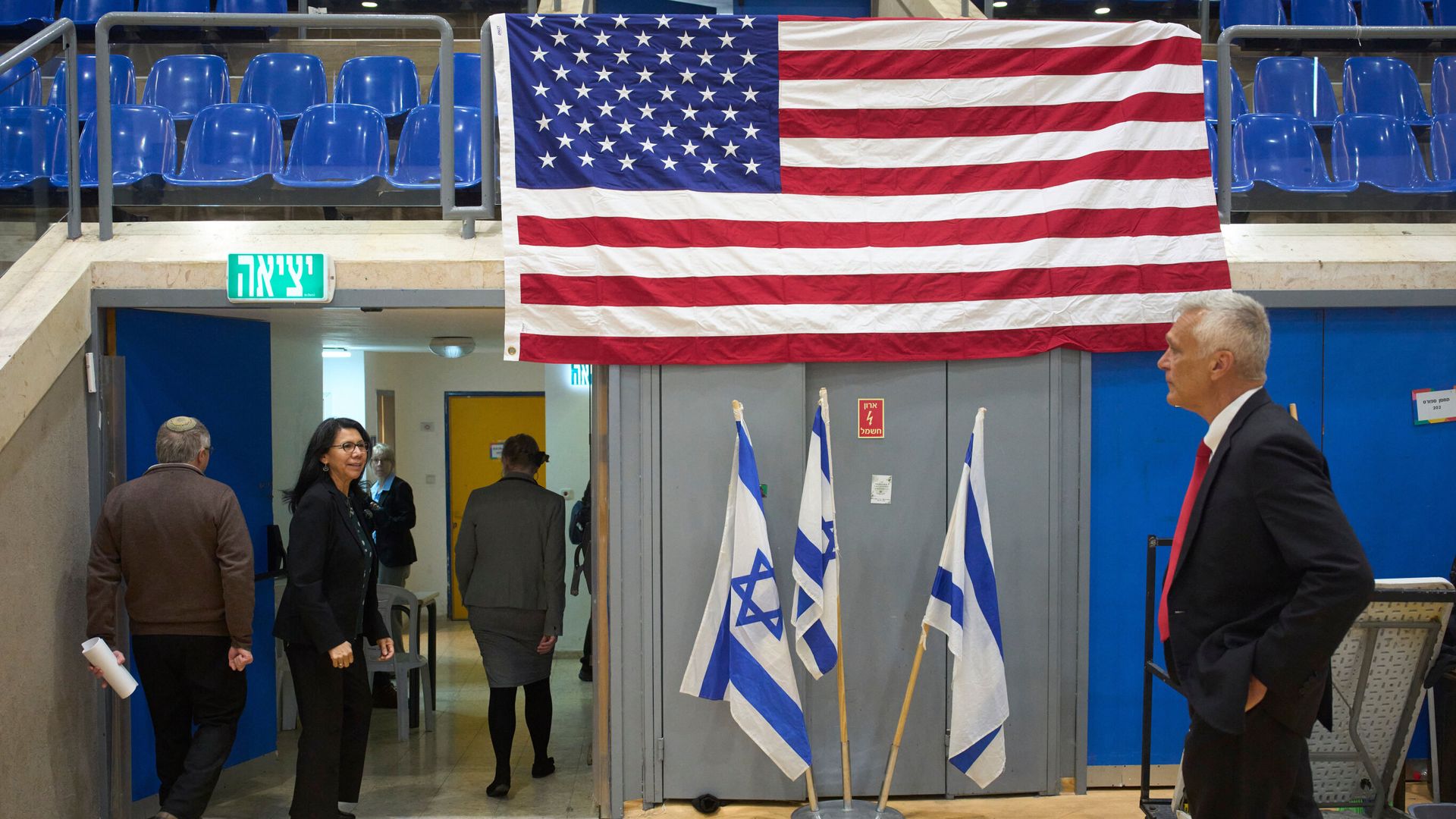
It isn't a grand embassy with bulletproof glass and sprawling courtyards. It is a "pop-up." A diplomatic experiment. A temporary consular office designed to serve American citizens living deep within the West Bank. But in this part of the world, nothing is ever just "temporary."
The Living Room Diplomacy
Imagine a father, let’s call him David. He moved from Brooklyn to the West Bank twenty years ago, seeking a spiritual connection to the land that he couldn't find in a subway station. He has three children, all American citizens by birth, who have never seen the Statue of Liberty. When David needs to renew a passport or report a birth, he used to face a gauntlet. He would drive through checkpoints, navigate the labyrinthine streets of Jerusalem, and wait in lines that stretched into the heat of the afternoon.
Now, the mountain has come to Muhammad—or in this case, the State Department has come to the settlement.
The opening of this consular service point in Givat Ha’avot is a logistical triumph for people like David. It’s convenient. It’s neighborly. But for the Palestinian family living five hundred yards away, the sight of American diplomats setting up shop in a settlement is a tectonic shift. It isn’t just about passports. It is about the "normalization of the illegal."
When a superpower provides services in a specific location, it provides legitimacy. It says, "We recognize you are here, and we will make it easier for you to stay."
The Invisible Stakes of a Stamp
International law is often discussed in the sterile halls of The Hague or the plush carpets of the UN General Assembly. It feels abstract. It feels like a series of footnotes. But in the West Bank, international law is the only shield many people believe they have.
The Fourth Geneva Convention explicitly prohibits an occupying power from transferring its own civilian population into the territory it occupies. Most of the world looks at Givat Ha’avot and sees a violation of that rule. By placing a consular office there, the U.S. isn't just processing paperwork; it is blurring a line that has been drawn in sand and blood for over half a century.
Consider the optics of the "pop-up." The term suggests something fleeting, like a fashion boutique or a trendy taco stand. It implies that if the political wind changes, the office can be folded up and packed away in a weekend. But diplomacy doesn't work like retail. Each stamp in a passport, each official handshake on settlement soil, adds a layer of concrete to a foundation that much of the world wants demolished.
A Neighborhood of Mirages
To walk through a settlement is to experience a strange kind of cognitive dissonance. The playgrounds are modern. The schools are bright. It looks like a suburb in Arizona, if Arizona were surrounded by a high-security fence and soldiers with Tavor rifles.
The U.S. government argues that this move is purely about "American Citizen Services." They insist it does not signal a change in policy regarding the legality of settlements. It is a pragmatic solution to a clerical problem. They point out that there are tens of thousands of Americans living in these areas who deserve access to their government.
But pragmatism is a luxury that the Middle East rarely affords.
When the U.S. embassy moved to Jerusalem, it was a thunderclap. This move—the pop-up in the settlement—is a whisper. Yet, whispers often carry further in the desert. To the Israeli settler movement, this is a quiet victory, a signal that the tide of history is finally pulling in their direction. To the Palestinian leadership, it is a betrayal wrapped in a bureaucratic envelope.
The Human Cost of Convenience
The real story isn't found in the press releases. It’s found in the silence that follows the departure of the diplomatic motorcade.
There is a psychological weight to being "seen" by a superpower. For the settlers, the American presence provides a sense of permanence. It validates their choice to build a life on contested ground. It makes the "illegal" feel official.
For the Palestinians in Hebron and the surrounding villages, the American presence feels like a disappearance. They look out their windows and see the most powerful nation on earth setting up shop on land they claim as their future state. They see a "pop-up" and wonder if they are being popped out of the narrative entirely.
The logistics are simple; the emotions are volatile. A passport renewal takes thirty minutes. The resentment built by the location of that renewal can last generations.
The Friction of the Future
We often think of diplomacy as a series of grand gestures—treaties signed with fountain pens, handshakes on the White House lawn. But diplomacy is actually a game of inches. It is found in the placement of a desk, the choice of a zip code, and the decision of which citizens get to be served where they live.
The pop-up consulate in Givat Ha’avot is a masterclass in "creeping recognition." It avoids the firestorm of a formal policy change while achieving the same result on the ground. It is the diplomatic equivalent of a "fait accompli."
As the sun sets over the Judean hills, the light catches the red tiles of the settlement houses, turning them the color of rust. The American flag outside the temporary office flutters in the evening breeze. It looks peaceful. It looks organized. It looks like a standard government office doing standard government work.
But look closer. Notice the way the neighbors avoid eye contact. Listen to the way the conversation stops when a stranger walks by. The office may be a pop-up, but the questions it raises are permanent. Who belongs here? Who is being served? And what happens when the "temporary" becomes the only reality anyone remembers?
The ink on those newly issued passports is barely dry, but the map of the world has already changed, one "convenient" appointment at a time.
The limestone is hard, the history is long, and the American flag is now flying in a place it was never supposed to be.