The heat in Michoacán doesn’t just sit on you. It heavy-presses against your chest, smelling of damp earth and ripening fruit. In the 1960s, a boy named Nemesio Oseguera Cervantes walked through these orchards, his feet caked in the dust of a town called Aguililla. He wasn't a kingpin then. He was a dropout. A kid from a family of eighteen siblings who looked at the rows of avocado trees and saw a dead end.
Money didn't flow here; it trickled, then evaporated.
By the time he was fourteen, Nemesio was guarding marijuana plantations. It was simple math. The dirt offered pennies for produce, but the shade of the forest offered dollars for contraband. This wasn't a cinematic choice. It was the only ladder available in a house with twenty mouths to feed. He wasn't the monster under the bed yet. He was just a ghost in the making, a shadow moving between the trees, learning that power isn't granted—it is seized when everyone else is looking the other way.
The California Dream and the Cold Reality of Cell 114
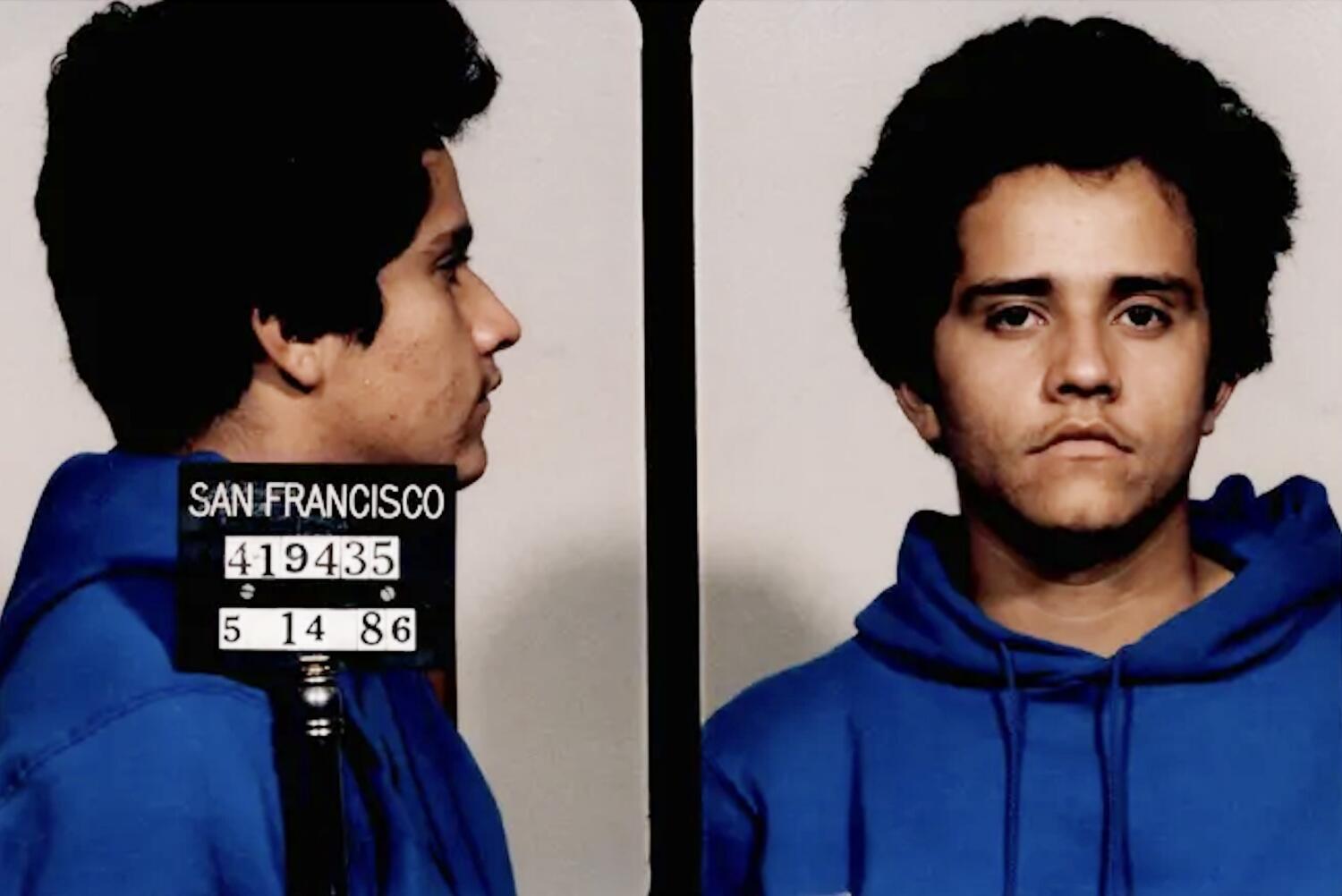
Most people see the rise of a cartel leader as a straight line. It’s actually a circle. In the 1980s, Nemesio followed the well-worn path north. He landed in California, a young man lost in the sprawl of the Central Valley and the neon grit of San Francisco. He wasn't a boss. He was a small-timer, a dealer pushing heroin and cocaine, trying to navigate a country that wanted his labor but loathed his presence.
Then came the mistake.
In 1992, he walked into a trap. A hand-to-hand sale of heroin to undercover officers. He wasn't a mastermind; he was a statistic. Sentenced to three years in a federal pack-up, he sat in a cell, likely staring at the ceiling and realizing that being a foot soldier for someone else's empire was a fool’s errand. When he was deported back to Mexico three years later, he didn't return as a broken man. He returned as a student of the system.
He joined the police.
Imagine the irony of that transition. The man who would become the most wanted person on the planet wore a badge in Cabo Corrientes, Jalisco. He wasn't there to protect and serve. He was there to observe. He watched how the state moved. He learned the gaps in the armor, the price of a local official’s silence, and the exact weight of a bribe. He was building a map of a country he intended to own.
The Marriage of Blood and Business
Power in the underworld is rarely about who shoots the straightest. It’s about who marries the best. Nemesio—now known as "El Mencho"—didn't just fight his way up; he wedded his way in. He married Rosalinda González Valencia.
To the uninitiated, she was just a woman from a wealthy family. To those who knew the geography of the black market, she was a "Valencia." Her brothers ran the Milenio Cartel, a sophisticated financial machine that handled the logistics of the trade. This wasn't just a romance. It was a merger.
Suddenly, the kid from the avocado orchards had the muscle of the street and the bankroll of an established dynasty. But the world he entered was fracturing. The old guards, the big federations of the 90s, were crumbling under the weight of internal betrayals and federal pressure. A vacuum opened.
Mencho didn't just step into the vacuum. He exploded into it.
He formed the Jalisco New Generation Cartel (CJNG). They started as "Mata Zetas"—The Zeta Killers. They framed themselves as a necessary evil, a group that would protect the people from the kidnappings and extortions of the hyper-violent Zetas. It was a brilliant, bloody marketing campaign. They dumped thirty-five bodies on a busy highway in Veracruz during rush hour, accompanied by a banner claiming they were cleaning up the streets.
The message was clear: We are the new law.
The Architecture of Terror
What makes Mencho different from the legends of the past? He lacks the flamboyant charisma of El Chapo. You won't find him giving interviews to actors or sending roses to beauty queens. He is a corporate raider with a paramilitary budget. He turned a drug gang into a diversified conglomerate.
Under his watch, the cartel moved beyond just white powder. They took over the avocado industry he grew up in. They moved into lime production, logging, and even the theft of petroleum from state pipelines. If it came from the earth and had value, Mencho wanted a cut.
He treated violence like a supply chain optimization tool.
Consider the sheer audacity of May 1, 2015. The Mexican government launched "Operation Jalisco" to capture him. They sent in the army and the federal police. In response, Mencho’s men didn't run. They stood their ground with a Russian-made RPG. They shot down a Cougar military helicopter, killing eight soldiers and a police officer.
The message wasn't just for the government. It was for the world. He had reached a level of parity with the state. He wasn't an outlaw hiding in a hole; he was a sovereign power within a shadow territory.
The Invisible Man in the Mountains
Today, the hunt for Mencho has turned into a ghost story. There are rumors he is dead. Rumors he is dying of kidney failure. Reports of "Mencho-land," a private hospital he allegedly built in the mountains of Jalisco to receive dialysis while his soldiers guard the perimeter.
The U.S. government has a $10 million bounty on his head. That’s enough money to change the lives of a thousand families in Michoacán. Yet, no one talks. Silence is the only currency that keeps you alive in the "New Generation" heartland.
His daughter, "La Negra," was arrested in the U.S. His son, "El Menchito," was extradited. His wife has been in and out of custody. The man is being pruned like one of the trees in his father’s orchard, yet the trunk remains rooted deep in the sierra.
He is the ultimate manifestation of the "broken ladder" problem. When a society offers no path for the bright and the ambitious in the forgotten corners of the map, they don't disappear. They reinvent the world in their own image. Mencho’s image is one of drones dropping explosives on rivals and social media videos featuring convoys of armored trucks that look like a national army.
The real tragedy isn't just the body count. It's the normalcy of it.
In the towns he controls, children don't dream of being doctors; they dream of being "punteros"—lookouts. They see the gold chains and the high-end trucks and they see a way out of the dirt. They are the same kids Nemesio was sixty years ago.
We look for him in the shadows of the mountains, but he is actually in the infrastructure. He is in the price of your guacamole. He is in the fuel in your car. He is in the silence of a journalist who chooses not to write a name.
The ghost isn't hiding. He is everywhere.
He sits in a high-altitude hideout, breathing through a machine, watching a world he broke and rebuilt to suit his own survival. He knows that even if they find him tomorrow, the machine he built is self-replicating. The orchards are still there. The heat is still heavy. And there is always another fourteen-year-old boy looking at the trees, realizing that the shade pays better than the sun.
The mountain air is cold, but the blood stays warm.