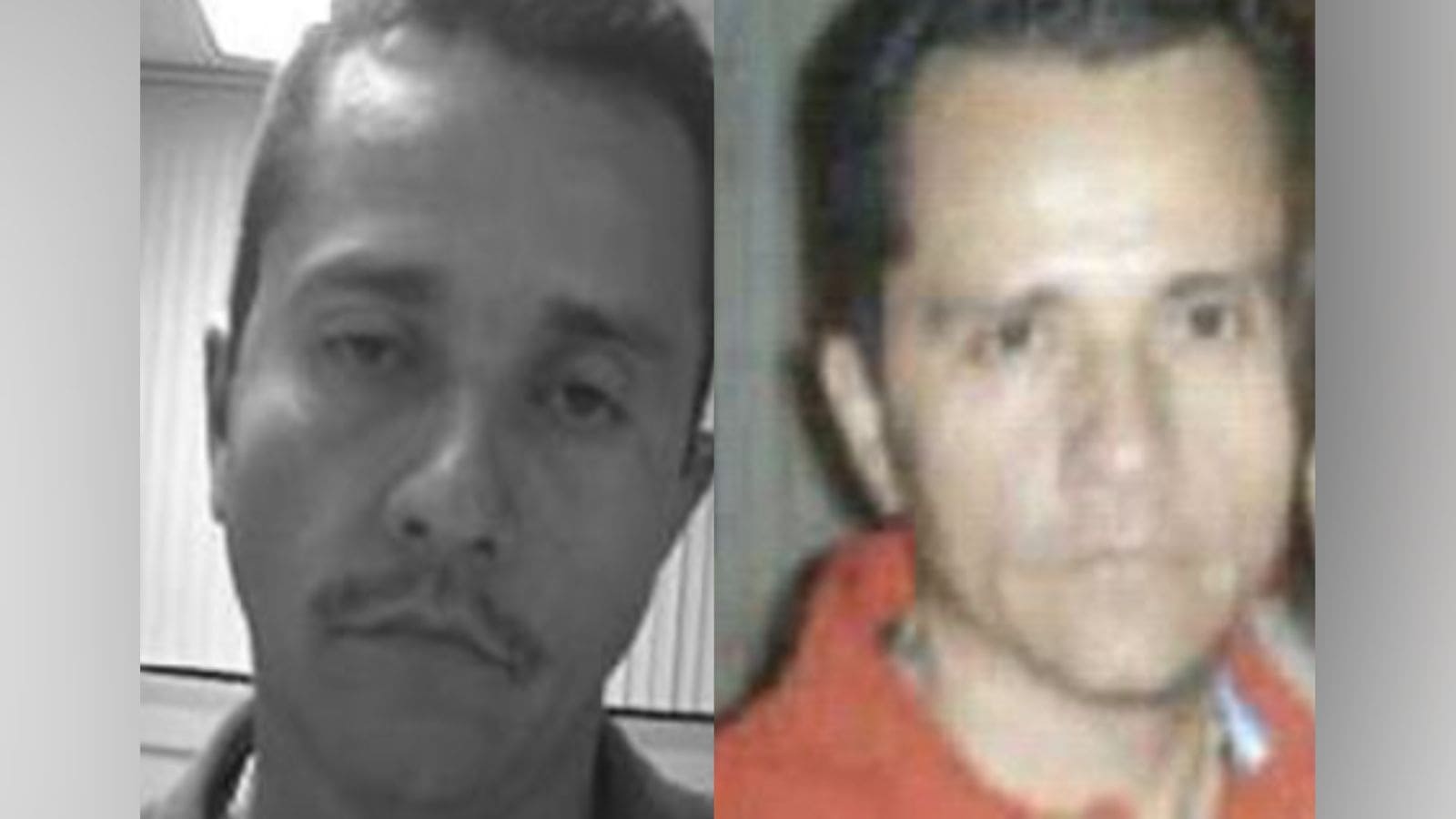
The air in the mountains of Michoacán doesn't just carry the scent of pine and damp earth. If you stand still enough, it carries the weight of a silence that feels like a physical pressure against your eardrums. It is the silence of a region that learned, over decades, that breathing too loudly could be a death sentence. For years, this was the private kingdom of Nemesio Oseguera Cervantes. The world knew him as "El Mencho." The US government knew him as a five-million-dollar bounty. But to the people living in the shadow of the Jalisco New Generation Cartel (CJNG), he was less a man and more a natural disaster—unpredictable, catastrophic, and seemingly eternal.
Then came the flash of steel and the roar of rotors.
The report of his death in a high-stakes military operation didn't just end a manhunt. It punctured a myth. To understand why a single man’s demise ripples from the dirt paths of western Mexico to the sterile boardrooms of the DEA and the quiet suburbs of middle America, you have to look past the spreadsheets of seized narcotics. You have to look at the anatomy of a shadow.
The Avocado Picker Who Built a Throne
Nemesio didn’t fall from the sky as a warlord. He grew out of the soil. Picture a young boy in the 1960s, his hands stained with the juices of fallen avocados, working the fields in a poverty so profound it feels like a terminal illness. There is a specific kind of desperation that breeds a man like Oseguera Cervantes. It is a hunger that cannot be satisfied by a daily wage.
He didn't start by leading armies. He started by crossing borders. In the 1980s, he was just another face in the crowd in San Francisco, dealing small amounts of heroin and getting caught. He was deported, a failed immigrant with a criminal record. Most men would have faded into the background of a small town. But Mencho possessed a terrifying, singular talent: he understood the mechanics of chaos.
While the older cartels—the ones led by names like "El Chapo"—focused on a strange, twisted code of "pueblo" loyalty, Mencho was different. He was corporate. He was clinical. He viewed the geography of Mexico not as a homeland, but as a series of logistical nodes. Under his hand, the CJNG didn't just grow; it metastasized. They didn't just bribe police; they became the police.
Imagine a town where the local bakery, the gas station, and the police precinct all answer to the same silent ghost in the mountains. That was the reality. If you were a farmer, you paid a "tax" on your crops. If you were a mayor, you took the gold or you took the lead. There was no third option. This wasn't just organized crime. It was a parallel state.
The Iron Fist and the Video Age
The CJNG became the most feared organization on the planet not just because of their reach, but because of their optics. They were the first cartel to truly weaponize the internet. Long before TikTok trends were a thing, Mencho’s hitmen were filming high-definition displays of military-grade power.
Consider the "Monster" trucks. These aren't the pickups you see at a local dealership. These are improvised tanks, plated in thick steel, mounted with 50-caliber machine guns that can shred an engine block in seconds. In 2015, his forces didn't just flee from a military helicopter; they used a rocket-propelled grenade to shoot it out of the sky.
It was a declaration of war against the very idea of a sovereign nation.
But behind the armored convoys and the gold-plated rifles was a man who remained a phantom. While El Chapo was giving interviews to Sean Penn, Mencho stayed in the creases of the map. He lived in the "Tierra Caliente," the Hot Lands. He was rumored to have kidney failure, requiring mobile dialysis units to follow him through the jungle. He was a dying king ruling a growing empire. This frailty added a layer of desperation to his reign. A man who knows his time is short is a man who leaves nothing to chance.
The Human Toll of the "Cuatro Letras"
We often talk about cartel violence in the abstract—numbers, statistics, "collateral damage." But the reality is found in the kitchens of mothers waiting for sons who went to a job interview and never came back. It is found in the mass graves discovered by "Las Rastreadoras," the searchers who dig into the Mexican dust with nothing but shovels and a refusal to forget.
Mencho’s expansion was fueled by "La Plaza." In cartel parlance, a plaza is a territory, a route, a town. To win a plaza, you have to break the spirit of everyone living in it. The CJNG moved through Mexico like a scythe. They were the "Cuatro Letras" (Four Letters), a brand that meant certain, swift, and spectacular violence.
The invisible stakes of Mencho’s rise were felt in every gram of fentanyl that crossed into the United States. While the public was distracted by the drama of the Sinaloa Cartel’s infighting, Mencho was perfecting the chemistry. He shifted the business model from plant-based drugs like marijuana and cocaine to synthetic killers. It was a business pivot that killed a generation.
Think of it as an industrial revolution of misery. No more waiting for crops to grow. No more worrying about the weather. Just precursors from overseas, a hidden lab in the woods, and a product so potent it turned American cities into ghost towns. Mencho wasn't just a drug dealer; he was the CEO of a global chemical catastrophe.
The Midnight Operation
The end did not come with a movie-script monologue or a dramatic standoff in a city square. It came in the way most things do in that world: with a betrayal of the terrain.
The military operation that finally closed the book on Mencho was the result of years of excruciating patience. Intelligence agencies had to map out the very heartbeat of the Jalisco mountains. They tracked the movement of supplies, the shifts in radio frequencies, and the subtle changes in the local atmosphere that signal a high-value target is nearby.
The operation was a surgical strike. These missions are a dance of shadows. There is the vibration of the blacked-out helicopters, the infrared goggles turning the world into a ghostly green landscape, and the sudden, violent intersection of two worlds—the high-tech might of the state and the raw, brutal reality of the cartel’s inner sanctum.
In the aftermath, the headlines screamed of his death. "The Most Wanted Man in Mexico is Gone." But for the people of Jalisco, Michoacán, and Guanajuato, the news wasn't met with parades. It was met with a bated breath.
The Power Vacuum and the Hydra
When you cut off the head of a traditional organization, the body dies. When you cut off the head of a modern cartel, the body fragments.
The real danger of Mencho’s death isn't the end of the CJNG, but its evolution. Without the "Patrón" to arbitrate disputes, the local lieutenants—men who have spent a decade learning that violence is the only valid currency—suddenly have no one to answer to. The empire becomes a collection of warring city-states.
This is the terrifying paradox of the war on drugs. Removing a figurehead like Mencho is a moral necessity. You cannot allow a man to challenge the state with RPGs and mass graves. Yet, the removal creates a "liminal space," a period of transition where the violence often spikes as subordinates scramble to claim the throne.
We see the same pattern repeat. From Medellín to Sinaloa, the fall of a king usually leads to a messy, protracted civil war among the heirs. The CJNG is a franchise model. It has cells in Chicago, Los Angeles, and Atlanta. It has tentacles in Europe and Asia. Mencho may be dead, but the infrastructure he built—the "Monster" trucks, the chemical pipelines, the culture of absolute terror—remains.
Living in the Aftermath
I remember talking to a man in a small village near the border of Jalisco. He didn't want to use his name. He didn't even want to look me in the eye. He told me that for years, he didn't own his land; he just looked after it for the "people in the trucks."
"When the boss dies," he whispered, "the wolves start fighting over the scraps. And we are the scraps."
That is the human element we miss when we read the dry reports of military successes. The death of a tyrant is a victory for justice, but for the person living in the crossfire, it is simply a change in the weather. The storm hasn't passed; it has just changed direction.
The legacy of Nemesio Oseguera Cervantes isn't just a record of crimes. It is a scar across the map of North America. It is the hollowed-out eyes of the addicted and the silent grief of the disappeared. He proved that a man from the agave fields could build a machine that defied governments, but in doing so, he destroyed the very fabric of the communities he came from.
The operation is over. The soldiers have returned to their bases. The journalists have filed their stories. But in the mountains of Michoacán, the pine trees are still swaying, and the silence is starting to settle back in. It is a heavy, expectant silence.
Somewhere in those mountains, a young boy is looking at a "Monster" truck passing by, his heart hammering against his ribs with a mixture of fear and a dark, dangerous ambition. He sees the throne is empty. And the cycle, ancient and hungry, prepares to turn once more.
The king is dead. But the kingdom of shadows has never been more alive.
Would you like me to analyze the current territorial shifts among the CJNG's rival factions following this power vacuum?


