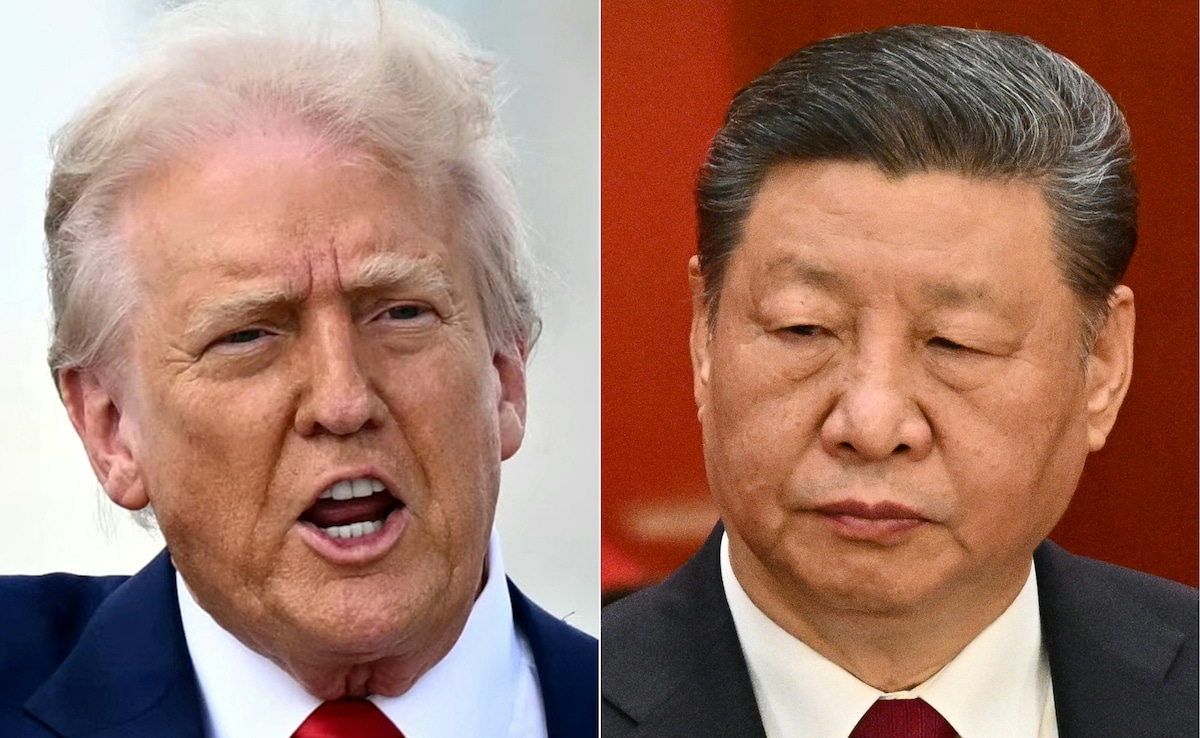
The collapse of diplomatic negotiations regarding Iran’s nuclear program acts as a transmission mechanism for systemic inflation, forcing a repricing of the U.S. Treasury yield curve. When geopolitical stability degrades in energy-dense regions, the bond market does not merely react to news; it recalibrates the Inflation Risk Premium and the Real Neutral Rate. This shift is currently manifesting as a sustained move higher in the 10-year Treasury yield, driven by the realization that "lower for longer" inflation is structurally incompatible with a fragmented global energy supply chain.
The Triad of Yield Drivers
To understand the current upward trajectory of yields, one must decompose the nominal yield into three distinct components. The failure of the Iran talks impacts each of these vectors with varying degrees of velocity. For an alternative view, read: this related article.
- Expected Inflation ($E\pi$): Markets are pricing in a higher floor for Consumer Price Index (CPI) prints. Iran’s isolation or the potential for regional escalation introduces a permanent "conflict premium" into Brent and WTI crude prices.
- The Real Policy Rate ($r^$):* The Federal Reserve’s perceived path. If energy prices remain elevated, the Fed's "neutral rate" must remain higher to suppress secondary inflationary effects (wage-price spirals).
- The Term Premium ($TP$): The extra compensation investors demand for holding long-term debt instead of rolling over short-term bills. Geopolitical uncertainty is the primary catalyst for a positive term premium.
Energy as a Monetary Variable
Energy is not an isolated volatile component that the Fed can ignore via "Core CPI" indefinitely. In a globalized economy, energy costs represent the primary input for the production and transportation of all goods. When negotiations with a major producer like Iran fail, the market loses a potential supply cushion of approximately 1.5 to 2 million barrels per day (mb/d) of exports.
The absence of this supply floor increases the convexity of oil prices. Small disruptions elsewhere—such as shipping bottlenecks in the Strait of Hormuz or infrastructure failures in the North Sea—now result in disproportionately large price spikes. Fixed-income investors view this convexity as a direct threat to the purchasing power of future coupon payments, necessitating a sell-off in long-dated Treasuries to reach a higher clearing yield. Further reporting on the subject has been published by Reuters Business.
The Transmission of Geopolitical Risk to the Yield Curve
The relationship between Middle Eastern instability and U.S. debt markets follows a specific logical sequence. It is rarely a "flight to safety" in the modern era; instead, it has become a "flight from duration."
Structural Breakdown of the "Inflation Hedge" Failure
Historically, Treasury bonds were the primary hedge against geopolitical shocks. However, when the shock itself is inflationary (supply-side), the traditional correlation flips. Bonds and equities begin to move in tandem—both falling. This creates a feedback loop:
- Reduced Diversification Benefit: As the correlation between stocks and bonds turns positive, institutional portfolios (60/40 models) must reduce bond exposure to maintain their risk parity.
- Forced Liquidation: Systematic selling to rebalance portfolios puts further downward pressure on bond prices, pushing yields higher regardless of the Fed’s immediate rhetoric.
The Fiscal Dominance Constraint
The collapse of Iran talks occurs against a backdrop of historic U.S. fiscal deficits. The Treasury Department must issue trillions in new debt to fund government operations. When geopolitical risk increases inflation expectations, the pool of "price-insensitive" buyers—primarily foreign central banks and domestic banks—shrinks.
- Foreign Reserve Management: Nations sensitive to energy prices (e.g., Japan, South Korea) may need to sell Treasuries to defend their currencies against a surging, energy-driven USD.
- Supply/Demand Imbalance: Increased supply of bonds meeting decreased demand from inflation-wary investors leads to "tailing" auctions, where the Treasury must offer higher yields than the pre-auction market price to find enough buyers.
Quantification of the Iran Factor in Crude Pricing
The market currently prices a "status quo" risk into oil, but the failure of the Joint Comprehensive Plan of Action (JCPOA) path removes the "downside tail" from the energy market.
- The Supply Gap: Iran possesses the world’s second-largest gas reserves and fourth-largest oil reserves. A successful deal would have integrated these into the global market, potentially lowering the Brent floor by $10–$15 per barrel.
- The Risk Multiplier: Without a deal, the probability of "kinetic" disruptions—sabotage of tankers or attacks on regional refineries—increases. This adds a structural $5–$8 risk premium to every barrel.
For the Treasury market, every $10 increase in the price of oil typically correlates with a 15–20 basis point increase in the 10-year yield over a 6-month horizon, assuming no immediate recessionary collapse in demand.
The Real Rate Trap and Federal Reserve Limitations
The Federal Reserve is currently operating under a "Higher for Longer" regime, but the collapse of Iran talks complicates the exit strategy. If the Fed cuts rates while energy prices are rising due to geopolitical failure, they risk a repeat of the 1970s "double-top" inflation.
The Cost Function of Premature Easing
If the Fed ignores the energy-driven inflation spike and proceeds with cuts:
- Inflation Expectations Unanchor: The 5-Year, 5-Year Forward Breakeven Inflation Rate—a key metric for the Fed—will surge.
- Currency Depreciation: The dollar may weaken against energy-exporting currencies, making imports even more expensive.
- The Secondary Wave: Energy costs bleed into services (airlines, logistics, manufacturing), creating "sticky" inflation that interest rates have a harder time suppressing.
Investors are currently betting that the Fed will be forced to keep the Federal Funds Rate above 4% for a significantly longer period than previously anticipated. This upward shift in the "terminal rate" pulls the entire Treasury curve higher.
Tactical Implications for Institutional Portfolios
The transition from a low-inflation, high-globalization environment to a high-volatility, fragmented environment requires a fundamental shift in asset allocation.
Duration Management
Long-duration assets (20+ year Treasuries, growth stocks) are the most vulnerable to the "Geopolitical Inflation" trade. The sensitivity of a bond’s price to a change in interest rates—its duration—means that a 50-basis point move in the 10-year yield can wipe out years of coupon income.
- Action: Pivot toward the "belly" of the curve (5-year to 7-year maturities) where the yield-to-risk ratio is more favorable.
The Rise of Hard Assets
When Treasury yields rise due to inflation fears rather than growth optimism, "Real Assets" outperform.
- Energy Infrastructure: Companies that benefit from higher throughput and higher commodity prices act as a natural hedge.
- Inflation-Protected Securities (TIPS): While nominal yields are rising, TIPS provide a floor by adjusting the principal based on the CPI. However, if the "Real Rate" ($Nominal Yield - Inflation$) rises faster than inflation itself, even TIPS can lose value.
The Strategic Projection
The failure of Iran-West diplomacy is not a fleeting news cycle event; it is a structural realignment of global energy security. This shift removes the possibility of a "soft landing" for interest rates. We are entering a period where the 10-Year Treasury Yield will likely establish a new support floor between 4.5% and 5.2%.
The "Peace Dividend" that suppressed yields for three decades has been fully liquidated. Investors must now prepare for a Volatile Equilibrium. The primary risk is no longer a recession that brings rates down to zero, but a "Stagflationary Trap" where growth slows while energy-driven inflation keeps yields punishingly high.
The immediate strategic move for capital allocators is the reduction of long-duration sovereign debt exposure in favor of cash equivalents and commodity-linked equities. The bond market is signaling that the era of cheap energy and cheap money is over; the rise in yields is the market's way of pricing in the cost of a less stable world. Expect the 10-year yield to test the 5% threshold within the next two fiscal quarters as the full weight of the energy supply deficit is realized in the CPI data.
Strategic Recommendation:
Execute a "Barbell Strategy." Maintain high liquidity in T-Bills (5%+ yield) to capture the peak of the Fed's cycle, while simultaneously holding direct exposure to energy commodities. Avoid the "Dead Zone" of 10-to-30-year nominal Treasuries until the term premium reaches at least 100 basis points, providing a sufficient margin of safety against further geopolitical escalations.