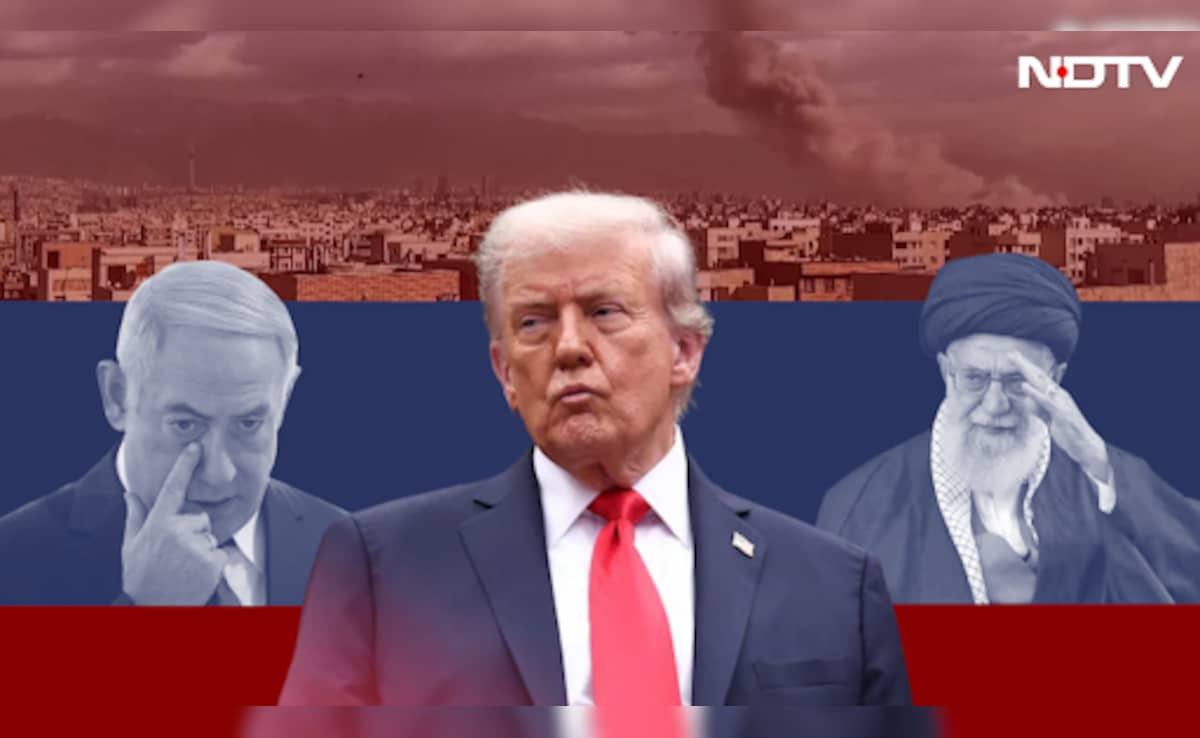
The map on your screen is bleeding red and blue, but the blood on the ground doesn’t follow the lines.
Turn on any major news network and you will see a neatly categorized chart of "who stands with whom" in the Middle East. They treat regional conflict like a high school seating chart. Saudi Arabia is here. Iran is there. Israel is in the corner. The U.S. is the overbearing principal. It is a clean, digestible, and entirely fraudulent narrative.
If you are looking at the Middle East through the lens of "allies" and "enemies," you have already lost the thread. In this theater, "alliance" is a marketing term used to secure weapons contracts and domestic approval. The reality is a shifting sea of transactional friction.
Stop looking for loyalty. Start looking for the price tag.
The Myth of the Monolithic Bloc
The most pervasive lie in modern reporting is the existence of stable, ideological blocs. We are told there is a "Resistance Axis" led by Iran and a "Moderate Arab Bloc" aligned with the West. This suggests these groups share a unified vision or a long-term destiny.
They don’t.
Take the so-called "Abraham Accords" partners. The surface-level take is that the UAE and Bahrain are now firmly in the Israeli camp against Iran. In reality, the UAE has spent the last three years aggressively de-escalating with Tehran. They are hedging. They aren't "standing with" Israel; they are purchasing an insurance policy while keeping the door open to the very "enemy" they are supposed to be countering.
When missiles fly, the "allies" don't rush to the front. They check their balance sheets. They calculate how much regional instability they can tolerate before their tourism goals (Vision 2030, anyone?) go up in smoke.
Sovereignty Is a Luxury Good
The media loves to talk about "state actors." It’s a comfortable term. It implies a central government with a monopoly on violence and a clear foreign policy.
In the Middle East, sovereignty is often a polite fiction. From Lebanon to Iraq to Yemen, the "state" is a shell. You aren't looking at a map of nations; you are looking at a map of overlapping influence zones.
When a missile is launched from Iraqi soil, asking "Does Iraq support this?" is a fundamentally stupid question. Which Iraq? The Baghdad Green Zone? The PMF militias? The Kurdish North? The "who stands with whom" articles fail because they attribute intent to entities that lack the agency to carry it out.
I have sat in rooms with regional analysts who swear by "security guarantees." Here is the brutal truth: a security guarantee is only as good as the guarantor's last election cycle. The nations in the region know this. They aren't looking for friends; they are looking for leverage.
The Logistics of Chaos
Let’s talk about the math. Most "insider" pieces ignore the boring stuff: supply chains and munitions.
War in the Middle East is a high-burn, low-inventory game. The "allies" providing the hardware—the U.S., Russia, China—are not doing it out of the goodness of their hearts. They are using the region as a live-fire laboratory and a clearinghouse for aging inventory.
$F-35$ sorties and $Shahed-136$ drone swarms aren't just military maneuvers; they are data-gathering exercises.
$$C = (P \times R) / S$$
In this simplified model, the Cost of Conflict ($C$) is the product of Political Will ($P$) and Resource Availability ($R$), divided by the Stability Threshold ($S$). When $S$ drops, the cost becomes unsustainable for everyone except the arms dealers.
The "Who stands with whom" crowd ignores the $S$ variable. They assume the "allies" will keep funding the fire forever. They won't. The moment the cost of protecting an "ally" exceeds the strategic value of the geography they sit on, the alliance evaporates.
The Proxy Fallacy
The term "proxy" is used to strip agency away from local players. It’s a Western-centric view that assumes Tehran or Washington is pulling every string like a master puppeteer.
It’s actually the other way around.
The "proxies" often drag their "sponsors" into fights the sponsors don't want. Hamas didn't ask permission for October 7th. The Houthis aren't waiting for a green light from the Ayatollah to disrupt global shipping in the Red Sea. They are independent entrepreneurs of violence who use "alliances" to get the keys to the armory.
If you want to understand the next "missile flight," stop looking at the Supreme Leader's speeches. Look at the local commander who needs to justify his budget or settle a tribal grudge.
The Energy Shadow Play
While the headlines scream about religious war and ancient hatreds, the real movement is in the pipelines.
The "lazy consensus" says the U.S. is involved to protect the oil. That’s 1990s thinking. The U.S. is now a net exporter. The real tension is between the Gulf’s desire to pivot to the East (China/India) and their legacy reliance on Western security architecture.
Every missile fired is a negotiation over the price of a barrel and the currency it’s traded in. When a "U.S. Ally" like Saudi Arabia refuses to pump more oil to lower prices during a Western-led crisis, the "alliance" is revealed for what it is: a temporary alignment of convenience that is currently being renegotiated in real-time.
The Intelligence Blind Spot
"Intelligence officials say..." is the most dangerous phrase in any news article.
I’ve seen these "official" assessments. They are often built on a foundation of wishful thinking and outdated human intelligence. They miss the "Black Swans" because they are too busy looking at the "Grey Rhinos"—the obvious threats everyone already knows about.
The "Who Stands With Whom" lists are always 24 hours behind the reality. They didn't predict the Saudi-Iran normalization deal mediated by China. They didn't predict the speed of the Abraham Accords. They didn't predict the resilience of the Houthi blockade.
They are playing checkers on a board where the squares are constantly changing color.
Stop Asking "Who Is Winning?"
The question "Who is winning?" assumes there is a finish line. There isn't. There is only the management of decline and the accumulation of influence.
In the Middle East, "winning" usually means being the last one standing in a room full of rubble. The players involved aren't trying to "win" in the Western sense of total victory. They are trying to remain relevant enough to stay at the table for the next round of negotiations.
The missiles aren't the story. They are the punctuation marks in a long, boring, and brutal sentence about economic survival.
The Actionable Truth
If you are an investor, a policy wonk, or just a concerned citizen, stop reading "alliance trackers." They are the geopolitical equivalent of a horoscope.
Instead:
- Follow the Spare Parts: You can’t fly a jet or launch a complex missile system without a global supply chain. Who is actually shipping the chips and the turbines? That’s your real alliance.
- Watch the Sovereign Wealth Funds: Where is the money moving? If the "allies" are pulling their capital out of Western markets while claiming to be "partners," believe the money, not the press release.
- Ignore the Ideology: Religion and "values" are the paint used to cover the rusted engine of realpolitik. No one in power in the Middle East makes a decision based on a 7th-century theological dispute unless it helps them control a port or a refinery today.
The Middle East isn't a board game. It’s a marketplace. And in a marketplace, there are no friends—only competitors you haven't betrayed yet.
Burn your maps. The lines are written in sand, and the wind is picking up.