The assumption that Donald Trump’s desire to end conflict with Iran stems from simple isolationism or political fatigue ignores the underlying economic and strategic architecture of his "America First" doctrine. For the Trump administration, the Middle East is no longer a theater for ideological transformation, but a cost-center that must be rationalized to facilitate a pivot toward domestic industrialization and the containment of China. The drive to terminate hostilities with Tehran is governed by three cold variables: the preservation of global energy price stability, the redirection of defense capital, and the necessity of a regional security architecture that functions without permanent U.S. kinetic involvement.
The Fiscal Constraint and Military Resource Realignment
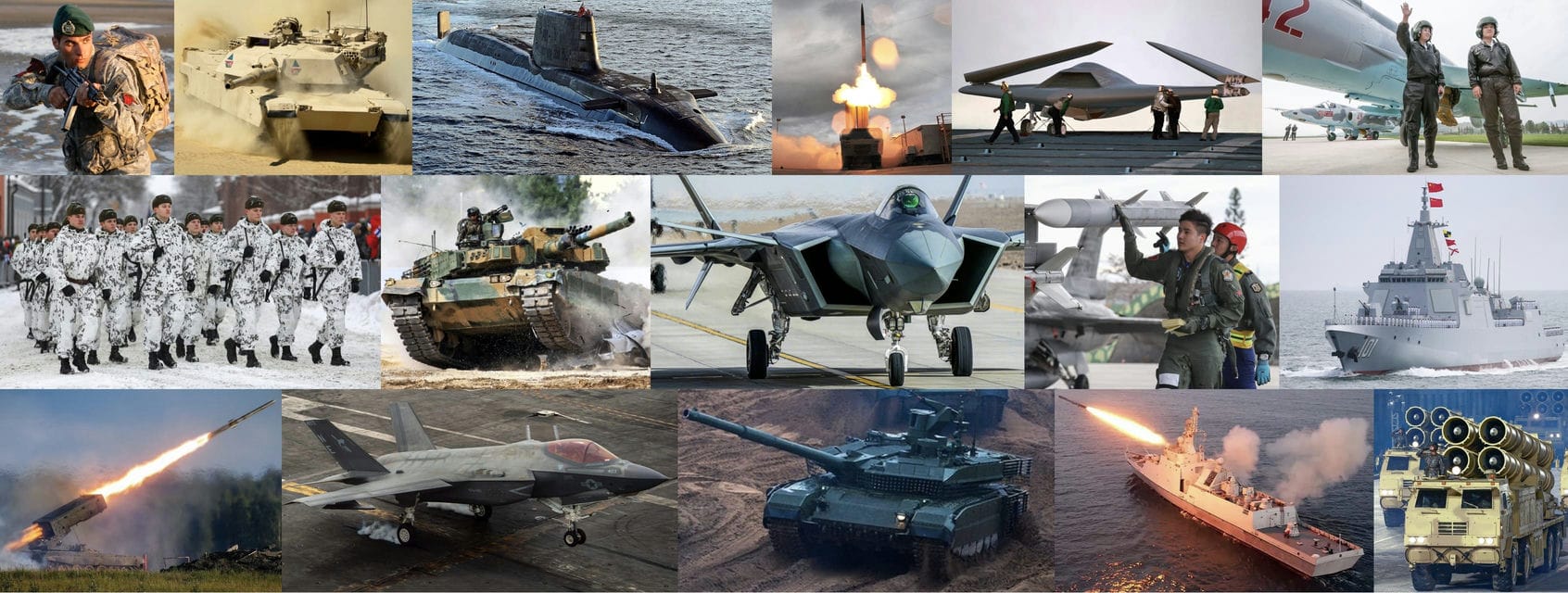
U.S. involvement in Middle Eastern conflicts operates on a diminishing marginal return. For the Trump executive branch, the primary objective is the repatriation of military spending to support domestic infrastructure and the modernization of the Pacific fleet. Every dollar spent on a carrier strike group in the Persian Gulf is a dollar diverted from the technological race against Beijing.
- Opportunity Cost of Deployment: Maintaining a high-readiness posture against Iran requires a significant portion of the Pentagon's "O&M" (Operations and Maintenance) budget. By de-escalating, the administration frees up these funds for Research, Development, Test, and Evaluation (RDT&E) in hypersonic weaponry and artificial intelligence.
- The Burden-Sharing Mandate: Trump’s strategy necessitates that regional allies—specifically Saudi Arabia and the United Arab Emirates—assume the primary financial and logistical burden of their own defense. Ending the threat of an immediate war with Iran is a prerequisite for a "transactional" exit, as it allows the U.S. to transition from a frontline combatant to a primary arms supplier.
The logic here is purely mathematical: the cost of a full-scale kinetic engagement with Iran is projected to exceed $2 trillion over a decade, whereas a managed stalemate or a "Grand Bargain" costs nothing in liquid capital.
The Energy Security and Inflationary Pressure Matrix
Trump’s political survival is tethered to the Consumer Price Index (CPI), specifically the cost of fuel. Iran remains a "wildcard" variable that can instantly destabilize global energy markets through the closure of the Strait of Hormuz. Approximately 20-30% of the world’s total oil consumption passes through this chokepoint.
- Risk Premium Elimination: The mere threat of war adds a $5 to $10 "geopolitical risk premium" per barrel of oil. By signaling a definitive end to hostilities, Trump effectively applies downward pressure on global oil prices without increasing domestic production, providing an immediate "tax cut" to the American consumer.
- The Petrodollar Stability: A protracted war would force Iran to further integrate its economy with the Chinese Yuan-denominated energy market. By bringing Iran back to the negotiating table or neutralizing the conflict, the U.S. prevents the acceleration of "de-dollarization" in the energy sector.
The administration views Iran not as a moral adversary, but as a supply-chain disruption risk. A war would trigger an inflationary spike that would derail the "MAGA" economic agenda, making de-escalation a tactical necessity for domestic stability.
Structural Failures of the Maximum Pressure Campaign
The "Maximum Pressure" campaign initiated during Trump's first term achieved economic devastation but failed to produce a regime collapse or a behavioral shift. Analytical rigor suggests that a strategy of pure attrition has reached its saturation point.
The Iranian regime has developed a high degree of "sanction-immunity" through the following mechanisms:
- The Shadow Banking System: Iran utilizes a complex network of front companies in third-party jurisdictions to move capital, rendering traditional Western banking sanctions less effective over time.
- Strategic Depth via Proxies: The "Axis of Resistance" (Hezbollah, Houthis, and PMF) allows Tehran to conduct asymmetric warfare at a fraction of the cost of conventional defense. The U.S. has found no cost-effective way to counter these proxies without direct, expensive intervention.
Trump recognizes that continued escalation yields diminishing results. The "Law of Diminishing Returns" applies here: the first 50% of sanctions caused 90% of the damage; the next 50% of sanctions are only causing a 10% increase in leverage at a much higher diplomatic cost. Therefore, the strategic pivot is to trade the removal of these exhausted sanctions for tangible concessions on nuclear enrichment and ballistic missile range.
The Abraham Accords as a Containment Framework
The Trump strategy relies on the Abraham Accords to serve as a regional "containment vessel" for Iran. By normalizing relations between Israel and Arab states, the U.S. creates a unified front that requires less direct American oversight.
This framework changes the calculus in three ways:
- Intelligence Integration: Direct Mossad-Saudi cooperation provides a more granular intelligence picture than U.S. assets alone can maintain.
- Integrated Air Defense: A regional missile defense shield (supported by U.S. technology but manned by local partners) reduces the necessity for U.S. Patriot batteries and THAAD systems in the region.
- Diplomatic Encirclement: When Iran is faced with a unified regional bloc rather than a distant superpower, its ability to play "divide and conquer" within the Arab world evaporates.
By ending the war footing, Trump isn't leaving a vacuum; he is handing the keys of a pre-built containment system to regional stakeholders. This allows the U.S. to maintain influence through software (technology, arms sales, and diplomacy) rather than hardware (boots on the ground).
Strategic Forecast: The Negotiated Stalemate
The transition from a "War State" to a "Negotiation State" regarding Iran is not a sign of weakness, but a recalibration of American interests. The administration will likely pursue a "JCPOA Plus" model—a deal that addresses the shortcomings of the 2015 agreement by including sunset clauses on missile technology and regional proxy funding, in exchange for phased sanctions relief that favors U.S. corporate entry into the Iranian market.
This approach creates a "Goldilocks Zone": Iran is contained enough to prevent regional hegemony, but integrated enough to be susceptible to economic leverage. For the Trump consultant, the endgame is a Middle East that is "quiet enough to ignore," allowing the U.S. to focus its entire strategic apparatus on the existential competition with China. The era of the "forever war" ends not out of pacifism, but out of a cold-blooded prioritization of resources.
The final strategic move involves a high-stakes summit—a "Nixon in China" moment—where Trump utilizes his personal brand of transactional diplomacy to bypass the traditional State Department bureaucracy. The goal will be a Memorandum of Understanding that guarantees the safety of international shipping lanes and a freeze on enrichment levels. Success in this endeavor would effectively decommission the Iranian threat as a primary driver of U.S. foreign policy, shifting the global center of gravity back to the Indo-Pacific.