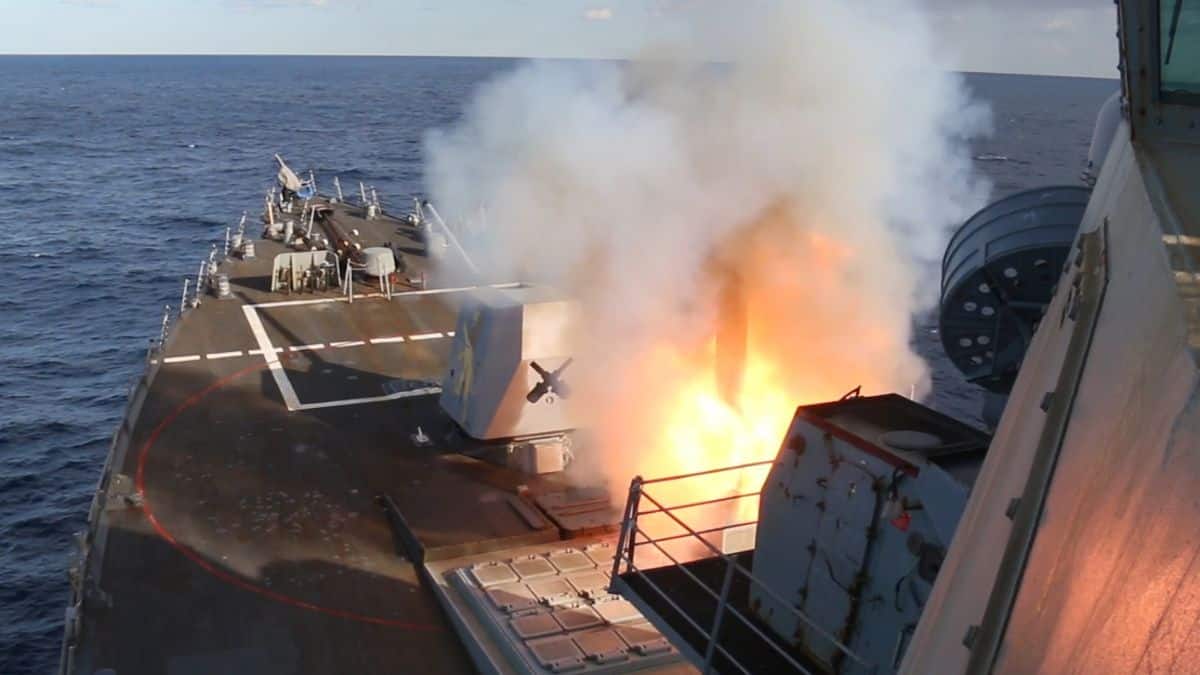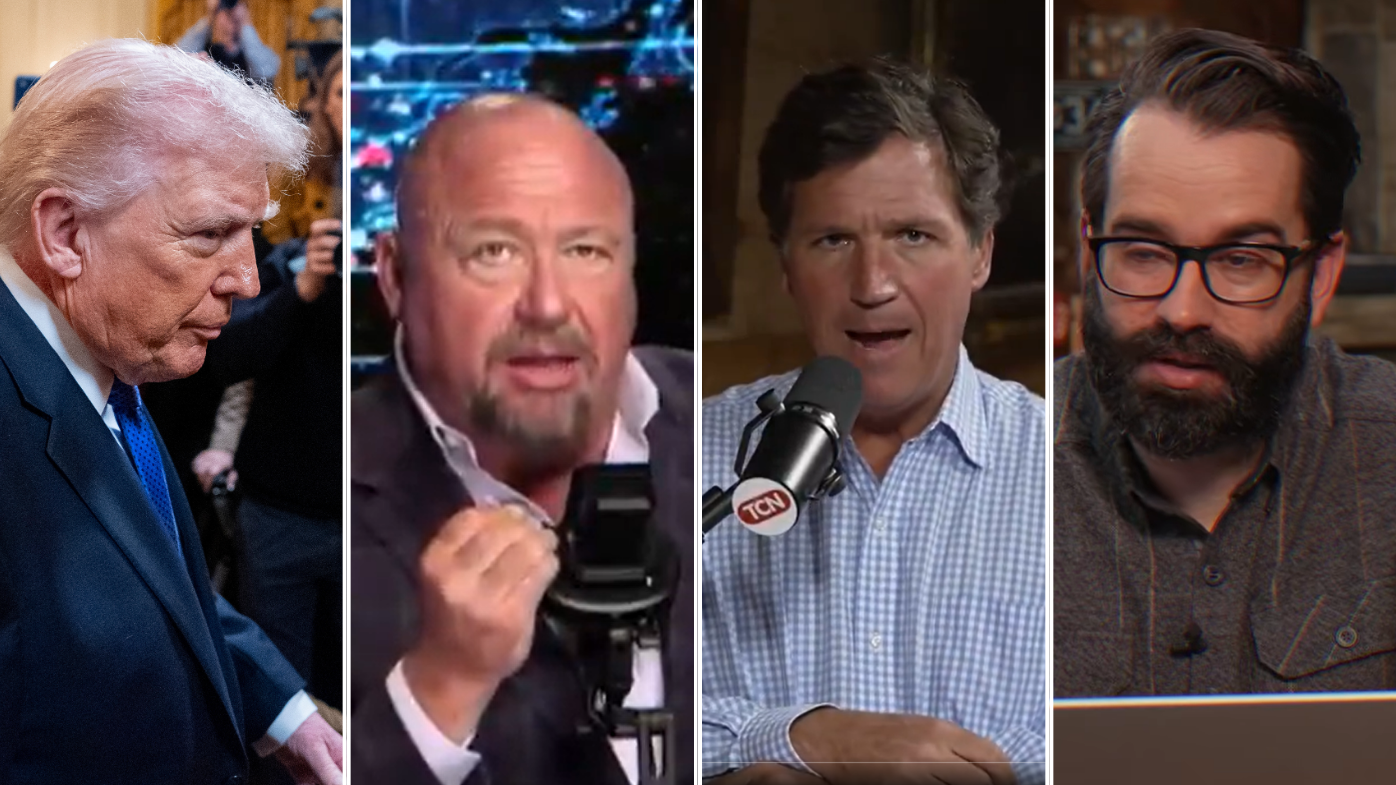
The chattering class is clutching their pearls again. From the leather-bound offices of the legacy right to the frantic digital op-eds of the neo-isolationists, the chorus is the same: Donald Trump’s decision to apply kinetic pressure to Iran is a "betrayal" of his base or a "reckless" lurch toward a new forever war. They are wrong. They are fundamentally misreading the mechanics of power, the physics of Middle Eastern stability, and the very nature of the "America First" doctrine they claim to defend.
The "lazy consensus" among conservative commentators today is that any military action is a failure of policy. They have become so traumatized by the nation-building disasters of the early 2000s that they’ve retreated into a corner of reflexive passivity. They mistake "non-intervention" for "non-action." But in a globalized economy where the Strait of Hormuz is a jugular vein for global energy markets, passivity isn’t a strategy—it’s an invitation to arson.
The Myth of the "Anti-War" Conservative
The critics argue that Trump’s base voted for an end to overseas entanglements. This is a half-truth that masks a deeper reality. The base voted to stop wasting trillions on "democracy promotion" and "nation-building." They did not vote for the United States to become a paper tiger that watches its assets and interests get systematically dismantled by a revolutionary regime in Tehran.
Realism, not idealism, dictates that you don't need to occupy a country to neutralize its ability to threaten you. The mistake of the Bush era was the "stay and fix" mentality. The strategy we are seeing now is "strike and exit." It is a surgical application of force designed to reset the cost-benefit analysis of an adversary. If the cost of Iranian provocation—be it through proxies or direct maritime harassment—is the sudden, violent loss of high-value infrastructure, the Iranian calculus changes. To call this "warmongering" is to fundamentally misunderstand the definition of the word.
Deconstructing the "Escalation Ladder" Fallacy
Commentators love to talk about the "escalation ladder," a theoretical model where every action leads to a counter-action until we reach total war. This is a classroom concept that rarely survives contact with the real world. In reality, the Iranian regime is a rational, survival-oriented actor. They are not suicidal.
When the U.S. remains static, the "escalation" comes from the smaller actor testing the boundaries. By striking back decisively, the U.S. isn't climbing the ladder; it's sawing the rungs off. We’ve seen this before. In 1988, during Operation Praying Mantis, the U.S. Navy destroyed half of Iran's operational fleet in a single day after a mine hit the USS Samuel B. Roberts. The result? Not World War III. Not a regional conflagration. The result was a sudden, quiet period of Iranian compliance.
The critics who fear "unintended consequences" are usually the ones who ignore the very intended consequences of doing nothing:
- The Erosion of Credibility: If a red line is crossed and nothing happens, the line doesn't exist.
- Economic Volatility: Uncertainty in the Gulf drives insurance premiums for tankers through the roof, which you feel at the gas pump.
- Proxy Proliferation: Passive stances allow Iran to fund and direct Houthis, Hezbollah, and Hamas with total impunity.
The Energy Market Logic
Let’s talk about the business of war. The isolationists claim these strikes threaten the global economy. I’ve seen traders panic over a single drone splash, sending futures up 4% in an hour. But long-term stability is never bought with appeasement. It is bought with the assurance that the police of the global commons—the U.S. Navy—is willing to use its teeth.
If Iran believes it can choke the world’s energy supply without facing a kinetic response, they have a permanent ransom note held to the world’s throat. A strike that establishes a "No-Go" zone for Iranian interference actually lowers long-term risk. It tells the markets that the flow of goods is guaranteed by the only force capable of guaranteeing it.
Why the "Constitutionality" Argument is a Red Herring
Many on the right are now hiding behind the War Powers Act, claiming Trump needs a Congressional invitation to breathe on a target. While I am a proponent of Congressional oversight, the executive’s role as Commander-in-Chief includes the inherent authority to defend U.S. interests and personnel against imminent threats.
The argument that we must wait for a formal declaration of war to respond to state-sponsored terrorism is a suicide pact. In the time it takes for a sub-committee to meet, a carrier group could be under fire. The founders intended for a deliberative process for wars of conquest, not for the tactical defense of the realm. To suggest otherwise is to demand we fight with one hand tied behind our backs while our opponents use every dirty trick in the book.
The Failure of the "Maximum Pressure" Critics
Critics say "Maximum Pressure" failed because Iran is still acting out. This is like saying a diet failed because you’re hungry. The goal of maximum pressure is to deplete the resources the regime uses to export its revolution. It is working. The Iranian economy is in a tailspin, their currency is toilet paper, and their ability to fund proxies is severely hampered.
The current kinetic actions are merely the enforcement arm of that economic policy. You cannot have "Maximum Pressure" if there is no physical "Maximum" at the end of the line. If you only use sanctions, you are just a bookkeeper. If you are willing to use a Hellfire missile, you are a superpower.
A Thought Experiment in Failure
Imagine a scenario where the U.S. follows the advice of the conservative isolationists. We pull back. We "de-escalate." We issue a sternly worded press release after an American drone is shot down or a commercial tanker is seized.
What happens next?
- Iran seizes another tanker, then another.
- They realize the U.S. has no stomach for a fight.
- They close the Strait.
- Oil hits $150 a barrel.
- The global economy enters a depression.
At that point, the very commentators screaming about "restraint" would be the first to scream about "failed leadership" and "American weakness." They want the benefits of a Pax Americana without the cost of maintaining it. It is intellectual dishonesty of the highest order.
The Tactical Nuance: Strike, Don't Stay
The genius of the Trump approach—and what the critics miss—is the absence of a "Phase 4." In the Iraq War, Phase 4 was the "What do we do now that we’ve won?" part. It involved building schools, training police, and trying to turn a desert into Delaware.
Trump has zero interest in Phase 4.
The strategy is "Phase 1: Identify Target. Phase 2: Eliminate Target. Phase 3: Go Home." This is the only way to use military power in the 21st century. It provides the deterrent effect without the quagmire. It satisfies the "America First" requirement of protecting U.S. interests while honoring the "No Forever Wars" pledge. It is the surgical application of violence to maintain a peaceful status quo.
Stop Asking the Wrong Question
The pundits are asking, "Will this lead to war?"
The real question is, "Will this prevent a larger war later?"
History is littered with the corpses of nations that thought they could buy peace with "restraint" against an expansionist, ideological aggressor. By hitting Iran now, we are signaling that the cost of their "Grey Zone" warfare has just become prohibitively expensive.
This isn't a departure from Trump's promises; it is the fulfillment of them. He promised to put American interests first. He promised to stop being the world’s patsy. He promised a military so strong that nobody would dare mess with us.
You don't build that reputation by writing checks and holding press conferences. You build it by being the guy who is willing to flip the table when the other side starts cheating at the game. The critics call it "chaos." I call it the most effective foreign policy move we’ve seen in three decades.
If you want a president who will let our adversaries dictate the terms of engagement while reading poetry about "international norms," vote for someone else. But if you want a president who understands that the only language a revolutionary theocracy speaks is force, then get out of the way and let the man work.
The loudest voices in the room right now are the ones who have been wrong about every major geopolitical shift for twenty years. They were wrong about the Abraham Accords. They were wrong about the move to Jerusalem. They are wrong about this. Peace through strength isn't a slogan; it’s a blueprint. And right now, the blueprint is being executed with devastating precision.
The only "betrayal" would be to return to the era of managed decline and strategic patience that left us vulnerable in the first place. If you're afraid of the fire, don't start a fight with a pyromaniac—but if the pyromaniac is already at your door, you’d better be ready to burn his house down first.
Would you like me to analyze the specific economic impact of these strikes on global shipping insurance rates?