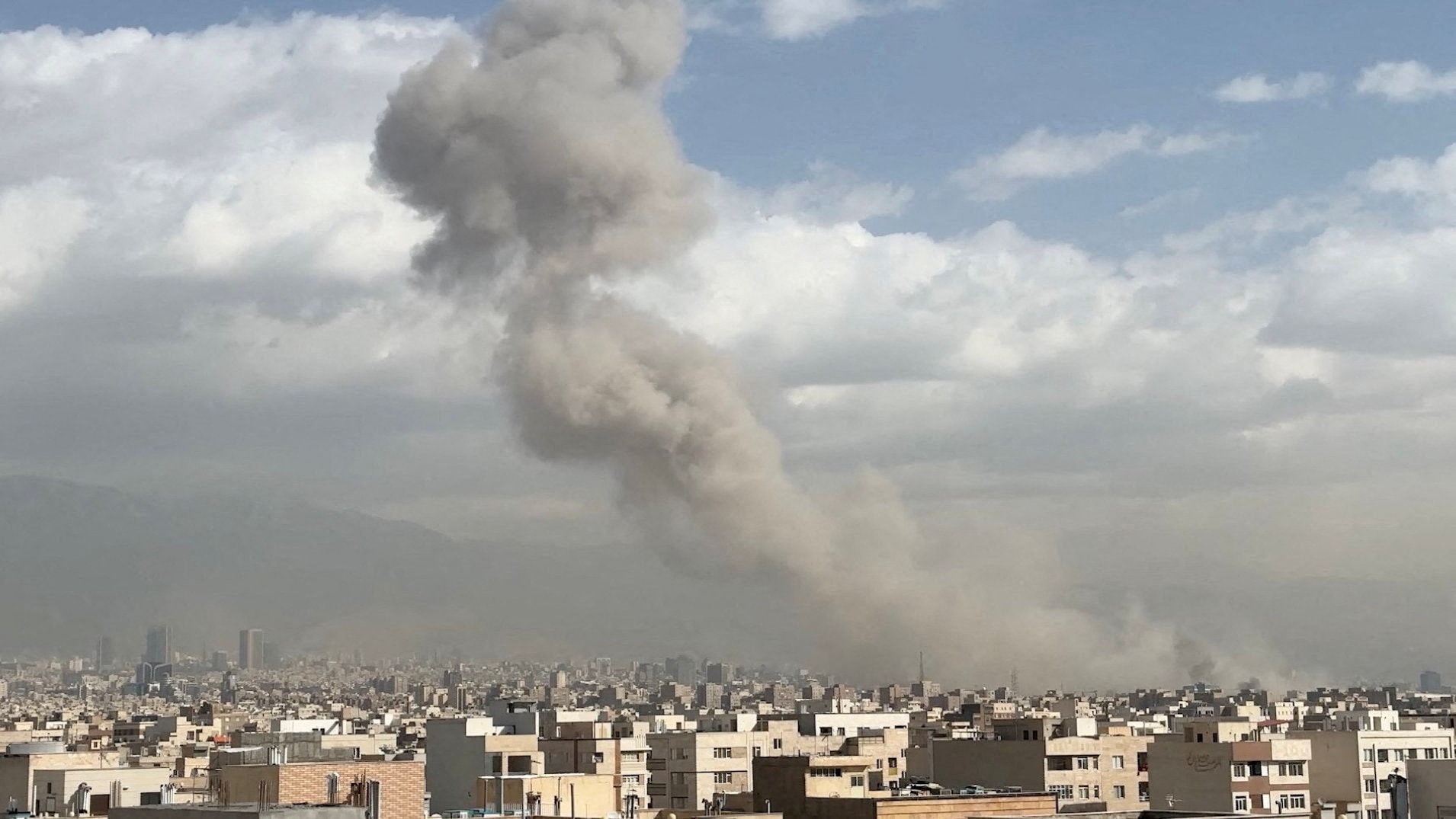
The concept of a "war to end all wars" in the Middle East is a mathematical impossibility when the underlying variables of regional friction—resource scarcity, ideological divergence, and the "security dilemma"—remain unaddressed. Current escalations are often framed as a path toward a definitive resolution, yet this ignores the Equilibrium of Perpetual Instability. For a conflict to end all others, it must achieve a total transformation of the regional incentive structure, a feat that no kinetic military action has historically accomplished without a subsequent, multi-decade occupation and economic reconstruction phase.
The current geopolitical friction is best understood through three distinct pillars of destabilization: the Symmetry of Asymmetric Assets, the Decoupling of State and Proxy Interests, and the Attrition of Institutional Deterrence.
The Symmetry of Asymmetric Assets
Modern conflict in the Middle East has moved past the era of conventional tank battles and clear front lines. We are now seeing the dominance of "Cheap-to-Produce, Expensive-to-Defend" (CPED) technology. This creates a fundamental imbalance in the cost function of regional defense.
- The Drone-Missile Ratio: A non-state actor can deploy a unidirectional attack drone costing $20,000. The interceptor missile required to neutralize it often costs upwards of $2 million.
- Infrastructure Vulnerability: The geographic concentration of desalination plants and oil refineries creates high-value targets that require 24/7 high-alert defense systems, whereas the offensive side only needs to succeed once.
- Cyber-Kinetic Integration: The use of digital disruption to blind early warning systems before a physical strike reduces the reaction window to near zero.
When the cost of defense exceeds the cost of offense by several orders of magnitude, "victory" becomes a matter of economic endurance rather than military prowess. A state may win every tactical engagement but lose the long-term economic war of attrition as its defense budget consumes its GDP.
The Decoupling of State and Proxy Interests
A primary logical failure in the "War to End All Wars" thesis is the assumption that neutralizing a state sponsor will automatically neutralize its proxies. This is the Principal-Agent Problem applied to militancy. While a sponsor provides funding and high-end hardware, local proxies often develop their own internal economies through smuggling, local taxation, and control of critical infrastructure.
- Ideological Autonomy: Proxies often hold more radical objectives than their sponsors. If a state sponsor attempts to de-escalate for diplomatic gains, the proxy may continue hostilities to maintain its local relevance.
- Technological Democratization: The ability to 3D-print components for short-range rockets or assemble explosive devices from dual-use chemicals means that "cutting off the head" no longer disables the limbs.
- The Martyrdom Feedback Loop: Kinetic strikes that cause high collateral damage serve as recruitment mechanisms, ensuring a steady supply of human capital even when financial capital is restricted.
This decoupling means that even if a major regional power were defeated or forced into a peace treaty, the sub-state actors would remain as "free radicals" in the system, capable of reigniting a full-scale regional conflict at any moment.
The Attrition of Institutional Deterrence
Deterrence only functions when the threat of retaliation is both credible and unbearable. In the Middle East, the threshold for "unbearable" has shifted.
The logic of deterrence is governed by the formula:
$$D = P \times C$$
Where $D$ is the strength of deterrence, $P$ is the perceived probability of a strike, and $C$ is the perceived cost of that strike to the adversary.
Currently, $C$ is diminishing because many regional actors have already hit a "floor" of economic or social misery. When an actor perceives they have nothing left to lose, the value of $C$ approaches zero, rendering $D$ ineffective regardless of how high $P$ is. This explains why heavy-handed military responses often fail to prevent subsequent attacks; the adversary has integrated the cost of retaliation into their operational model as an acceptable overhead.
The Resource Scarcity Bottleneck
Beneath the surface of religious and political rhetoric lies a brutal competition for survival assets. The Middle East is facing an existential crisis regarding water and arable land, which acts as a force multiplier for every other conflict.
- Transboundary Water Rights: The damming of major river systems by upstream nations creates a zero-sum game for downstream neighbors.
- Arable Land Loss: Desertification is pushing rural populations into overcrowded urban centers, creating "tinderbox" demographics prone to radicalization.
- Energy Transition Risks: As the world shifts away from hydrocarbons, states that failed to diversify their economies face a looming revenue collapse, which historically precedes internal civil war.
Any "final war" that does not solve the desalination and irrigation requirements of the region is merely a temporary pause. Hunger and thirst do not honor peace treaties.
The Strategic Failure of Decapitation Strikes
Consultancy-level analysis of military history shows that decapitation strikes—targeting the top leadership of an organization—rarely lead to the organization's collapse. In fact, they often trigger a "Darwinian Pressure" effect.
When a charismatic, central leader is removed, the organization typically decentralizes. The remaining mid-level commanders are often more violent, more decentralized, and harder to track. This transformation from a hierarchical entity to a distributed network makes the conflict "un-winnable" in the traditional sense because there is no central authority left to sign a surrender.
The transition from a known adversary to a "hydra" of autonomous cells increases the intelligence requirements for the defending state while decreasing the effectiveness of high-yield weapons.
Structural Requirements for Regional Stability
If a "War to End All Wars" is a fallacy, what is the alternative framework for stability? It requires a transition from Kinetic Dominance to Systemic Integration.
1. The Creation of Cross-Border Economic Interdependency War becomes less attractive when the cost of disrupting trade exceeds the perceived gain of a strike. This requires infrastructure that physically links the fates of rival nations—such as a shared regional power grid or integrated water management systems.
2. Standardized Rules of Engagement for Non-State Actors International law currently struggles to categorize non-state actors. A new framework is required that holds state sponsors strictly liable for the actions of their proxies, including automatic economic sanctions triggered by proxy activity, regardless of "plausible deniability."
3. The Pivot to Modular Defense States must move away from centralized, high-value defense assets and toward modular, distributed defense networks that mirror the decentralized nature of their threats. This involves the mass deployment of AI-driven, low-cost interceptors to re-align the cost function of defense.
The Forecast of Fractional Conflict
The probability of a single, decisive conflict resolving the Middle East's tensions is statistically negligible. Instead, the region is moving toward a state of Fractional Conflict: a series of high-intensity, localized eruptions that are managed rather than "won."
The strategic play for any global power or regional stakeholder is not to seek a "final victory" but to build Resilient Insularity. This involves:
- Decoupling critical supply chains from the immediate conflict zones.
- Investing in localized resource production (vertical farming, modular nuclear reactors).
- Developing "Active Neutrality" capabilities, where the cost to any aggressor for violating a state's space is made prohibitively high through automated systems rather than political alliances.
The actors who will thrive in the next decade are those who recognize that the Middle East is not a puzzle to be solved, but a volatile system to be navigated. Victory is redefined as the ability to maintain internal economic and social coherence while the external environment remains in a state of flux.
Prioritize the construction of decentralized energy and water infrastructure to remove the primary triggers of localized uprisings. Shift military procurement toward mass-scale autonomous defense to invert the current unfavorable cost-to-intercept ratio. Stop seeking the "end of the war" and start building a state that is indifferent to its continuation.