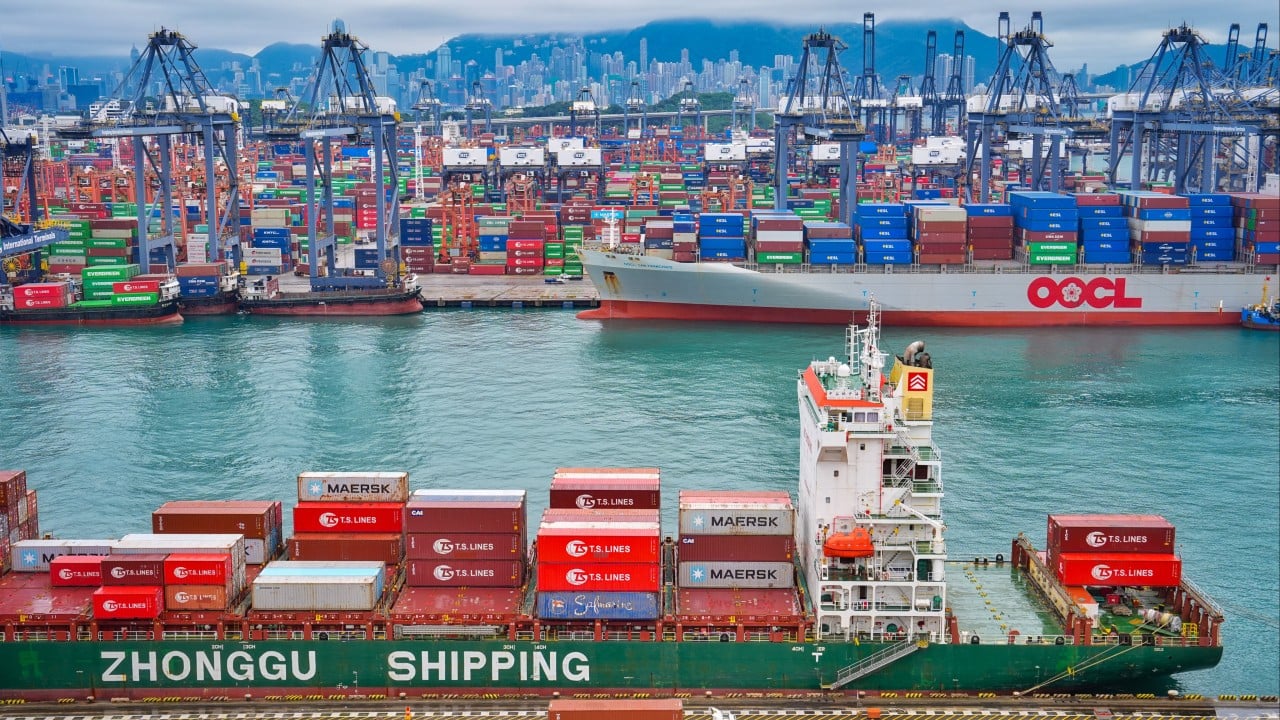
The 30% surge in air freight rates for China-based shippers following Middle East airspace closures is not a random market fluctuation; it is the inevitable mathematical result of a sudden contraction in available ton-mile capacity. When sovereign airspace becomes a restricted zone, the logistical burden shifts from a linear path to a circumscribed arc, triggering a cascade of secondary costs that aggregate into a substantial price floor. Shippers must understand that this price hike is driven by the physics of fuel consumption and the rigidities of crew duty cycles rather than simple opportunistic pricing by carriers.
The Triad of Operational Friction
To analyze why a 15% increase in flight distance leads to a 30% or higher increase in landed cost, one must look at the three primary drivers of cargo pricing: Fuel Burn Variance, Payload Penalty, and Network Utilization Decay.
1. Fuel Burn Variance and the Kinetic Tax
Air freight is essentially the business of converting kerosene into distance. When flight paths are diverted—for instance, routing around Iranian or Iraqi airspace to transit via the northern corridor over Central Asia or the southern corridor over the Arabian Peninsula—the flight time increases by two to four hours depending on the specific origin-destination pair.
The fuel burn does not scale linearly with time. A heavier fuel load required for the longer duration increases the aircraft's takeoff weight, which in turn increases the lift-induced drag. This creates a feedback loop where the aircraft burns more fuel simply to carry the extra fuel needed for the detour. In high-performance widebody freighters like the Boeing 777F or the 747-8F, this "fuel-to-carry-fuel" penalty accounts for a significant portion of the surcharge passed to the shipper.
2. The Payload-Range Trade-off
Commercial aircraft operate within a fixed Maximum Takeoff Weight (MTOW). Every kilogram of additional fuel required for a longer route directly displaces a kilogram of revenue-generating cargo.
- Standard Route Capacity: An aircraft might carry 100 tons of cargo with a specific fuel reserve.
- Diverted Route Capacity: To cover an additional 1,000 nautical miles, the fuel requirement might increase by 12 tons.
- Resultant Capacity: The sellable space drops to 88 tons.
Carriers must recover the lost revenue of those 12 tons across the remaining 88 tons. This structural scarcity drives the "30% tipped rise" reported in market forecasts. It is a supply-side contraction occurring simultaneously with a demand-side shock.
3. Crew Duty Cycles and Asset Rotation
International aviation regulations dictate strict flight time limitations (FTL) for flight crews. A 10-hour flight that becomes a 13-hour flight often crosses the threshold where a double-crew (four pilots) is required instead of a standard crew. Furthermore, these delays disrupt the "turnaround" synchronization at hubs like Shanghai Pudong (PVG) or Frankfurt (FRA). If an aircraft arrives three hours late due to a detour, it misses its scheduled maintenance slot or its next departure window, reducing the total number of cycles the airframe can complete in a month. This decrease in asset utilization requires higher per-kilogram margins to maintain the same Return on Invested Capital (ROIC).
Supply Chain Elasticity and the Modal Shift
The immediate reaction to a 30% price spike is often a search for alternatives, but the current geopolitical environment has neutralized many of the traditional safety valves. The effectiveness of a supply chain’s response depends on the Value-to-Weight Ratio of the commodities being moved.
The Breakdown of Sea-Air Hybrid Solutions
In typical years, shippers mitigate high air costs by using Sea-Air solutions—shipping via ocean to a hub like Dubai or Colombo and then flying the remainder. However, the Red Sea crisis has already compromised ocean transit times and reliability. If the "Sea" portion of Sea-Air is delayed by 15 days due to Cape of Good Hope diversions, and the "Air" portion is 30% more expensive due to airspace closures, the hybrid model loses its economic and temporal advantage.
Rail Freight Contradictions
The China-Europe Railway Express (CRE) offers a middle ground, but it suffers from its own geopolitical sensitivity. Routes through Russia (the Northern Corridor) are restricted by many Western sanctions regimes or corporate ESG policies, while the Middle Corridor (via the Caspian Sea) lacks the throughput capacity to absorb a significant percentage of air freight volumes. This leaves air freight as the "lender of last resort" for high-value electronics, automotive components, and pharmaceuticals, regardless of the 30% premium.
The Cargo Risk Premium Framework
Shippers are not just paying for fuel; they are paying a risk premium associated with "Capacity Certainty." In a volatile airspace environment, carriers prioritize long-term contract holders (BSAs - Block Space Agreements) over spot market participants.
Spot Market Volatility
The spot market functions as the marginal clearing price for the industry. When capacity is removed due to payload penalties, the spot market does not rise by 30%—it often doubles or triples as freight forwarders scramble to fulfill "must-go" orders. The 30% figure cited by analysts represents the weighted average, but for the uncontracted shipper, the reality is far more punishing.
The Role of Ad-Hoc Charters
Large-scale manufacturers often turn to ad-hoc charters when scheduled service fails. However, charter availability is currently constrained by two factors:
- Military Demand: Geopolitical instability often leads to increased government requisitioning of private heavy-lift capacity for logistical support.
- Repositioning Costs: Since planes cannot fly through the closed airspace, the cost of "deadheading" or repositioning a charter aircraft to China becomes prohibitively expensive, as the ferry flight also incurs the detour fuel penalty.
Quantifying the "China Factor" in Global Logistics
China’s position as the world's primary manufacturing hub creates a specific directional imbalance. The "Head-Haul" (China to Europe/US) is consistently over-subscribed, while the "Back-Haul" often has excess capacity.
When Middle East airspace closes, the impact on China-Europe lanes is disproportionately higher than on Trans-Pacific lanes. Shippers moving goods from Shenzhen to Amsterdam are facing a direct geographic barrier. In contrast, goods moving from China to the US West Coast remain unaffected by Middle Eastern geography, creating a bifurcated market where "East-West" logistics costs diverge wildly based on the specific compass heading.
Tactical Adjustment: The Density Optimization Requirement
Since air freight is billed on "Volumetric Weight" (the greater of actual weight vs. space occupied), the 30% price increase forces a mandatory shift in packaging engineering. If the price per kilogram rises, the only way to maintain a landed cost parity is to increase the density of the shipment.
- Old Strategy: Focus on rapid fulfillment with oversized protective packaging.
- New Strategy: Vacuum-sealing, nesting components, and removing retail packaging at the point of origin to maximize the utilization of every cubic centimeter of the aircraft's hold.
Strategic Recommendation for High-Volume Shippers
The expectation of a return to "normal" pricing in the short term is a strategic fallacy. Airspace closures in the Middle East are often protracted, and the resulting carrier surcharges tend to be "sticky"—remaining in place even after the immediate crisis subsides as carriers look to recoup lost margins.
Actionable Play: Transition 20% of your highest-velocity air volume to a "Buffer Stock" model utilizing localized warehousing in Europe. The cost of carrying inventory for 30 days is currently lower than the 30% delta in air freight premiums and the associated risk of production line shutdowns due to "bumped" cargo. For the remaining 80%, move from monthly spot bidding to quarterly fixed-rate agreements with "Force Majeure" clauses that define specific fuel-trigger indexes. This replaces the uncertainty of a 30% "tip" with a predictable, albeit higher, cost baseline that can be priced into the final product.
Maintain a "Dynamic Routing" capability. Ensure your logistics providers have pre-cleared access to both the Northern (trans-Siberian, if compliant) and Southern (via South East Asia) transit corridors. Reliability in the current market is found in redundancy, not in the lowest bid.