The recent deployment and discharge of Japanese missile systems in the northern Philippines, conducted in coordination with United States and allied forces, represents a fundamental shift from passive deterrence to active kinetic signaling. This exercise, situated on the geographic periphery of the South China Sea, is not merely a tactical drill; it is a calculated demonstration of inter-theater interoperability designed to address specific vulnerabilities in the "First Island Chain" defense strategy.
The Strategic Geometry of the Luzon Strait
The location of these drills—facing the South China Sea from the northern Philippine province of Cagayan—is dictated by the physics of maritime chokepoints. The Luzon Strait serves as the primary deep-water gateway for naval assets transiting from the mainland Asian coast into the open Pacific. Control over this corridor is the decisive factor in any conflict involving the Taiwan Strait or the West Philippine Sea.
By placing Japanese Ground Self-Defense Force (JGSDF) assets, specifically Type 12 surface-to-ship missile units, on Philippine soil, the alliance is testing a distributed lethality framework. This framework relies on three distinct operational pillars:
- Geographic Displacement: Moving high-value strike assets away from predictable home bases in Okinawa or Kyushu to temporary, mobile positions in the Philippines.
- Cross-Domain Integration: Utilizing U.S. sensor data (ISR) to provide targeting solutions for Japanese shooters, effectively creating a "plug-and-play" kill web.
- Political Signaling: Establishing a precedent for Japan’s "collective self-defense" posture to manifest physically within the sovereign territory of a Southeast Asian partner.
Technical Analysis of the Kinetic Assets
The Type 12 Surface-to-Ship Missile (SSM) utilized in these drills is the centerpiece of Japan’s "stand-off" defense capability. Understanding the impact of this deployment requires an analysis of its performance parameters and how they alter the regional cost-exchange ratio.
The standard Type 12 operates on an inertial navigation system (INS) with GPS guidance and terminal active radar homing. However, the upgraded iterations currently under development aim to extend ranges from 200 kilometers to over 1,000 kilometers. Even at current operational ranges, the placement of these units in northern Luzon allows for the "bottling up" of the Bashi Channel.
The Sensor-to-Shooter Bottleneck
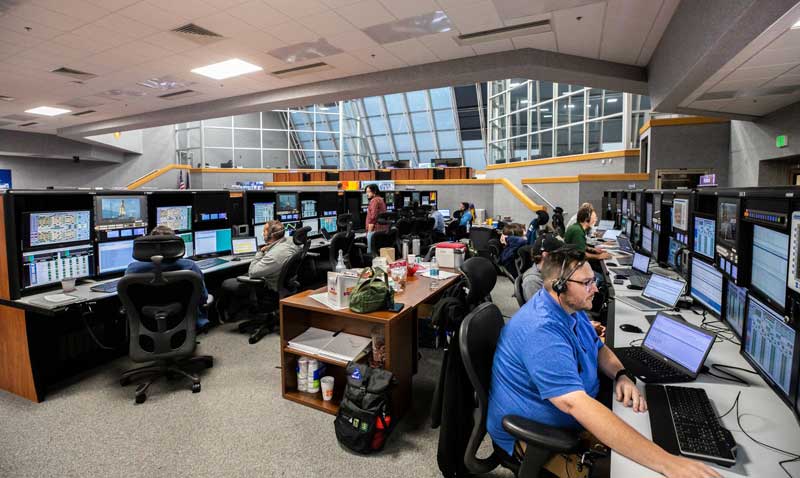
The primary challenge in this exercise is not the launch itself, but the target acquisition cycle. To successfully interdict a hostile maritime vessel in the South China Sea from a Philippine beachhead, the alliance must maintain a persistent data link. This creates a reliance on the following:
- P-8A Poseidon Surveillance: U.S. naval aircraft providing long-range maritime patrol and acoustic tracking.
- Space-Based ISR: Satellite constellations providing electro-optical and synthetic aperture radar (SAR) imagery to confirm target coordinates.
- Link 16 Data Exchange: The tactical data link used to pass target tracks between Japanese launchers and American command nodes.
The bottleneck occurs in the latency of this data transfer. If the "kill chain" takes longer than the target's maneuverability allows, the missile becomes an expensive piece of ballistic waste. The Philippines drill serves as a live-fire stress test of this digital architecture under tropical atmospheric conditions, which can degrade certain sensor frequencies.
The Cost Function of Multilateral Escalation
Military drills are often characterized as "provocative" in general media, but a data-driven analysis views them through the lens of escalation dominance. The goal is to make the cost of a competitor's move (e.g., an amphibious assault or a blockade) higher than any potential gain.
The introduction of Japanese missiles into the Philippine theater changes the risk assessment for regional adversaries. Previously, an adversary could focus its electronic warfare and anti-satellite (ASAT) capabilities on a single nation's assets. Now, they face a multi-node threat. To neutralize the threat, the adversary must now consider kinetic or cyber strikes against:
- Philippine infrastructure (hosting the assets).
- Japanese personnel (operating the assets).
- U.S. data streams (guiding the assets).
This complicates the adversary's "First Strike" logic. Striking a Japanese unit on Philippine soil triggered by American data creates a three-front diplomatic and military crisis, effectively raising the threshold for regional conflict.
Institutional Friction and Operational Constraints
Despite the visual success of the missile fire, the alliance faces significant structural hurdles that a single drill cannot resolve. These are not failures of intent, but realities of sovereign logistics.
Logistic Interoperability
Japan and the Philippines do not share a common logistics backbone. The "Reciprocal Access Agreement" (RAA) currently being navigated between Tokyo and Manila is the legal prerequisite for more permanent deployments. Without a standardized system for ammunition storage, fuel grades, and maintenance parts, these drills remain "boutique" operations—impressive for a day, but unsustainable during a high-intensity conflict of several weeks.
Sovereignty Limits
The Philippine constitution and domestic political climate place strict limits on foreign military presence. Unlike the "permanent-rotational" status of U.S. forces under the Enhanced Defense Cooperation Agreement (EDCA), Japanese presence is still viewed through a historical and constitutional lens. Every missile fired in these drills must be framed as a "training exercise" rather than a "deployment," a linguistic distinction that impacts the speed of mobilization.
Displacement of the Maritime Gray Zone
The South China Sea is currently defined by "Gray Zone" tactics—actions that fall below the threshold of open warfare but change the status quo on the ground (or water). This includes the use of maritime militia, water cannons, and ship-ramming.
The deployment of heavy kinetic assets like the Type 12 missile is an attempt to "re-conventionalize" the conflict. By bringing heavy artillery to the shores of the Luzon Strait, the U.S.-Japan-Philippines triad is signaling that Gray Zone harassment will eventually meet a "Hard Power" wall.
This creates a new equilibrium. If the triad demonstrates that it can reliably track and target vessels in the South China Sea from land-based positions, the utility of the maritime militia decreases. The militia's primary advantage—deniability—evaporates when they are being tracked by high-altitude sensors and held at risk by precision-guided missiles.
Structural Vulnerabilities in the Alliance Kill-Web
While the drills project strength, a clinical analysis identifies two critical failure points in this specific defensive posture.
The First Failure Point: Cyber-Electromagnetic Contest (CEMA)
The integrated nature of the U.S.-Japan-Philippine drill is its greatest weakness. If an adversary can successfully jam the communication nodes between the U.S. sensor and the Japanese launcher, the system defaults to "Degraded Operations." In this state, the Japanese units are essentially blind, capable only of firing at targets within their own organic radar horizon (roughly 20-30 kilometers for sea-skimming threats due to the earth's curvature).
The Second Failure Point: The "Small Island" Logistics Trap
Mobile missile launchers require significant support vehicles, including reloading trucks, command and control vans, and power units. Northern Luzon's infrastructure, while improving, consists of narrow coastal roads and bridges with limited weight-bearing capacities. An adversary does not need to hit the missile launcher to neutralize it; they only need to destroy a single bridge or a localized fuel depot to render the multi-million dollar battery immobile and useless.
Strategic Shift from Defense to Denial
The shift observed in the northern Philippines is the transition from "Area Defense" (protecting a specific island) to "Sea Denial" (preventing an enemy from using a body of water).
The tactical recommendation for the alliance moving forward involves the proliferation of "Attritable" assets—low-cost, unmanned sensors and launchers that can be distributed across the hundreds of small islands in the Philippine archipelago. Relying on a few high-value JGSDF Type 12 units creates a "target-rich" environment for adversary precision strikes. A more resilient strategy requires the miniaturization of these capabilities, moving from large, truck-mounted launchers to smaller, containerized systems that can be hidden in civilian shipping or jungle canopy.
The alliance must now prioritize the "Hardening" of Philippine bases—not just with concrete, but with the digital infrastructure required to maintain a localized "Common Operational Picture" (COP) that does not rely exclusively on vulnerable satellite links to Hawaii or Okinawa. The ability to maintain a localized kill-chain, independent of global networks, is the final step in making the defense of the Luzon Strait a credible deterrent.