Rain streaked the windows of a small diner in Des Moines, the kind of place where the coffee is bottomless and the conversations usually center on the weather or the local high school football scores. But today, the silence was heavy. At the corner booth, a man named Elias—a third-generation hardware store owner—stared at a stack of invoices that felt more like a death warrant. For months, the cost of the steel bolts, the copper wiring, and the aluminum siding he sold had been climbing. He wasn’t raising prices to get rich. He was raising them to survive.
The culprit wasn’t a lack of customers. It was a signature in Washington.
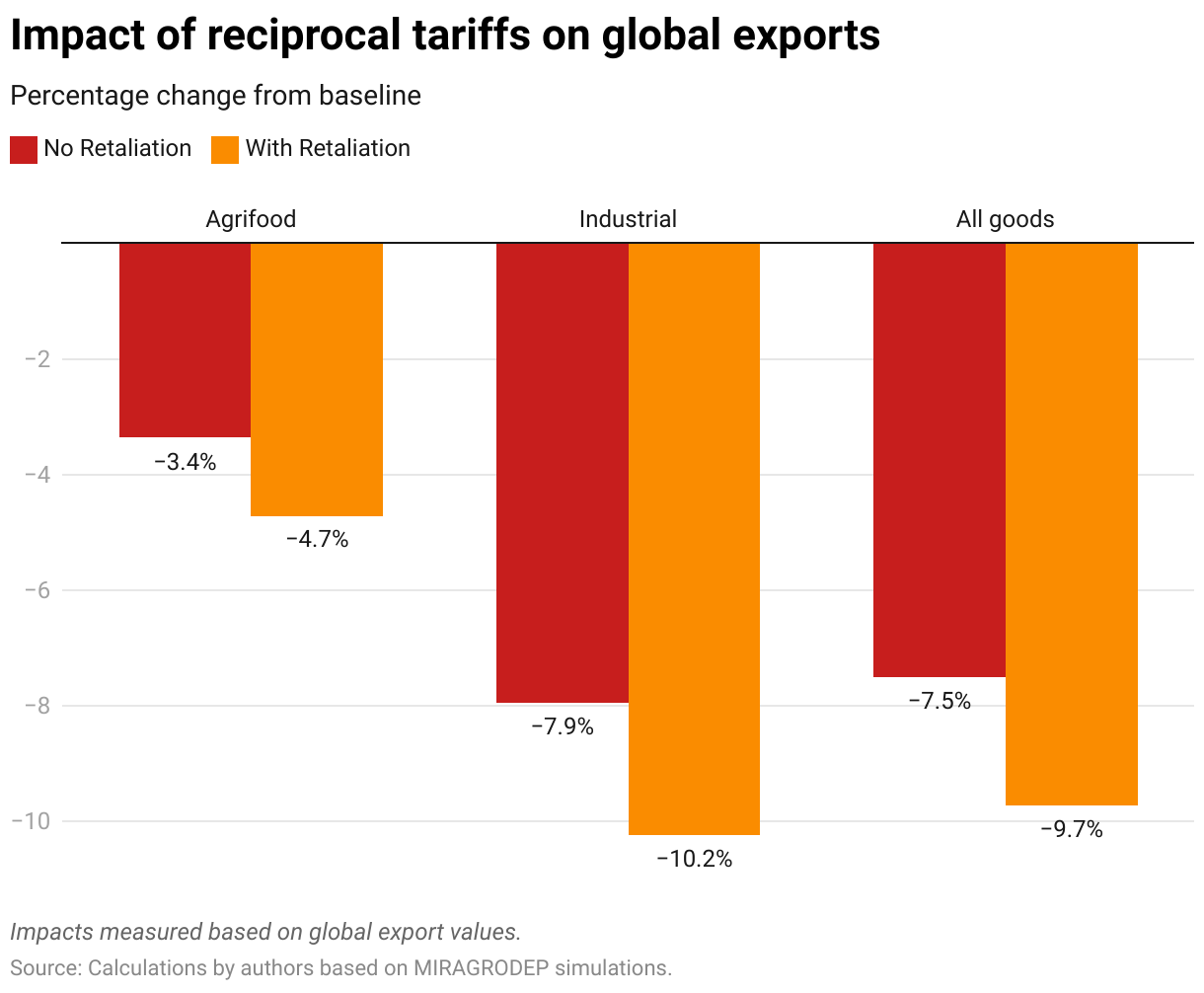
When the executive branch decided to bypass the usual legislative channels to slap sweeping tariffs on imported goods, the ripple effect didn't just hit "foreign entities." It hit Elias. It hit the young couple trying to renovate their first home. It hit the contractor who had to tell his crew there wouldn’t be a Christmas bonus this year because the margins had vanished into the ether of trade war politics.
Then, the Supreme Court spoke.
The decision was not merely a dry interpretation of the law. It was a structural earthquake. By ruling against the administration's unilateral use of emergency powers to levy tariffs, the Court didn't just talk about trade. They talked about the kitchen table. They reminded the country that the power to tax—which is exactly what a tariff is—belongs to the people's representatives, not to a single person in a high office, regardless of their party or their promises.
The Myth of the Magic Wand
We often treat the presidency like a magic wand. We want someone who can step into the Oval Office and, with a flick of a pen, fix the economy, secure the borders, and lower the price of milk. It’s a seductive idea. It’s also a dangerous one.
The "landmark" nature of this Supreme Court decision lies in its rejection of this presidential alchemy. For decades, Congress has been handing over its homework to the Executive Branch. They passed broad, vaguely worded laws that allowed Presidents to declare "national emergencies" for almost anything. Need to protect a specific industry? Call it a national security threat. Want to pressure a neighbor on immigration? Use a tariff as a blunt force instrument.
This ruling stopped the clock. The Justices looked at the fine print and decided that the "emergency" excuse had been stretched until it snapped. They signaled that the era of "government by memo" is facing a reckoning. When the government decides to reach into the pockets of its citizens, it must do so through the messy, loud, and public process of Congressional debate.
Consider the alternative: a world where the cost of every item in your shopping cart is subject to the morning mood of one individual. If a President can unilaterally tax a washing machine coming from South Korea or a crate of avocados from Mexico, they aren't just managing trade. They are micro-managing your bank account.
The Invisible Tax on the American Dream
Tariffs are often wrapped in the flag. They are sold as a way to "make them pay." But "they" rarely pay. We do.
Imagine a hypothetical manufacturer in Ohio. Let’s call her Sarah. Sarah builds high-end medical imaging equipment. Her machines save lives. To build them, she needs specialized components that are only manufactured in two places on Earth, neither of which is the United States. When a 25% tariff is placed on those components, Sarah faces a choice that feels like a trap.
She can swallow the cost, which means she stops hiring and stops innovating. She can pass the cost to the hospitals, which means your next MRI just got more expensive. Or she can move her assembly line to a country where those tariffs don't exist.
This isn't a theory. This is the math of the modern world.
The Supreme Court's decision acknowledged that these "invisible taxes" carry a weight that requires more than just executive fiat. By insisting that such broad economic shifts must go through Congress, the Court re-inserted a crucial buffer between political impulse and economic reality. They forced the government to show its work.
The Ghost of 1930
To understand why this matters, we have to look back at the wreckage of the past. In 1930, two men named Smoot and Hawley thought they had the answer to the Great Depression. They pushed through a massive tariff bill, convinced that protecting American industry from foreign competition would jumpstart the economy.
It was a disaster.
Global trade froze. Other nations retaliated. The Depression didn't just deepen; it became a global abyss. The lesson was supposed to be that trade is a delicate ecosystem, not a game of tug-of-war. Yet, as the years passed, we forgot. We started to believe that we could isolate ourselves without consequence.
The current legal battle wasn't just about the ghost of Smoot-Hawley; it was about the modern interpretation of the "Separation of Powers." The administration argued that they needed the flexibility to act fast in a changing world. The Court, however, reminded them that the Constitution was designed to be slow. It was designed to be difficult. That friction is what prevents a single mistake from becoming a national catastrophe.
The Human Toll of Uncertainty
Business thrives on one thing above all else: predictability.
If you are a farmer in Nebraska, you need to know what the price of fertilizer will be six months from now. If you are a tech startup in Austin, you need to know if your server costs are going to double overnight because of a new trade spat.
The unilateral nature of recent tariffs created a fog of war over the American economy. Investment chilled. Why build a new factory today if the rules of the game might change on a Tuesday morning tweet?
The Court’s ruling acts as a lighthouse in that fog. By narrowing the scope of what a President can do without Congress, they have restored a measure of stability. They have told the markets that the rules won't change unless there is a broad consensus, or at least a recorded vote where politicians have to look their constituents in the eye.
Why It Isn't Over
It would be a mistake to think this ruling solves every problem. The tension between the branches of government is a permanent feature of the American experiment. But the decision draws a line in the sand. It says that the word "emergency" cannot be used as a skeleton key to unlock powers that the Constitution explicitly gave to the legislature.
Back in the diner in Des Moines, Elias might not care about the nuances of the "Non-Delegation Doctrine" or the specific precedents cited in a 60-page judicial opinion. But he will care when his next shipment of steel arrives. He will care when he realizes that the legal guardrails are back in place.
We have spent a long time pretending that the complexities of a global economy can be solved by a "strongman" approach. We have flirted with the idea that the checks and balances designed by 18th-century men are too slow for the 21st-century world.
The Court just reminded us that those checks and balances aren't an obstacle to progress. They are the only thing keeping the grocery list from becoming a luxury item.
The gavel has fallen. The invoices remain. But for the first time in a long time, the person holding the pen has to answer to the people who have to pay the bill. The air in the diner feels a little less heavy. The rain continues to fall, but the foundation of the house—the messy, slow, frustrating, and vital separation of powers—is a little more secure than it was yesterday.
Would you like me to research the specific legal precedents the Court used in this decision to see how they might affect future trade cases?