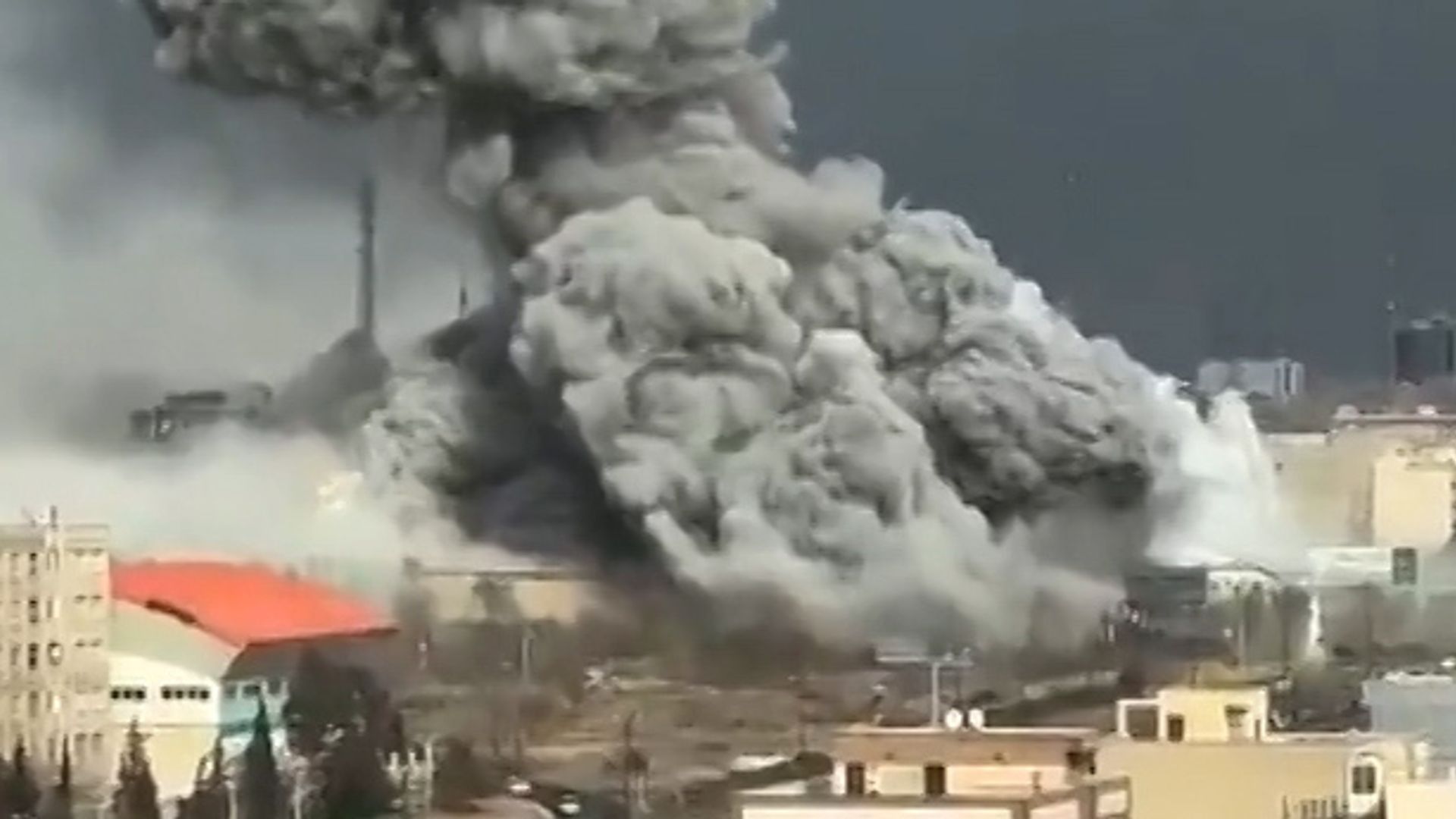
The world’s most important oil chokepoint just became a literal firing range. If you’re wondering why Brent crude just smashed through $83 and shows no signs of slowing down, look at the 21-mile-wide strip of water between Iran and Oman. Iran’s Islamic Revolutionary Guard Corps (IRGC) hasn't just issued a threat—they’ve effectively pulled the plug on 20% of the world’s daily oil supply.
It’s not just a "surge" in price. It’s a seismic shift in global energy security that’s going to hit your wallet at the pump within days. With hundreds of tankers now sitting ducks near the UAE port of Fujairah, the "just-in-time" global energy supply chain is officially broken.
The 21 Mile Bottleneck That Controls Your Life
The Strait of Hormuz is the only way out for oil from Saudi Arabia, Kuwait, the UAE, and Iraq. It’s the highway for about 20 million barrels of oil every single day. When Iran says the "strait is closed," they aren't just talking about their own exports. They’re threatening to set fire to any vessel—regardless of the flag it’s flying—that dares to transit.
We’re seeing a drop in tanker traffic of nearly 80% since the weekend. On March 1, only four vessels made the trip, compared to the usual average of 24. Most of those were Iranian. For everyone else, the risk of being "set ablaze," as IRGC officials so colorfully put it, is too high for any insurance company to touch.
Why $83 Is Just the Starting Line
If you think $83 Brent is expensive, you haven't seen the worst of it. Analysts from Goldman Sachs and Rystad Energy are already mapping out the math for $100 oil. The jump we’re seeing right now is a "risk premium." Basically, traders are betting on how much pain the world can take.
- Supply Loss: A full closure removes up to 15 million barrels per day that can't be rerouted.
- Insurance Meltdown: Major maritime insurers like Gard and Skuld have canceled war risk cover. No insurance means no shipping, period.
- The LNG Factor: This isn't just about oil. Roughly 20% of the world's liquefied natural gas (LNG) passes through here. European gas prices already spiked 40% after Qatar was forced to pause production for security reasons.
The Strategy of Economic Pain
Tehran knows it can't win a traditional naval war against the U.S. and Israel forever. But they don't have to. Their strategy is simple: make the global economy scream until the pressure on Washington becomes unbearable. By targeting tankers and energy hubs, they’re exporting their internal crisis to every gas station in America and every factory in Asia.
Iraq, OPEC’s second-largest producer, is already feeling the squeeze. They’ve warned they might have to slash production by 3 million barrels a day because they simply have nowhere to put the oil if the tankers aren't coming to pick it up. They’ve already cut over a million barrels from the Rumaila and West Qurna 2 fields.
Can Anyone Actually Bypass the Strait
The short answer? Not really. There are a few pipelines in Saudi Arabia and the UAE that can move oil to the Red Sea or the Gulf of Oman, but they don't have the capacity to handle even half of what usually goes through the water.
- East-West Pipeline (Saudi Arabia): Can handle about 5 million barrels per day, but it’s a drop in the bucket compared to the 20 million barrels at risk.
- Abu Dhabi Crude Oil Pipeline: Bypasses the strait to Fujairah, but it’s already running near its limit.
The International Energy Agency (IEA) estimates only about 4 million barrels per day can realistically be redirected. That leaves a massive, 16-million-barrel hole in the global market.
What Happens to Your Wallet Tomorrow
This isn't a "wait and see" situation for the economy. Energy is the input for everything. When oil prices stay above $80, it's not just gasoline that gets more expensive; it’s the plastic in your phone, the fertilizer for your food, and the shipping for your Amazon packages.
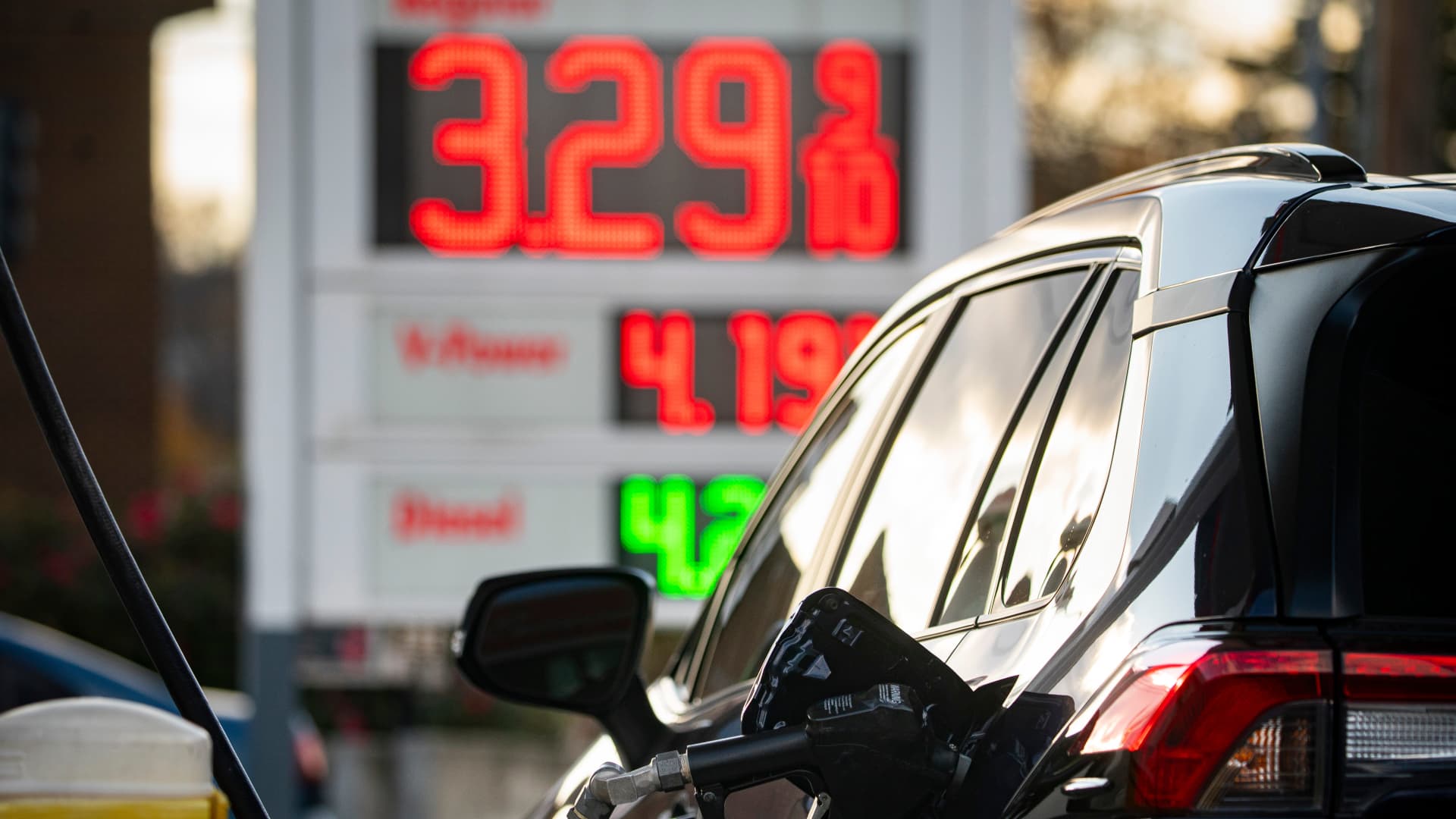
In the U.S., gasoline prices are already creeping toward $4 a gallon in some regions. If the blockade holds for more than a few weeks, we’re looking at a global inflationary cycle that could dwarf what we saw in 2022. China, the world's biggest oil importer, is panicking behind the scenes, trying to pressure Iran to keep the lanes open for Qatari LNG. But so far, the "oil weapon" is the only leverage Tehran has left.
Navigating the Volatility
If you're an investor or just someone trying to budget for the month, don't expect a quick fix. Even if the U.S. Navy manages to force the lanes open, the "fear tax" is here to stay.
- Watch the Insurance Rates: Until war risk cover is restored, the "closure" is effectively real, even if the water is physically clear.
- Keep an Eye on Qatar: If QatarEnergy stays offline, the energy crisis shifts from a "transportation issue" to a "production catastrophe."
- Don't Buy the "Sanguine" Narrative: Some analysts think this will be short-lived. They said the same thing in 1973 and 1979. Geopolitics is rarely that polite.
Stop looking at the $83 price tag as the peak. In this environment, with shipping at a standstill and production being cut at the source, $83 is the floor. If the Strait of Hormuz stays dark, the real "nightmare scenario" of $120 oil is a lot closer than anyone wants to admit.
Start looking for ways to hedge your energy exposure now. Whether that’s lock-in fuel contracts for business or simply topping off your tank today, the cost of waiting is about to go vertical.