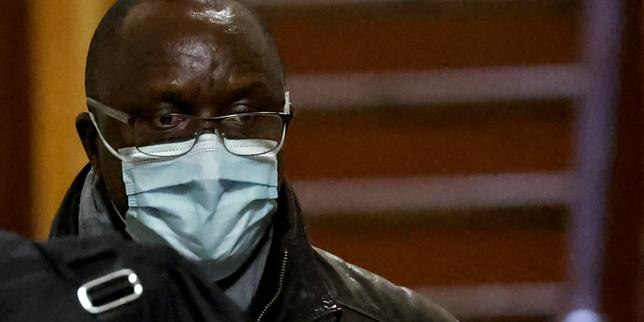
France has finally delivered a definitive blow in one of its longest-running legal battles concerning the 1994 genocide against the Tutsi. The appeals court in Paris has upheld the conviction of Claude Muhayimana, a former hotel driver, sentencing him to fourteen years in prison for complicity in genocide and crimes against humanity. While the verdict offers a semblance of closure, it unearths uncomfortable questions about the mechanics of international justice and the delayed conscience of a nation that served as a sanctuary for those fleeing the wreckage of Rwanda.
Muhayimana was not a high-ranking military officer. He was not a government minister or a mastermind behind the "Hutu Power" ideology. He was a man behind a wheel. Yet, the court found that his role was indispensable to the machinery of death in the Karongi district (formerly Kibuye). By transporting Interahamwe militiamen to massacre sites—specifically the heights of Bisesero and the church in Kibuye—Muhayimana became a vital cog in a system designed for total extermination.
The Infrastructure of a Massacre
The prosecution’s case rested on a grim logistics problem. In the hilly terrain of western Rwanda, killing thousands of people in a short window of time requires more than just intent; it requires transport. The hills of Bisesero became a symbol of resistance where Tutsis fought back with stones and spears against attackers armed with rifles and grenades. Without drivers like Muhayimana to shuttle reinforcements and ammunition to these remote peaks, the scale of the slaughter would have been physically impossible to achieve.
During the initial trial and the subsequent appeal, Muhayimana maintained a defense of powerlessness. He claimed he was forced to drive under duress, a common refrain among lower-level participants in the genocide. The court, however, saw a pattern of voluntary cooperation. Witnesses described a man who didn't just drive because a gun was at his head, but who functioned as a willing facilitator for the local authorities.
This distinction between "forced labor" and "complicity" is where the legal weight of the case resides. Complicity in genocide does not require the defendant to have personally wielded a machete. It requires the knowledge that one’s actions are contributing to a genocidal plan and the continued provision of support regardless. For the judges in Paris, fourteen years was the price for providing the mobility that death required.
The Long Road to a French Courtroom
The fact that this trial took place in France, and not in Kigali or at the now-defunct International Criminal Tribunal for Rwanda (ICTR), is a testament to the complex "universal jurisdiction" laws. These laws allow French courts to try individuals for the most heinous international crimes, regardless of where they were committed. But the timeline is an indictment in itself.
Muhayimana lived in France for years before he was ever seriously bothered by the law. He gained French nationality in 2010 while working as a road mender in Rouen. It took decades of pressure from the Collective of Civil Parties for Rwanda (CPCR), an advocacy group led by Alain and Dafroza Gauthier, to force the French judiciary to move.
The delay is not merely an administrative hurdle. It is a biological one. As the years pass, witnesses die. Memories blur. The physical evidence of the massacre sites in Kibuye is reclaimed by the earth. Every year that France waited to prosecute was a year that the defense could use to claim that testimony was coached or unreliable due to the passage of time.
A Selective Accountability
There is an inherent tension in the French pursuit of men like Muhayimana. For decades, France has been accused of "complicity by omission" or worse during the genocide. The Operation Turquoise mission, intended as a humanitarian intervention, has been criticized for creating a safe corridor that allowed many of the genocidaires to escape into what was then Zaire.
By focusing on drivers and mid-level bureaucrats, the French legal system avoids the more explosive questions regarding the French state’s own role in Rwanda during the early 1990s. It is easier to convict a driver than to interrogate the diplomatic and military cables that authorized French support for the Habyarimana regime. This is not to say Muhayimana is innocent, but rather that his conviction serves as a convenient focal point for a judiciary that has often been slow to pursue higher-profile targets living on French soil.
The Logistics of Local Slaughter
To understand why a driver matters, one must look at the geography of the Kibuye prefecture. It was one of the most beautiful parts of Rwanda, bordering Lake Kivu, and it became one of the bloodiest.
- Bisesero: Thousands of Tutsis fled to these hills, believing the terrain would protect them.
- The Church: Hundreds sought sanctuary in religious buildings, only to find them turned into slaughterhouses.
- The Stadium: Local officials used the Gatwaro stadium to herd people into a confined space before opening fire.
In each of these instances, the "logistical support" mentioned in the court documents refers to the movement of men. The Interahamwe were often "commuters" of violence. They would be picked up from town centers and driven to the hills for a day’s "work" of killing, then driven back. Muhayimana’s presence in this cycle was constant. The defense's attempt to paint him as a victim of circumstances failed because the frequency of his trips suggested a level of integration into the local power structure that exceeded simple coercion.
The Psychological Burden of the Fourteen Year Term
The fourteen-year sentence has drawn criticism from both sides. To the survivors, it feels like a light punishment for a man involved in the deaths of thousands. To the defense, it is a harsh sentence for a man they argue was caught in a historical whirlwind he couldn't control.
However, the legal logic of fourteen years reflects a specific tier of guilt. It acknowledges that Muhayimana was not the one giving the orders, but he was the one ensuring the orders could be carried out. In the hierarchy of international crime, "complicity" is often punished less severely than "direct perpetration," yet the moral stain is arguably identical. Without the driver, the killer never reaches the hill.
Beyond the Verdict
The Muhayimana case is part of a broader, late-stage push by the French Pole for Crimes Against Humanity. After years of inertia, the French courts are finally processing a backlog of Rwandan suspects. This isn't just about one man in Rouen; it's about the credibility of the European legal system. If a country provides a passport to a man suspected of genocide, it has a moral and legal obligation to determine the truth of those suspicions.
The conviction stands as a warning to those who believe that time is a shield. It also highlights the tireless work of civil society groups who refuse to let these cases disappear into the archives. The Gauthiers and their supporters have spent more than twenty years tracking down suspects, interviewing witnesses, and lobbying prosecutors. Their work fills the gaps left by governments that would often prefer to look the other way for the sake of diplomatic expediency.
The Reality of Universal Jurisdiction
We are seeing a shift in how these cases are handled. In the early 2000s, there was a sense that once the ICTR closed its doors, the era of Rwanda trials would end. Instead, we are seeing a "localization" of international justice. Courts in Paris, Brussels, and Frankfurt are becoming the new battlegrounds.
This transition brings its own set of problems.
- Cost: These trials are immensely expensive, requiring multiple trips to Rwanda for judges and lawyers.
- Cultural Translation: French juries must understand the specific social and political dynamics of 1994 Rwanda, a task that is fraught with the risk of misunderstanding.
- Political Pressure: Trials involving Rwanda are always shadowed by the shifting diplomatic relationship between Paris and Kigali.
Despite these hurdles, the Muhayimana appeal proves that the "driver defense"—the claim of being a small, insignificant part of a large machine—is no longer a guaranteed escape hatch. The law is beginning to recognize that genocide is a collective effort, and everyone who lends their hands, or their vehicles, to the cause bears a portion of the blood.
The fourteen-year sentence is a signal that the French judiciary is willing to follow the chain of command downward. It is a recognition that the "banality of evil" described by Hannah Arendt is often found in the most mundane tasks, like driving a truck. Claude Muhayimana will now serve the remainder of his time, but the broader investigation into the French role in Rwanda remains a work in progress.
As more cases reach the trial phase, the focus will inevitably shift from the drivers to the planners. The survivors of Bisesero have waited thirty years for this moment. For them, fourteen years for a driver is less about the length of the prison term and more about the formal, legal acknowledgment that what happened on those hills was not an accident of war, but a coordinated effort that required every participant to do their part.
The question that remains is how many more Muhayimanas are currently living quiet lives in the suburbs of Europe, waiting for a knock on the door that may never come. The French state must decide if it is content with convicting the helpers, or if it has the stomach to eventually face the full extent of its own history.
Check the records of the next scheduled hearings in Paris to see who is next on the docket.