The ritual usually begins before the coffee has even finished brewing. In the gray, liminal space of 6:30 AM, millions of thumbs are already dancing across glass screens. It is a quiet, solitary communion with a grid of thirty empty squares. There is no sound—only the soft haptic buzz of a correct letter turning green. We share our results as a series of colored blocks, a digital semaphore that tells our friends we are awake, we are thinking, and we are, for today at least, successful.
Wordle was never just a game. It was a shared moment of peace in a loud world. But the silence is about to break.
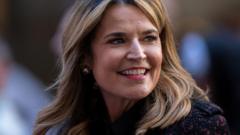
The news that NBC is transforming this meditative digital puzzle into a televised quiz show, hosted by the veteran poise of Savannah Guthrie, feels like watching a secret garden be turned into a public stadium. It is a transition from the internal to the external. From the quiet satisfaction of the "three-guess solve" to the bright lights, ticking clocks, and high-stakes pressure of a soundstage.
The Architecture of a Global Obsession
Josh Wardle didn't build a billion-dollar empire; he built a gift for his partner. That is the heartbeat of the Wordle story. It was a private language shared between two people that accidentally became the world’s most addictive vernacular. When the New York Times eventually bought the game, the fear was that the soul would be stripped away. Instead, the game became a pillar of daily life.
Now, we move into the next phase of its evolution. The transition to television isn't just about moving pixels to a bigger screen. It is about the human drama of the "Aha!" moment.
Consider a hypothetical contestant—let's call her Elena. Elena has played Wordle every day for three years. In her bedroom, she is a genius. She understands the strategic placement of the letter 'Y.' She knows that 'CRANE' is a statistically superior opener. But under the searing heat of studio lights, with Savannah Guthrie looking on and a camera lens inches from her face, the simple five-letter word for "a piece of fabric used for warmth" might as well be written in ancient Sumerian.
This is the invisible stake of the new show. It isn't just about the words; it’s about the psychological collapse that happens when a private ritual becomes a public performance.
The Anchor and the Audience
Choosing Savannah Guthrie wasn't an accident of scheduling. To make a game as static as Wordle work on television, you need a host who can navigate the tension between intellectual rigor and human warmth. Guthrie, a staple of The Today Show, exists in that specific American intersection of "trusted news authority" and "neighbor you’d have a drink with."
She provides the necessary friction. Without a compelling host, watching people solve a word puzzle is as exciting as watching a spreadsheet update. Guthrie’s role is to act as the surrogate for the audience, translating the internal gears of the contestant’s mind into a narrative we can root for.
Think back to the golden age of game shows. Jeopardy! succeeded because it rewarded the obscure corners of the human brain. Wheel of Fortune succeeded because of the visceral thrill of the physical spin. Wordle on TV has to find a third path. It has to capture the specific agony of the "Yellow Letter Trap"—that moment where you know the letter is there, but you can't for the life of you see where it fits.
Why We Need to See the Struggle
There is a certain irony in taking a game famous for its lack of ads, its lack of pop-ups, and its lack of noise, and placing it in the most commercialized medium on earth. Yet, there is a deep human desire to see how others solve the problems we face ourselves.
Every morning, when we post our grids to Twitter or text them to our parents, we are performing a small act of ego. We are saying, "Look how I navigated the chaos today." The TV show promises to let us see the actual face of that navigation.
We want to see the sweat. We want to see the hesitation.
In a world where artificial intelligence can solve a Wordle in milliseconds, there is something profoundly moving about watching a human being struggle to remember the word 'GHOST.' It reminds us that our brains are beautiful, messy, and prone to freezing under pressure. The show becomes a gallery of human fallibility.
The Mechanics of the Transition
Logistically, the show has to expand the footprint of the game. A standard Wordle takes a few minutes. A television hour requires more than just six guesses. Reports indicate that the format will involve teams, head-to-head battles, and a race against time.
Imagine the scene: two strangers, paired together, arguing over whether the middle letter is an 'I' or an 'E.' The game moves from a test of vocabulary to a test of social dynamics. Who yields? Who insists? Who takes the blame when the sixth row turns up all gray?
This is where the show will live or die. Not in the words themselves, but in the spaces between the players. It turns a linguistic puzzle into a sociological experiment.
The Evolution of the Morning Ritual
Some purists argue that the move to TV cheapens the experience. They feel the sanctity of the 1:00 AM reset is being traded for ratings. But look closer at how we consume media today. Everything is moving toward the "eventization" of the mundane.
We used to cook in private; now we watch MasterChef. We used to sing in the shower; now we watch The Voice. We used to solve puzzles at the kitchen table; now we watch the world do it with us.
This isn't a loss of intimacy; it's an expansion of community. It’s the recognition that these five little boxes have become a common language. Whether you are a college student in London or a grandfather in Ohio, you both felt the same frustration yesterday when the word was 'COYLY.'
Savannah Guthrie isn't just hosting a quiz show. She is主持 (hosting) a national conversation about how we think.
The Hidden Power of Five Letters
The brilliance of the five-letter constraint is that it is just long enough to be complex, but short enough to feel attainable. It fits perfectly into the human brain's working memory. It is the perfect length for a "hook."
On television, this brevity creates a frantic pace. There is no room for long-winded explanations. There is only the grid.
The stakes are higher than they appear. In an era of fractured attention spans, Wordle is one of the last things that truly "everyone" is doing at the same time. NBC isn't just buying a game show format; they are buying a piece of the collective consciousness. They are betting that the millions of people who solve the puzzle on their commute will want to see how the "pros" do it under the glare of the lights.
But the "pros" are just us. They are people who have stared at the same empty squares, felt the same panic on the fifth guess, and experienced the same rush of dopamine when the final tile flips over to reveal the truth.
The coffee is cold now. The sun is fully up. The grid on the phone is filled with green. But tonight, the grid will be six feet tall, the colors will be neon, and for the first time, we won't be solving it alone. We will be watching to see if the words we know so well still make sense when the world is watching back.
The cursor blinks. The clock starts. The first letter is 'S.'