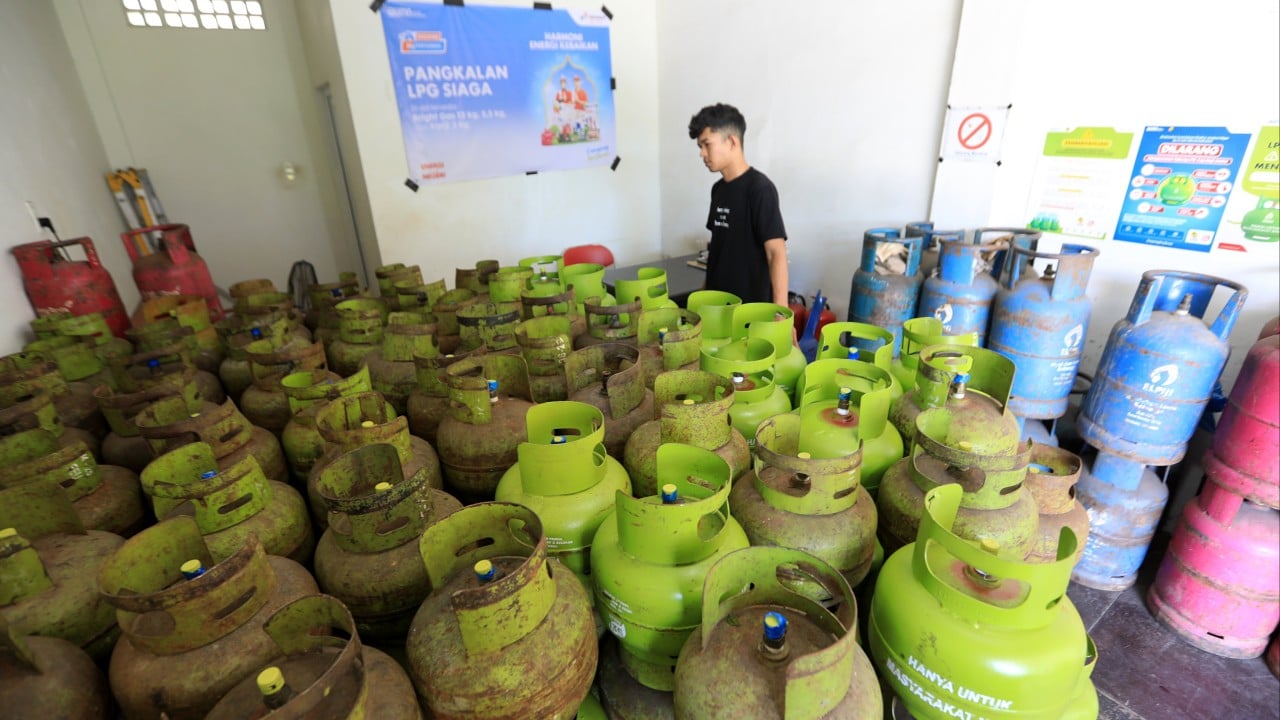
Indonesia is currently engaged in a high-stakes game of fiscal chicken. When Pertamina, the state-owned energy giant, adjusts prices at the pump, it isn't just a routine corporate update. It is a calculated, desperate attempt to prevent the national budget from hemorrhaging cash while simultaneously trying to keep the lid on a boiling pot of social unrest. The government is effectively trapped between the demands of global oil markets and the rigid expectations of a population that views cheap fuel as a fundamental right rather than a market variable.
The math is simple, but the politics are treacherous. Every time Brent crude climbs or the Rupiah weakens against the dollar, the gap between the market price of fuel and the price Indonesians pay at the pump widens. This gap is filled by the state. This year, the pressure reached a breaking point, forcing a price correction that serves as a temporary tourniquet for a much deeper wound.
The Myth of the Subsidy Cushion
For decades, the Indonesian government has used fuel subsidies as a primary tool for poverty alleviation and political stability. It is a blunt instrument. While intended to help the poor, the reality of the data shows a different story. The bulk of subsidized fuel is consumed by the middle and upper classes who own private vehicles.
We are looking at a system that rewards consumption rather than efficiency. When Pertamina raises prices, it is an admission that the subsidy "cushion" has become a concrete slab. The state energy firm cannot absorb these costs indefinitely without compromising its own operational integrity. If Pertamina fails to maintain its infrastructure because its capital is tied up in covering the public’s gasoline bill, the long-term energy security of the archipelago is at risk.
The current price hike is less about profit and more about survival. The government’s budget, known as the APBN, has a finite capacity. When the subsidy bill exceeds $30 billion—as it has in volatile years—it cannibalizes funding for healthcare, education, and the very infrastructure needed to transition away from fossil fuels. It is a cycle of dependency that is getting harder to break.
The Rupiah Factor
Most analysts focus on the price of a barrel of oil. They are looking at the wrong variable. The real killer for Indonesia’s energy balance is the exchange rate. Because Pertamina buys oil in dollars but sells fuel in Rupiah, currency depreciation acts as a hidden tax on the state.
Even if global oil prices remain flat, a 5% drop in the value of the Rupiah can add trillions to the subsidy bill. The central bank is forced into a defensive posture, raising interest rates to protect the currency, which in turn slows down the domestic economy. It is an interconnected web of financial pain that starts at the petrol station and ends in the boardroom of the central bank.
Political Survival versus Economic Reality
No Indonesian leader wants to be the one who raised fuel prices. History in this region is littered with the remains of administrations that lost their grip on power following "energy adjustments." The 1998 fall of Suharto was catalyzed, in part, by soaring costs of living driven by IMF-mandated subsidy cuts.
Today’s administration is moving with extreme caution. They use a tiered system, raising prices on high-octane fuels used by the wealthy while trying to shield the low-octane "Pertalite" used by the masses. But this creates a secondary problem: fuel migration. When the price of "good" gas goes up, everyone switches to the subsidized stuff, causing shortages and further inflating the government’s liability.
It is a leaky bucket. You plug one hole, and the pressure forces a new leak elsewhere.
The Distribution Nightmare
The "why" behind the inefficiency of Indonesian fuel pricing is rooted in the geography of the country. Distributing fuel across 17,000 islands is a logistical feat that is unmatched anywhere else on earth. The cost of getting a liter of gasoline to a remote village in Papua is significantly higher than delivering it to a station in Jakarta.
The government’s "One Price Policy" mandates that fuel costs the same everywhere. While socially equitable, it is an economic nightmare for Pertamina. The firm is forced to cross-subsidize its logistics, using profits from urban areas to fund the expensive delivery to the frontier. When you add a price hike into this mix, the logistical margins get even tighter, often leading to regional "scarcity" that is actually just a breakdown in the supply chain because the money for transport has run dry.
The Green Energy Paradox
There is a cruel irony in Indonesia’s fuel crisis. The country is sitting on some of the world’s largest reserves of geothermal energy, nickel (for batteries), and solar potential. Yet, the massive spend on fuel subsidies acts as a direct disincentive for the green transition.
Why would a delivery driver switch to an electric motorcycle when the government is paying for half of his gasoline?
The subsidy is a wall that prevents innovation from entering the market. To fix the budget, the government needs to move people toward EVs and renewables. But to move people toward EVs, they have to let fuel prices rise to market levels, which risks the very social stability they are trying to protect. They are essentially paying billions of dollars to keep themselves stuck in the 20th century.
Smuggling and Leakage
When you sell a commodity at a price significantly lower than its neighbors, you create a black market. This is not a hypothetical. Historically, subsidized Indonesian fuel has been siphoned off by industrial players or smuggled across maritime borders to be sold at market rates in neighboring countries.
Every liter smuggled is money stolen directly from the Indonesian taxpayer. The government has attempted to use digital tracking and QR codes to limit who can buy subsidized fuel, but in a country with high levels of informal labor and varying degrees of digital literacy, these systems are easily bypassed. The "how" of the subsidy drain is often found in the small-scale corruption at thousands of individual pumps.
The Structural Deadlock
Investors looking at Indonesia see a country with immense potential but a recurring fiscal headache. The fuel subsidy is viewed as the "original sin" of Indonesian macroeconomics. It is the reason the country’s credit rating isn't higher and why its infrastructure development often lags behind its neighbors.
The recent price hike is a signal to the markets that the government is willing to take the "bitter medicine," but the dose is rarely enough to cure the underlying disease. To truly fix the problem, the government would need to decouple social welfare from fuel consumption entirely.
Direct cash transfers (BLT) are the proposed solution. Instead of subsidizing the fuel, you give money directly to the poorest households. It sounds better on paper than it works in practice. Database inaccuracies mean that the money doesn't always reach the right people, and the psychological impact of seeing the "price on the board" go up at the gas station often outweighs the benefit of a monthly bank deposit in the eyes of the public.
The Refinement Gap
Another overlooked factor is Indonesia’s lack of refining capacity. Despite being a major oil producer in the past, the country is now a net importer of refined products.
Indonesia exports crude oil and imports expensive refined gasoline. It is the equivalent of a farmer selling his wheat for pennies and buying back bread for dollars. For years, the construction of new refineries has been delayed by bureaucratic red tape and shifting investment priorities. This makes the country a price-taker on the global stage. When Singapore’s refining margins go up, Indonesian consumers feel it, regardless of how much crude is sitting under the soil in Sumatra.
The Inevitability of More Hikes
The current price adjustment is not the end. It is a pause. As long as the global economy remains volatile and the transition to renewables remains slow, Pertamina will be forced to revisit these numbers again and again.
The government is betting that it can manage the fallout through a combination of police presence at stations and targeted PR campaigns. But the "brutal truth" is that the era of cheap energy in Southeast Asia is dead. The fiscal space to maintain these subsidies is gone, eaten away by debt servicing and the need to fund a new capital city in the jungle of Kalimantan.
The next few months will be a test of the public’s patience. If inflation starts to creep into the price of rice and basic goods—which are transported by trucks burning this fuel—the government will find that a few cents at the pump can quickly turn into a billion-dollar political crisis.
The real tragedy is that this was all predictable. The warnings have been in every World Bank and IMF report for the last twenty years. Indonesia’s leaders chose the path of least resistance, and now the bill has finally come due. There are no more easy choices left, only varying degrees of economic and social pain.
Stop looking at the pump and start looking at the balance sheet. The fuel price isn't the problem; it's the symptom of a nation that has spent decades subsidizing its own stagnation. The only way out is through a total dismantling of the current energy hierarchy, a move that requires more political courage than any administration has shown to date.
The government's only real move now is to accelerate the shift to a digital, targeted subsidy system while praying that global oil prices don't spike to $120 a barrel. If they do, no amount of fiscal engineering will save the budget.