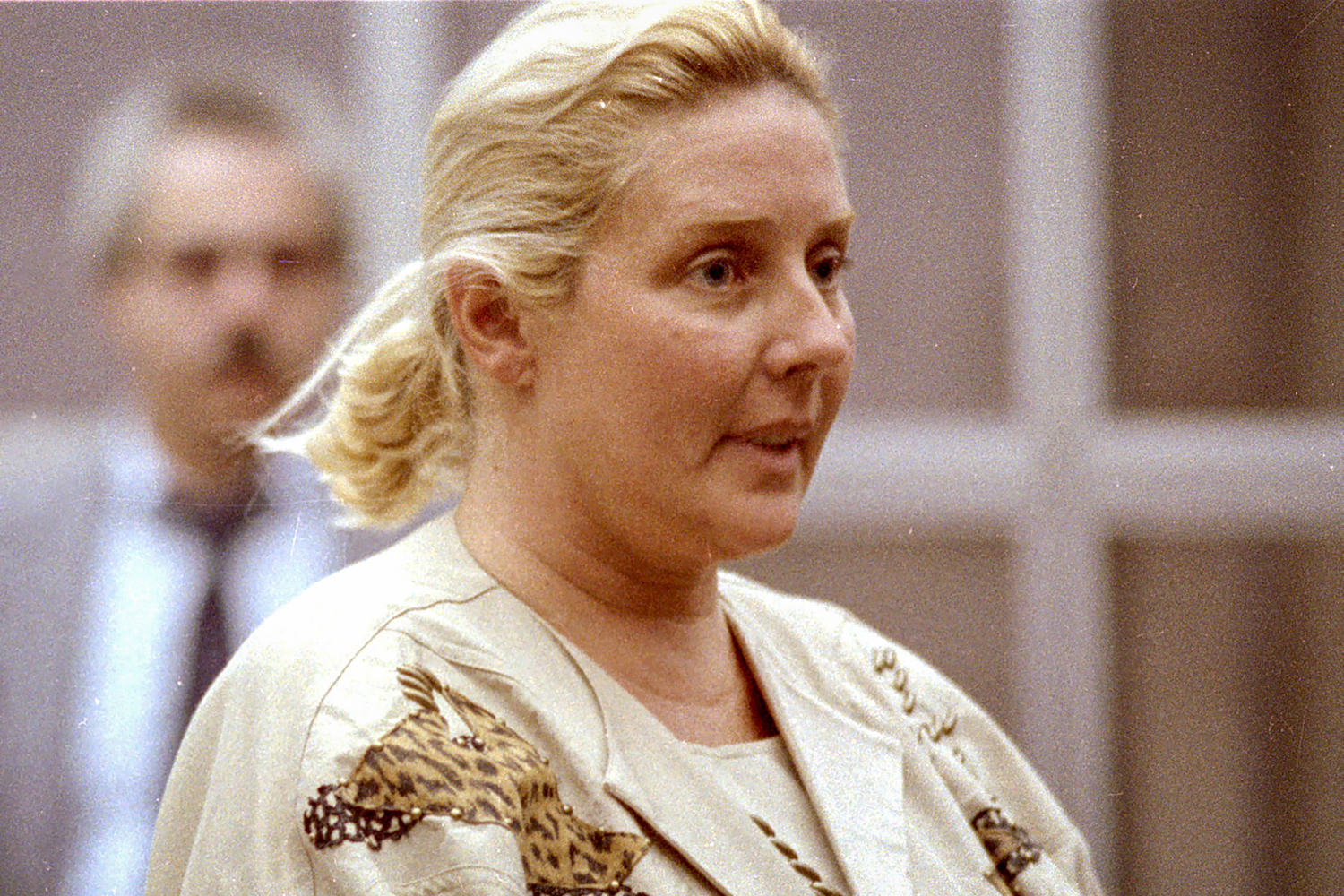
The air in the California Institute for Women at Corona always carried a heavy, recycled scent—a mix of industrial floor wax and the stifling heat of the Inland Empire. For thirty-five years, that air belonged to Elisabeth Anne Broderick. To the world outside, she was "Betty," the suburban Medea, the woman who turned a Chanel-clad life of carpools and country clubs into a bloody tabloid cautionary tale.
On a quiet morning, that long, agonizing breath finally stopped. At 78, Betty Broderick died behind the walls that had defined her for nearly half her life.
She didn't die in the bed she once shared with Dan Broderick in La Jolla. She didn't die surrounded by the fine china and the carefully curated social status she spent the 1980s defending with a ferocity that bordered on the demonic. She died as Inmate W42477. It was a sterile, lonely end for a woman whose entire existence was fueled by the loud, chaotic, and destructive need to be noticed.
The Architecture of a Breakdown
To understand why a woman picks up a Smith & Wesson .38 revolver and drives to her ex-husband’s house in the pre-dawn darkness, you have to look at the scaffolding of the life she thought she was building. Betty wasn't born a killer. She was born a believer in the American Dream of the 1950s. She played by every rule in the book. She supported Dan through medical school. Then through law school. She birthed five children and buried one. She was the quintessential "corporate wife," the silent partner in a skyrocketing career.
Then came the 1980s.
The decade of excess brought a cold reality to the Broderick household. Dan was a superstar attorney, wealthy and powerful. Betty was the woman who had helped him get there, but she was aging. Dan’s eyes wandered to his office assistant, Linda Kolkena. Linda was twenty years younger. She was the "new model."
What followed wasn't just a divorce. It was a psychological demolition.
Imagine spending twenty years constructing a cathedral, stone by stone, only to have the co-architect lock the doors and hand the keys to a stranger. Dan Broderick used his legal brilliance to wage a war of attrition. He used "legal abuse"—calculated maneuvers that left Betty feeling gaslit and erased. He withheld money. He obtained restraining orders. He had her committed to a mental hospital for seventy-two hours.
The stakes weren't just about alimony. They were about identity. Without "Mrs. Dan Broderick," Betty was a ghost.
The Morning the Music Stopped
November 5, 1989.
The sun hadn't yet touched the Pacific when Betty used her daughter’s key to enter Dan and Linda’s new home. She walked up the stairs. She entered the bedroom.
She fired five shots.
Two hit Linda. One hit Dan. One hit a nightstand. One hit the wall.
In the aftermath, Dan reached for the telephone. His last words, according to Betty’s testimony, were, "Okay, you shot me." Betty pulled the phone cord out of the wall. She fled.
The trial that followed became a national obsession. It split the country down the middle. One side saw a cold-blooded, narcissistic murderer who couldn't handle losing her meal ticket. The other side saw a "disposable wife" driven to a temporary state of insanity by a man who had systematically dismantled her mind.
Betty didn't look like a monster on the witness stand. She looked like a grandmother in a sweater set. She spoke about the "years of psychological torture." She spoke about being a victim of a system designed by men, for men. She became a dark folk hero for women who felt discarded by their husbands after decades of domestic service.
But the blood on the sheets told a different story. The jury couldn't ignore the premeditation. The second trial ended in two counts of second-degree murder. The sentence was 32 years to life.
The Long Fade into Gray
Prison is where the narrative usually ends in the public imagination. We like the gavel to fall and the credits to roll. But for Betty, the real story was the three decades of stasis that followed.
She spent thirty-five years in a world where her social status meant nothing. She worked in the prison laundry. She taught aerobics to other inmates. She wrote letters—thousands of them—to anyone who would listen, still litigating the divorce in her mind, still insisting that Dan had "pushed" her to pull the trigger.
She never expressed genuine remorse. Not really. When she appeared before the parole board in 2010 and again in 2017, she remained defiant. To Betty, she was the primary victim of the story. She spoke of the murders as an inevitable result of Dan’s cruelty.
"I have no one to blame but myself," she told the board in 2017, but the words carried a hollow ring. She immediately followed them with a long list of Dan’s provocations. She was stuck in 1989, a fly preserved in the amber of her own resentment.
The parole board saw a woman who was still a danger because she refused to take full accountability. They saw a woman who still believed her anger gave her the right to take a life. They denied her, telling her she could try again in fifteen years.
Time, however, had other plans.
The Ghost of La Jolla
In her final years, Betty Broderick became a relic of a different era of American crime. Her story had been dramatized in books and television movies. New generations of true-crime fans "discovered" her on streaming platforms, debating her guilt and her trauma in Reddit threads and podcasts.
To the young, she was a meme or a case study in "feminist rage." To those who lived through the eighties, she was a reminder of how quickly a "perfect" life could liquefy.
But inside the prison, she was just an elderly woman with failing health. The fire that had burned so brightly in the San Diego courtroom had finally dimmed to an ember. The "Beautiful Betty" of the country club photos was gone, replaced by a woman whose face was etched with the lines of thirty-five years of incarceration.
There is a specific kind of silence that accompanies the death of a prisoner like Betty Broderick. There are no grand funerals in La Jolla. There are no society columns mourning the loss. There is only the closing of a file.
Her death marks the end of a long, dark chapter in the history of American domestic tragedy. It serves as a grim coda to the idea that vengeance offers any kind of peace. Betty spent thirty-five years trying to justify the five seconds she spent pulling a trigger, and in the end, the justification died with her.
The "invisible stakes" of her life weren't the houses or the cars or the money. They were the children she lost the right to mother and the life she forfeited in a quest to "win" a divorce that was already over.
She leaves behind a legacy of shattered families and a legal precedent that forced the world to look at the psychological wreckage of "nasty" divorces. But more than that, she leaves behind a cautionary tale about the weight of a grudge.
Betty Broderick spent half her life in a prison of her own making before she ever stepped foot in the California Institute for Women. Now, the gates have finally opened, and the woman who refused to be forgotten has slipped quietly into the past.
The house in La Jolla has had many owners since that November morning. The bloodstains are long gone, scrubbed away by time and new paint. The world has moved on. The children are grown. The rage that once captivated a nation has finally run out of oxygen.
There are no more appeals. No more parole hearings. No more letters.
Just the quiet.



