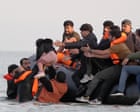
The English Channel is becoming a graveyard for children while two of the world’s wealthiest nations point fingers at each other. It’s a disgrace. Recently, an extensive investigation by the NGO Border Forensics revealed a "catastrophic failure" by both UK and French authorities. We aren't just talking about a single tragic accident. We're talking about the deaths of 22 children in a single calendar year—children who should still be alive today if the systems meant to protect human life actually worked.
When a boat flips in the middle of one of the world's busiest shipping lanes, every second counts. Yet, the evidence suggests that emergency responses are being delayed by jurisdictional squabbles. Instead of launching rescue crafts, officials are reportedly spending critical minutes debating whose "side" the boat is on. It’s bureaucratic negligence at its most lethal. For another perspective, check out: this related article.
Why the Current Border Strategy is Killing Kids
The numbers don't lie. Over the last few years, the crossing has become more dangerous, not because of the weather, but because of the policy. When you block safe routes, people take risky ones. When you make those risky routes even harder to navigate through increased surveillance and "push-back" rhetoric, the smugglers pack more people into cheaper, flimsier boats.
The NGO report highlights a specific incident where a boat carrying over 60 people began to disintegrate. Despite multiple distress calls, the response was fragmented. France’s CROSS (Regional Operational Centre for Surveillance and Rescue) and the UK’s Coastguard have a duty to coordinate. Instead, there's a pattern of "passing the buck." If a boat is drifting near the border line, the delay in deciding who takes the lead is often the difference between a successful rescue and a recovery mission. Related coverage on this matter has been shared by Reuters.
The logic used by authorities is often that "active intervention" might encourage more crossings. This is a cold, calculated gamble with human lives. You can't "deter" a person who is fleeing a war zone or total economic collapse by letting their child drown. It doesn't work. It hasn't worked. It only increases the body count.
The Myth of the Unstoppable Smuggler
Politicians love to blame "evil smuggling gangs" for these deaths. Don't get me wrong—smugglers are opportunistic criminals. They're exploitative. But they're also a symptom, not the cause. The cause is the lack of any viable alternative for someone seeking asylum.
If a 10-year-old from Sudan or Syria has no legal way to claim asylum in the UK without physically standing on British soil, they will find a way to get there. The smugglers provide the "service" that the law has made necessary. By focusing entirely on "smashing the gangs" without providing safe passage, the UK and France have created a high-demand market for the most dangerous vessels imaginable.
- Overcrowding: Boats designed for 10 people are carrying 50.
- Engine Failure: Cheap, unreliable outboards frequently stall in the middle of the lane.
- Lack of Safety Gear: Most "life jackets" provided by smugglers are decorative foam that won't keep a child afloat in choppy water.
The "catastrophic failure" mentioned by Border Forensics isn't just about the boats. It’s about the refusal to acknowledge that as long as there's no front door, people will keep trying to climb through the window—even if that window is a freezing, turbulent sea.
Coordination Failures Between UK and French Coastguards
One of the most damning aspects of the recent findings is the breakdown in communication. Search and Rescue (SAR) is supposed to be apolitical. International maritime law is pretty clear: if someone is in distress at sea, you save them. No questions asked. No passport checks required.
However, the NGO's digital modeling of specific shipwrecks shows a different story. They’ve used AIS (Automatic Identification System) data to track where rescue vessels were during active distress calls. In several cases involving child fatalities, rescue ships were within reach but didn't deploy quickly enough.
The Jurisdictional Trap
There's a gray zone in the middle of the Channel. When a dinghy is in this zone, both the UK and France often wait for the other to blink. This isn't just an opinion—it's backed by logs of emergency calls where operators tell terrified migrants they're in the "other" country's waters.
- Delayed Deployment: French vessels waiting for UK authorization to enter British waters.
- Visual Sighting Gaps: UK drones spotting boats but not triggering a rescue until the boat enters a specific nautical mile radius.
- Communication Silos: Critical information about the number of children on board not being shared between the two nations' command centers.
It's a game of chicken played with 22 lives that hadn't even reached adulthood.
The Psychological Toll and the Victim Blaming
There's a nasty trend in public discourse that suggests parents are to blame for putting their children on these boats. It's a convenient way to shift the moral burden away from the state. But think about the level of desperation required to put your child on a rubber raft in the middle of the night.
These parents aren't "irresponsible." They're desperate. Most have traveled thousands of miles, survived deserts, and escaped militias. They see the Channel as the final hurdle to a life where their child can go to school instead of dodging bullets. When the state fails to provide a way to do that safely, the state shares the responsibility for the outcome.
The Border Forensics report argues that the UK and France are effectively using the sea as a "border tool." By allowing the crossing to remain perilous, they hope the fear of drowning will do the work of border agents. It’s a strategy of death by proxy.
Looking at the Hard Data
In 2024 and 2025, the mortality rate for children in the Channel spiked. We aren't seeing fewer people cross; we're just seeing more people die.
| Year | Child Fatalities | Total Crossings (Approx) |
|---|---|---|
| 2021 | 3 | 28,000 |
| 2022 | 5 | 45,000 |
| 2023 | 8 | 29,000 |
| 2024 | 22 | 33,000 |
The jump in child deaths is disproportionate to the total number of people crossing. This suggests the conditions of the crossing—the boats used and the speed of the rescue—have degraded significantly. It’s a systemic collapse.
What Needs to Change Right Now
We can't keep having the same conversation every time a body washes up on the shores of Kent or Calais. The NGO recommendations are clear, and they aren't rocket science.
First, there needs to be a unified, cross-border rescue command that operates regardless of maritime boundaries. If a boat is sinking, the closest vessel goes. Period. No phone calls to headquarters to check coordinates. No arguing over who pays for the fuel.
Second, the UK must establish humanitarian visas. If there's a way for a child to apply for asylum from a center in France, they won't need to get on a boat. It's the most effective way to put smugglers out of business overnight. You don't fight a black market by yelling at it; you fight it by providing a legal alternative.
Third, transparency is non-negotiable. The UK and French governments often hide behind "operational security" to avoid releasing logs of failed rescues. We need an independent body to investigate every single death in the Channel, just like we would for a plane crash or a train derailment.
The 22 children who died weren't just "migrants." They were kids who liked soccer, feared the dark, and had parents who loved them. The "catastrophic failure" isn't a mistake—it's the logical result of a policy that values borders more than human life.
Demand transparency from the Home Office and the French Ministry of the Interior. Support organizations like Alarm Phone and Sea-Watch that provide real-time monitoring of distress calls. The information is out there. The failure is documented. Now it's a matter of whether we actually care enough to stop the next 22 deaths. Don't let this slide into the next news cycle without asking why these children were allowed to drown. It's time to stop the bureaucratic finger-pointing and start launching the boats. Reach out to your local representative and ask specifically about their stance on the Border Forensics findings. Silence is just another form of complicity in these waters.