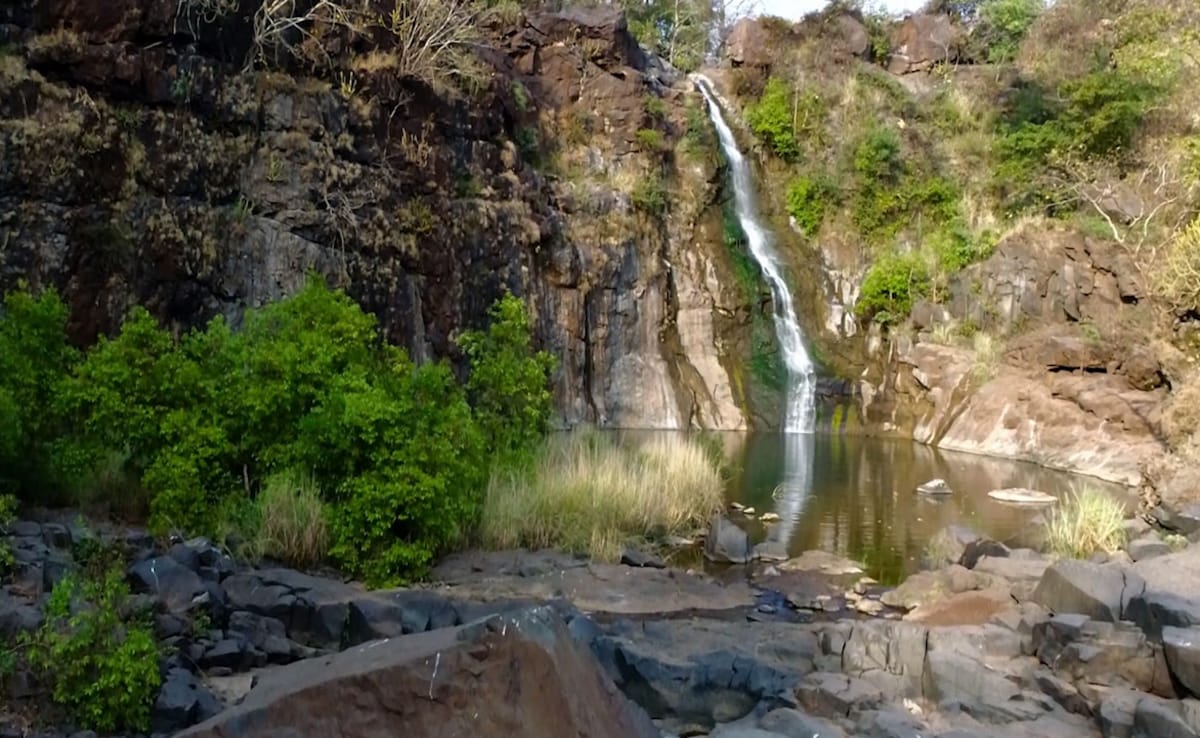
The headlines always follow the same script. A young, brilliant software engineer from Andhra Pradesh—this time a 27-year-old at the height of his career—heads to a scenic California waterfall with friends. He slips. He falls. He dies. The media treats it as a freak accident, a cruel twist of fate, or a momentary lapse in judgment.
They are wrong.
This isn't about bad luck. It isn't even strictly about waterfalls. It is about a systemic cultural failure to respect the physics of the natural world. We have built a society so cushioned by UI/UX design, guardrails, and liability waivers that we have lost the ability to calculate risk the second we step off the pavement. We treat the wilderness like an extension of a theme park, and that arrogance is exactly what kills.
The Waterfall Fallacy and the Death of Common Sense
The "lazy consensus" suggests that these tragedies are unpredictable. That’s a lie. If you stand on moss-covered granite near a high-volume drop-off, the probability of a life-ending event isn't "low"—it’s a mathematical certainty waiting for a trigger.
Most people look at a waterfall and see a backdrop for a profile picture. They see a "vibe." They don't see the coefficient of friction. In the tech world, we obsess over edge cases. In the physical world, the "edge case" is literal, and it has zero undo buttons.
California’s geography is particularly deceptive. After heavy rainfall or snowmelt, the Sierra Nevada and coastal ranges become slick, high-energy environments. The water isn't just "moving"; it’s a hydraulic machine. Yet, we see a recurring pattern: high-achieving professionals, used to mastering complex digital systems, assume they can master a physical environment just by being "careful."
"Careful" doesn't work when gravity takes over. Gravity doesn't care about your GPA or your H-1B status.
Stop Blaming the Signs and Start Blaming the Mindset
Whenever these incidents happen, the public outcry demands more signage. More fences. More "awareness."
That is a waste of resources.
The signs are already there. The fences are jumped. The awareness is ignored because of a phenomenon I call The Digital Invincibility Bias. When your entire day is spent in a world where mistakes can be rolled back with a Git command, you subconsciously believe the physical world operates on the same logic.
I’ve seen this firsthand in the trekking community. People show up to technical trails in lifestyle sneakers because they "look good in photos." They ignore the advice of local rangers because they checked a 4.5-star review on an app that said the hike was "easy."
Let’s be brutally honest: If you need a sign to tell you that a 50-foot drop onto wet rocks is dangerous, the sign isn't the problem. Your fundamental lack of situational awareness is.
The Physics of the Slip
Let's break down the mechanics. Most waterfall deaths occur because of two specific factors:
- Hydro-slick surfaces: River rocks are often covered in biofilm—microscopic algae that make the surface slicker than ice. Your vibram soles don't matter here.
- Cold Water Shock: If the fall doesn't kill you, the temperature will. California’s mountain water is often just above freezing. The moment you hit, your body undergoes an involuntary gasp reflex. You inhale water. You drown in seconds.
The "friends" mentioned in these reports are usually helpless because they are equally unprepared. They aren't carrying throw ropes or satellite communicators. They are carrying smartphones. A smartphone is not a piece of safety equipment; it is a witness to your demise.
The Diversity of Danger
There is a specific nuance here that the mainstream media is too terrified to touch: the cultural gap in outdoor literacy.
In many parts of the world, "nature" is something to be managed or moved through, not a recreational playground. When high-skilled immigrants move to the U.S., they are often pushed toward "Californian" hobbies—hiking, surfing, climbing—to fit the lifestyle. But they are doing so without the decade-plus of "scouts" or family camping trips that bake-in an intuitive understanding of the terrain.
We are sending people into the wild with 10/10 intelligence but 1/10 mountain-IQ.
If you didn't grow up learning how to read a current or identify unstable scree, you shouldn't be starting your "outdoor journey" at the edge of a waterfall. You are skip-leveling your safety training, and the wilderness is a brutal grader.
The Actionable Truth for the Modern Explorer
If you want to survive your weekend, you need to dismantle your own ego.
- The 10-Foot Rule: If you are within 10 feet of a ledge or a rushing current, you are in a "no-fail" zone. Treat it like a loaded gun.
- Physics Over Aesthetics: If the rock is wet, it’s a slide. If it’s green, it’s a trap.
- The "Groupthink" Hazard: Never assume your friends know what they are doing. Usually, five people are all following the most confident idiot in the group.
We need to stop mourning these deaths as "accidents." An accident is a tire blowout. Falling off a waterfall is a predictable outcome of poor risk assessment.
The tech industry spends billions on "safety" and "security" in the cloud. It’s time the people building that cloud realize that the real world doesn't have a sandbox mode. Nature is beautiful, sure, but it is primarily a chaotic system designed to find the weakness in your footing and exploit it.
Respect the friction, or stay on the pavement. There is no third option.