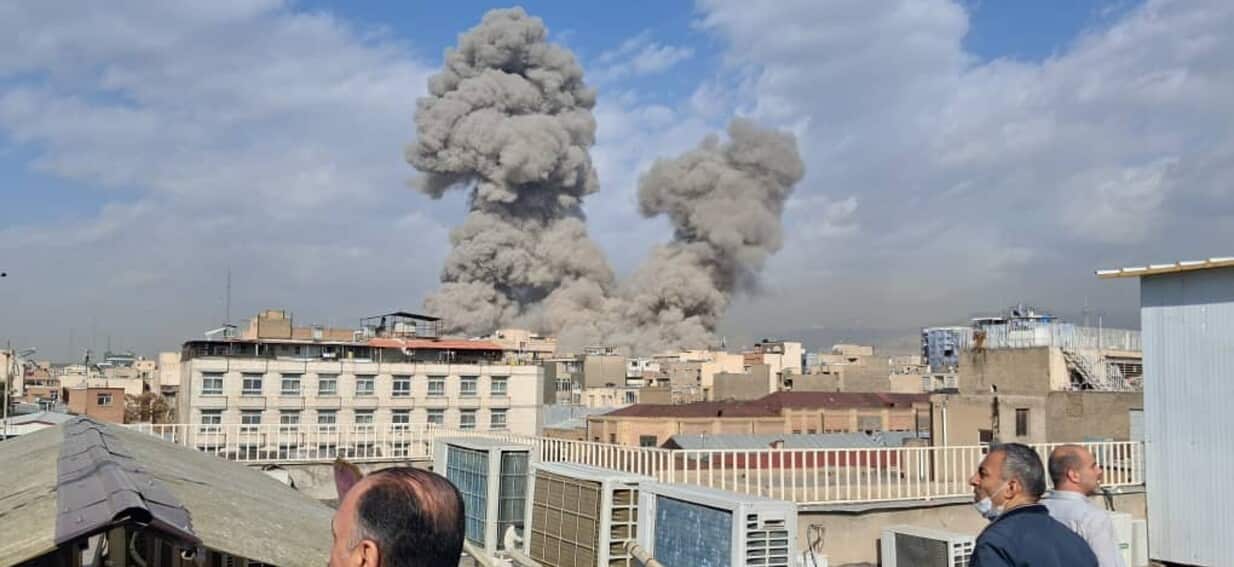
The Middle East just shifted under our feet. On February 28, 2026, President Donald Trump stood before a camera and confirmed what the world had feared as explosions began rocking Tehran. He didn't use soft diplomatic language. He announced "major combat operations" against the Iranian regime. This isn't just another flare-up in a decades-long shadow war. It's a massive, coordinated effort by the U.S. and Israel to dismantle Iran's military infrastructure once and for all.
If you're wondering how we got here so fast, you aren't alone. Just days ago, negotiators were sitting in Switzerland trying to salvage a nuclear deal. Those talks didn't just fail; they evaporated. Now, we're seeing the largest U.S. military movement in the region since the 2003 invasion of Iraq.
The strikes and the strategy
The operation, codenamed Operation Epic Fury by the U.S. and Roaring Lion by Israel, kicked off with a brutal efficiency. It wasn't just about hitting a few warehouses. The strikes targeted leadership hubs, missile production plants, and nuclear facilities across several cities, including Tehran, Isfahan, and Qom.
Reports coming out of the region are still chaotic, but the Israeli military says they've hit "dozens of military targets." Trump's stated goal is simple and incredibly ambitious. He wants to destroy Iran’s missile inventory, "annihilate" their navy, and ensure they never touch a nuclear weapon.
What has been hit so far
- Tehran: Massive explosions reported near government buildings and IRGC hubs.
- Isfahan and Qom: Sites long suspected of housing nuclear research and missile storage.
- Kermanshah: Strikes on advanced air defense systems, including the SA-65.
- Naval Assets: Unconfirmed reports suggest the IRGC Navy frigate Jamaran was targeted.
The most shocking claim? Some reports suggest that Supreme Leader Ayatollah Ali Khamenei was killed in a strike on his compound. While the U.S. and Israel have hinted at this, Tehran hasn't officially confirmed it, and some sources say he was moved to a secure location before the bombs fell. Either way, the "decapitation strike" strategy is clearly in play.
Why this is different from 2024 and 2025
We've seen tensions spike before. In 2024, there were direct exchanges. In June 2025, a 12-day conflict saw the U.S. hit Iranian nuclear sites after missiles were fired at the Al Udeid air base in Qatar. But those felt like "tit-for-tat" exchanges. This is a full-scale campaign.
Trump basically gave the Iranian military an ultimatum: lay down your weapons and get immunity, or face "certain death." He’s not looking for a ceasefire this time. He’s calling for the Iranian people to rise up and "take over your government." It’s an explicit push for regime change, wrapped in a massive bombing campaign.
The immediate blowback
Iran didn't sit still. As the first wave of U.S. and Israeli jets cleared the airspace, Tehran launched a retaliatory barrage. They fired dozens of ballistic missiles and drones, not just at Israel, but at U.S. bases throughout the Gulf.
Where the counter-strikes landed
- Israel: Air raid sirens have been constant. At least one civilian death has been reported.
- U.S. Bases: Installations in Bahrain, Kuwait, Qatar, and the UAE have all come under fire.
- Global Logistics: At least nine LNG (liquefied natural gas) carriers have diverted from the Strait of Hormuz.
This is the nightmare scenario for the global economy. The Strait of Hormuz is the world's most important oil chokepoint. If it stays closed or becomes a permanent combat zone, you’re going to feel it at the pump and in your heating bill almost immediately.
What you need to watch for next
This isn't a "one and done" airstrike. Trump described it as an "ongoing campaign." That means more sorties, more missiles, and likely more retaliation.
- Proxy responses: Keep an eye on the Houthis in Yemen and Hezbollah in Lebanon. If they open up new fronts, this becomes a regional conflagration that’s much harder to contain.
- Oil prices: Markets are already jittery. If Iran follows through on threats to hit more civilian aviation or shipping facilities, expect a massive spike in energy costs.
- Domestic unrest: Trump’s gamble relies on the Iranian public seizing the moment to topple their leaders. If that doesn't happen, the U.S. could be looking at a long-term air war with no clear exit.
The U.S. has signaled it will continue "heavy and pinpoint bombing" for as long as necessary. For now, the best thing you can do is stay informed through reliable, real-time updates and prepare for the economic ripples this conflict will inevitably send across the globe.
Check your local travel advisories if you have plans near the region. Most airlines have already diverted flights or canceled routes to the Middle East. If you hold energy-sensitive investments, now is the time to review your exposure to volatility. The situation is moving fast.