The situation in Lebanon isn't just another flare-up. It's a fundamental shift. For months, the border between Israel and Lebanon felt like a predictable, albeit violent, back-and-forth. Both sides seemed to follow a "tit-for-tat" script. That script is gone. The Israeli military has thrown out the old rules of engagement and transitioned into a high-intensity offensive that aims to dismantle Hezbollah’s infrastructure permanently. If you think this is just about a few border tunnels, you're missing the bigger picture.
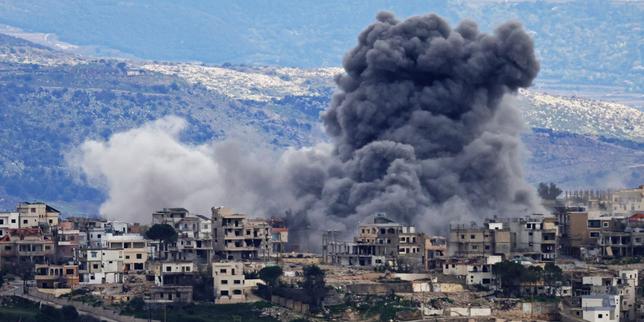
Israel's strategy has shifted from containment to "degrade and destroy." This isn't just my opinion. Look at the sheer volume of strikes hitting the Bekaa Valley and the southern suburbs of Beirut. The goal isn't just to stop rockets today. It's to ensure those rockets can't be fired ten years from now.
Why the Buffer Zone Strategy Is Back with a Vengeance
For decades, the idea of a "buffer zone" in Southern Lebanon was a ghost of the 1982 war. Many analysts thought Israel would never go back to that. They were wrong. The IDF is currently pushing to create a reality where Hezbollah cannot physically stand within sight of Israeli civilian homes. It's a brutal, physical necessity for the 60,000+ Israelis who have been displaced from their northern towns for nearly a year.
You can't tell a family to move back to Metula or Kiryat Shmona if Radwan Forces are sitting in the woods 500 meters away. It doesn't work. The military pressure we're seeing right now is a direct response to that political reality. Israel is betting that it can use air power and targeted ground incursions to push Hezbollah back behind the Litani River, as mandated—but never enforced—by UN Resolution 1701.
Honestly, the UN's failure to enforce its own rules is why we're here. When international diplomacy fails to provide security, nations eventually take it by force. That's exactly what is happening.
Intelligence Dominance and the Collapse of Hezbollahs Secrecy
The most shocking part of this offensive hasn't been the bombs. It's the intelligence. How does a military know exactly which apartment in a crowded Beirut neighborhood holds a specific commander? Or which garage in a rural village is hiding a long-range cruise missile?
The "pager explosions" and the subsequent hits on the Jihad Council showed the world that Hezbollah is compromised. Deeply. This isn't just about satellites. It's about years of digital and human signals intelligence. Hezbollah spent twenty years preparing for a 2006-style ground war. They weren't prepared for a 2026-style intelligence war.
- Targeted eliminations: Taking out the entire top tier of the Radwan Force in one go.
- Logistical disruption: Hitting smuggling routes from Syria before the trucks even reach the border.
- Psychological warfare: Sending mass text messages to Lebanese civilians to evacuate before a strike.
These aren't random acts. They're part of a synchronized effort to make the cost of hosting Hezbollah's weapons too high for the local population to bear.
The Human Cost and the Looming Refugee Crisis
We have to be real about the ground reality. This intensification has displaced hundreds of thousands of Lebanese people. The roads to Beirut are clogged. Schools are becoming shelters. While Israel argues that Hezbollah hides missiles in civilian homes—and there's plenty of drone footage showing secondary explosions that back this up—the result for the average family is the same. They're losing everything.
Lebanon was already a failed state. Its economy was in the trash. Its government was paralyzed. This war is the final weight on a structure that was already collapsing. The international community is talking about "de-escalation," but that word feels empty when the jets are overhead. There is a legitimate fear that Lebanon could become "Gaza-fied" if a long-term diplomatic solution isn't reached soon. But who is there to negotiate with? Hezbollah is an Iranian proxy, and the Lebanese state has almost no say in what happens on its own soil.
Iran's Dilemma and the Risk of Regional Fire
Everyone is looking at Tehran. For years, Hezbollah was seen as Iran’s "insurance policy." The idea was that if Israel ever attacked Iran's nuclear sites, Hezbollah would rain fire on Tel Aviv.
Now, that insurance policy is being burned to the ground.
If Iran stays quiet, they look weak to their proxies in Yemen, Iraq, and Syria. If they jump in, they risk a direct war with Israel and potentially the United States. It's a trap. Right now, it looks like Tehran is willing to fight to the last Lebanese member of Hezbollah rather than risk their own regime. This realization is starting to ripple through the region. People are starting to ask if being an Iranian proxy is actually a suicide pact.
What Happens When the Smoke Clears
Military experts often say that "air power alone doesn't win wars." That's usually true. You eventually need boots on the ground to hold territory. Israel knows this, which is why the buildup of tanks and reserves at the border is so massive.
But a ground invasion is a different beast. Lebanon's terrain is mountainous, rocky, and perfect for guerrillas. Hezbollah has had 18 years to dig into those hills. Even if their leadership is gutted, the local fighters know every inch of that dirt.
If the goal is a "surgical" operation, Israel has a chance. If the goal is a long-term occupation, they're stepping into a quagmire that has swallowed them before. The next few weeks will decide if this is a localized victory or a generational conflict.
Keep a close eye on the Litani River. That's the red line. If the IDF crosses it in force, the map of the Middle East changes for the next decade. If they can force a diplomatic retreat without a full-scale occupation, it's a win for Israeli security. But "ifs" don't provide much comfort to the people living in the crosshairs.
Check the latest updates from the UN Security Council meetings and keep an eye on the flight paths out of Beirut. The logistics of the evacuation tell you more about the expected duration of the conflict than any official press release ever will. Watch the "Blue Line" maps closely; any movement north by Israeli mechanized divisions signals the start of the next, more dangerous phase.