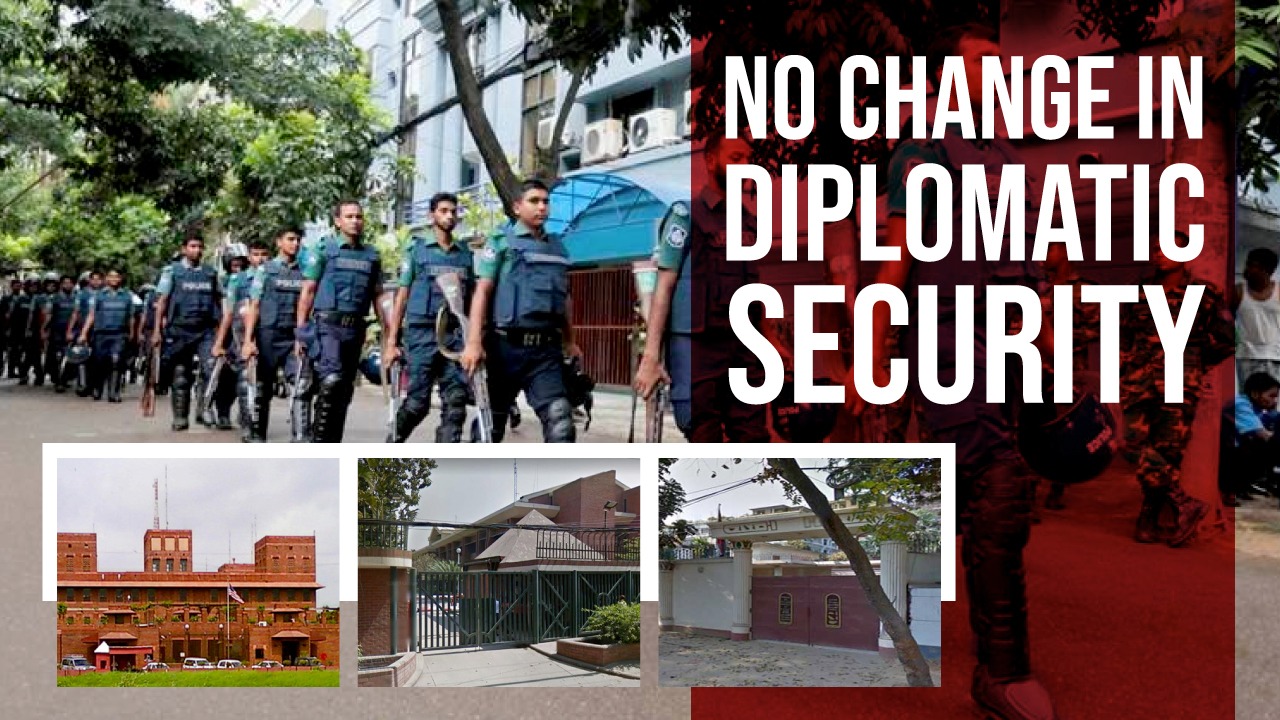
The breach of a sovereign diplomatic compound represents a terminal failure of layered security, forcing a transition from passive deterrence to active kinetic engagement. When protesters stormed the Karachi consulate, the shift from crowd control to the use of force by US Marines was not a localized anomaly but the execution of a rigid Escalation of Force (EOF) framework. Understanding this event requires moving past emotive reporting and into the technical mechanics of Mission Readiness Postures and the physics of perimeter defense.
The Triad of Perimeter Integrity
A diplomatic facility’s security relies on three distinct but interdependent layers. When these layers are compressed or bypassed, the probability of a kinetic response increases exponentially.
- The Outer Cordon (Host Nation Responsibility): Under the Vienna Convention, the host country provides the primary buffer. A breach at this stage indicates either a deficiency in host nation capability or a strategic withdrawal of local law enforcement.
- The Physical Barrier (Structural Engineering): Anti-ram walls, reinforced gates, and non-lethal deterrents (clear zones and sensory inhibitors) serve to delay transit.
- The Inner Sanctum (Marine Security Guard Intervention): Once the physical barrier is compromised and the "threat-to-life" threshold is met, the Rules of Engagement (ROE) shift from defensive to neutralizing.
The Karachi incident demonstrates the failure of the first two layers, forcing the third into a high-stakes decision-making loop where seconds determine the survival of mission personnel.
Quantifying the Threshold of Kinetic Response
Military and diplomatic security details do not fire upon crowds based on proximity alone. They operate within a codified "Use of Force" continuum. The decision to open fire is governed by the intersection of Intent, Capability, and Opportunity.
- Intent: Demonstrated through the use of incendiary devices (Molotov cocktails), the scaling of fortified walls, or the destruction of entry points.
- Capability: The possession of tools or weapons capable of breaching armored glass or harming personnel inside the "hard line."
- Opportunity: The collapse of the distance buffer between the aggressor and the protected assets.
In high-density urban environments like Karachi, the "Opportunity" variable is compressed. The proximity of civilian structures to consulate walls means that the transition from a peaceful assembly to an existential threat can occur in under 120 seconds.
The Logistics of Crowd Volatility and Non-Lethal Failure
The use of live ammunition often suggests that non-lethal interventions—such as CS gas, flash-bangs, or Long Range Acoustic Devices (LRADs)—either failed to achieve dispersal or were bypassed by a sufficiently motivated vanguard.
The physics of a crowd breach follows a "fluid dynamics" model. Once a "hole" is created in a defensive line, the pressure of the mass behind it forces a rapid influx of bodies that cannot be stopped by individual physical restraint. At this point, the security detail faces a binary choice: cede the interior of the building (compromising classified data and human life) or establish a "dead line" through targeted fire.
Structural Vulnerabilities in Urban Consulates
The Karachi consulate’s geographical positioning creates a specific set of tactical constraints. High-threat urban posts often suffer from:
- Line-of-Sight Deficits: Surrounding high-rise buildings provide overwatch for aggressors, limiting the movement of defenders.
- Egress Bottlenecks: Narrow streets prevent rapid reinforcement by host-nation armored units.
- Communication Lag: The latency between the initial breach of the outer gate and the notification of the State Department’s Operations Center can lead to a delay in the authorization of expanded force, though MSGs (Marine Security Guards) retain inherent self-defense authority.
Data Integrity and the "Burn" Protocol
A secondary, often overlooked driver of aggressive defense during a consulate storming is the protection of classified networks. A breach of the physical facility is a breach of the global intelligence infrastructure.
If the inner perimeter is compromised, "Emergency Destruction" procedures are initiated. This involves the physical destruction of hard drives and the incineration of sensitive documents. The time required for a total "burn" is a fixed variable. The Marine detachment’s primary objective during a kinetic engagement is often to "buy time" for these protocols to complete. The use of fire is, therefore, a strategic delay tactic as much as a self-defense mechanism.
Tactical Attribution and the Misinformation Loop
Reports of "Marines opening fire" frequently lack the granularity required to distinguish between warning shots, non-lethal kinetic rounds (rubber batons), and lethal force. In the Karachi context, the psychological impact of a warning shot is designed to break the "herd mentality" of a crowd.
However, the efficacy of warning shots is declining in modern urban warfare. Aggressors often interpret a lack of immediate casualties as a sign of hesitation, leading to further escalation. This creates a paradox: hesitant force can lead to a more violent eventual outcome than an immediate, overwhelming display of capability.
Strategic Realignment of Overseas Assets
The Karachi event serves as a data point for the inevitable shift toward "Fortress Diplomacy." As urban centers become more volatile, the model of the "accessible" consulate is being replaced by the "Inland Mission" model:
- De-urbanization: Moving consulates to isolated, high-acreage plots where the standoff distance (the space between the fence and the building) exceeds the range of most improvised explosives.
- Autonomous Monitoring: Replacing human sentries at the outer perimeter with remote-operated non-lethal systems to reduce the "heat" of face-to-face confrontation.
- Hardened Safe Havens: Designing buildings as modular bunkers where the interior can be sealed into independent, air-gapped zones.
The reliance on host nation support is a variable that is being systematically de-weighted in US security planning. The Karachi breach confirms that when local political sentiment aligns with protesters, the "Outer Cordon" becomes porous, making the Marine Security Guard's ROE the only functional barrier.
Future diplomatic security will prioritize the "Standoff Variable" above all else. Any facility that cannot maintain a minimum 100-meter buffer between the public and the hard-line entry is an operational liability. The strategic play for diplomatic missions in high-volatility regions is the immediate transition to "Reduced Footprint" operations, where physical presence is minimized in favor of hardened, remote processing centers, effectively removing the target from the street.


