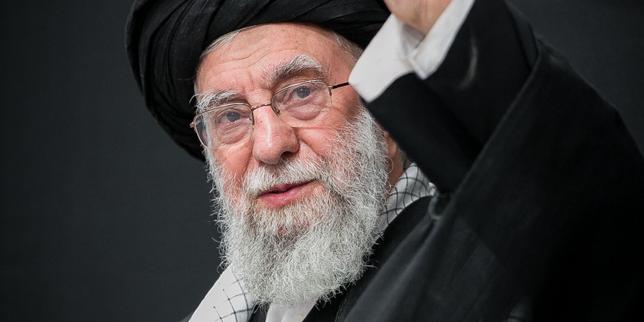
Ali Khamenei is gone. For decades, the Supreme Leader was the absolute gravity point of Iranian politics, a man who survived an assassination attempt in the eighties and outlasted every Western president who tried to wait him out. His death isn't just a change in leadership. It’s the removal of the only real glue holding a fractured, pressurized system together. If you’ve been following the headlines, you know the official narrative usually focuses on the "hardline" transition or the threat of regional war. But that’s surface-level analysis. The real story is about a vacuum that no one in Tehran is truly ready to fill.
The Islamic Republic operates on a unique, often contradictory blend of theocratic authority and bureaucratic infighting. Khamenei wasn't just a dictator; he was the ultimate arbiter. When the Revolutionary Guard (IRGC) clashed with the traditional clerics, or when pragmatists argued with ideologues, Khamenei made the final call. Without that final word, the internal machinery of the state faces a friction it hasn't felt since the death of Ruhollah Khomeini in 1989.
Why the Succession Isn't as Simple as a Vote
Most people think the Assembly of Experts will just walk into a room, pick a name, and that’s that. It’s not going to be that clean. The Assembly is technically responsible for choosing the successor, but they don't operate in a vacuum. They operate under the heavy shadow of the IRGC.
The military wing of the Iranian state has spent the last twenty years becoming an economic powerhouse. They control everything from construction firms to telecommunications. For them, the next Supreme Leader isn't a spiritual guide; he’s a business partner who needs to keep the sanctions-busting routes open and the budget flowing. If the Assembly picks someone who wants to pull the military back into the barracks, expect a quiet—or not so quiet—internal coup.
There’s also the "hereditary" problem. For a long time, whispers centered on Mojtaba Khamenei, the leader's son. But the Islamic Republic was founded on the rejection of hereditary monarchy. Elevating Mojtaba would be a massive ideological backtrack. It would signal to the Iranian people that the revolution simply replaced one Shah with another wearing a turban. That’s a dangerous message to send to a population that has already shown it’s willing to hit the streets when the hypocrisy gets too loud.
The Gap Between the Street and the State
You can’t talk about Khamenei’s death without talking about the "Woman, Life, Freedom" movement. The protests that sparked in 2022 weren't a phase. They represented a fundamental break in the social contract. Khamenei became the personification of everything the youth hated: the mandatory hijab, the economic stagnation, and the isolation from the global community.
The state's response has always been "patience and pressure." They wait for the energy to die down, then they arrest the leaders. But that strategy relied on Khamenei’s perceived legitimacy among the "Grey Generation"—the older, more conservative Iranians who remembered the 1979 revolution. As that generation thins out, the state is left trying to rule a country that looks and thinks nothing like its leadership.
- The Economic Reality: Inflation has been hovering around 40-50% for years.
- The Brain Drain: Iran’s most educated youth are leaving in record numbers to Europe, Canada, and the U.S.
- The Environmental Crisis: Severe water shortages are causing internal migration and rural unrest.
These aren't problems a new Supreme Leader can fix with a fatwa. They’re structural failures. If the next leader doubles down on Khamenei's "Resistance Economy," the friction between the state and the people will likely turn into a permanent fracture.
Regional Chaos or Tactical Retreat
The world is watching the borders. Khamenei was the architect of the "Axis of Resistance," the network of proxies stretching from Lebanon to Yemen. He viewed this not just as a military strategy, but as a religious mission.
A new leader might not have the same personal prestige with groups like Hezbollah or the Houthis. Those relationships were built on decades of personal trust and shared history. If the new guy lacks that "revolutionary street cred," we might see these groups becoming more autonomous. That’s a double-edged sword. An autonomous Hezbollah is less predictable, which increases the risk of a miscalculation that leads to a full-scale regional conflict.
Alternatively, a weaker leader might be forced to make tactical concessions. If the internal pressure is too high, the regime might look for a "heroic flexibility" moment—a term Khamenei himself used to justify the original nuclear deal. Don't expect them to become a Western-style democracy overnight, but they might be more willing to trade nuclear enrichment levels for a bit of economic breathing room.
The Myth of the Moderate Successor
One mistake Western analysts make constantly is looking for the "Iranian Gorbachev." Stop looking. The system is designed to weed those people out long before they get anywhere near the top. Any candidate for the leadership has been vetted, re-vetted, and proven their loyalty to the concept of Velayat-e Faqih (Guardianship of the Jurist).
The choice won't be between a "hardliner" and a "moderate." It’ll be between a "hardliner" and a "ultra-hardliner." The difference matters for diplomacy, but for the average person in Tehran or Isfahan, the daily reality of restricted internet and morality police likely won't change in the short term.
The real shift happens when the system realizes it can't survive on ideology alone. We saw this in the Soviet Union and in Maoist China. Eventually, the pragmatism of survival outweighs the purity of the cause. We aren't there yet, but the death of the man who defined the cause for thirty years moves the clock forward significantly.
Watch the IRGC Not the Clerics
If you want to know where Iran is heading, look at the Revolutionary Guard’s top brass. Men like Hossein Salami or the commanders of the Quds Force are the ones who actually hold the keys. They’ve spent years positioning themselves as the true defenders of the nation, often framing the clerics as out-of-touch or corrupt.
There’s a very real possibility that the Supreme Leader's role becomes more ceremonial over time, while the IRGC transitions Iran into something resembling a military autocracy with a religious veneer. This would look more like Egypt or Pakistan than the original vision of the 1979 revolution. It’s a cleaner model for them: keep the religion for the poor, keep the guns for the dissidents, and keep the oil money for themselves.
The coming months will be defined by "quiet" purges. Watch for high-ranking officials who suddenly retire or are accused of financial "irregularities." This is how the new power structure clears the board.
To stay ahead of the curve on this, stop looking for "official" statements from the state media. They’ll be full of mourning and platitudes. Instead, track the movement of the Rial on the open market and monitor the Persian-language social media feeds of activists inside the country. That’s where the real impact of Khamenei’s death will show up first. The transition has begun, and it won't be televised until it’s already over.
Check the latest reports from the International Crisis Group or the Institute for the Study of War for technical breakdowns of military movements within the country. These organizations track the granular shifts that signal who is winning the internal tug-of-war. The era of Khamenei is over; the era of uncertainty is just beginning.



