The Middle East as we knew it ended at 9:45 a.m. Tehran time on February 28, 2026. What began as a coordinated strike on nuclear facilities quickly devolved into a decapitation strike that has left the Iranian regime without its Supreme Leader and the region on the precipice of total war. This isn't just another exchange of fire in a decades-long shadow war. It is a calculated, high-stakes gamble by the United States and Israel to forcibly dismantle the clerical establishment in Tehran.
Operation Epic Fury and the Fall of Khamenei
While the world was watching for a repeat of the limited 2025 strikes, the Pentagon and the IDF launched a much more ambitious campaign. Codenamed Operation Epic Fury by the U.S. and Operation Genesis by Israel, the assault involved over 200 fighter jets and a swarm of Task Force Scorpion Strike drones. The primary target was not just the centrifuges at Natanz or Fordow, but the heart of the regime itself.
The destruction of the Supreme Leader’s compound in Tehran’s Pasteur district was the definitive blow. Iranian state media has confirmed the death of Ayatollah Ali Khamenei, along with several members of his family and high-ranking security officials, including Ali Shamkhani. For the first time since 1989, the Islamic Republic is a ship without a captain.
The Strategy of Forced Collapse
The logic behind this escalation is brutal. After diplomacy collapsed in early 2025 and Iran moved toward 90% uranium enrichment, the Trump administration and the Netanyahu government concluded that containment had failed. They are now betting that the internal fractures within Iran—widened by the massive anti-regime protests that erupted in January 2026—will lead to a popular uprising if the central security apparatus is paralyzed.
It is a theory of "regime change from the air." By targeting the Islamic Revolutionary Guard Corps (IRGC) Ground Forces Sarallah Headquarters, the coalition is attempting to strip the regime of its ability to suppress its own people. If the IRGC cannot communicate or coordinate, the theory goes, the protesters will seize the streets.
The Regional Firestorm
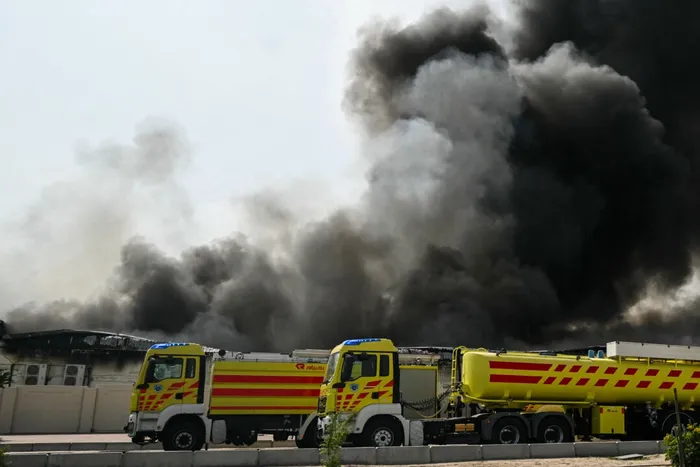
Iran’s retaliation was immediate and widespread. It did not just target military assets; it went for the economic jugular of the Gulf. Ballistic missiles have struck luxury hotels in Dubai and high-rise apartments in Bahrain. Major aviation hubs, including Dubai International and Hamad International in Qatar, are currently dark.
- 27 U.S. bases across the region have reported incoming fire.
- The Strait of Hormuz is effectively a no-go zone as Iranian naval vessels, though battered, have begun mining the shipping lanes.
- Tel Aviv and central Israel are under constant siren alerts as the "Axis of Resistance" mobilizes from Lebanon and Iraq.
The risk here is not just a local conflict, but a systemic collapse of global energy security. With oil prices already surging toward $100 a barrel, the economic fallout is being felt in real-time at gas pumps from London to Los Angeles.
A Vacuum in Tehran
The regime has attempted to project stability by forming a temporary leadership council consisting of the president and the judiciary chief. But the reality on the ground is chaotic. Reports from Tehran describe a city in a state of mass exodus and internal panic. The "lion of God" is dead, and the IRGC is fighting for its institutional survival rather than the defense of a specific leader.
There is no guarantee that a more moderate or pro-Western government will emerge from this wreckage. History suggests that when a revolutionary state’s head is cut off, the body often reacts with unpredictable, desperate violence. The U.S. and Israel have successfully removed their primary antagonist, but they have also removed the only person capable of ordering a ceasefire.
The coming days will determine if this was a masterstroke of 21st-century warfare or the most expensive geopolitical blunder in a generation. The smoke rising over Tehran is not just from burning bunkers; it is the haze of a region being forcibly remade without a blueprint.
Would you like me to analyze the specific impact of these strikes on the global oil market and the current status of the Iranian "shadow fleet" tankers?