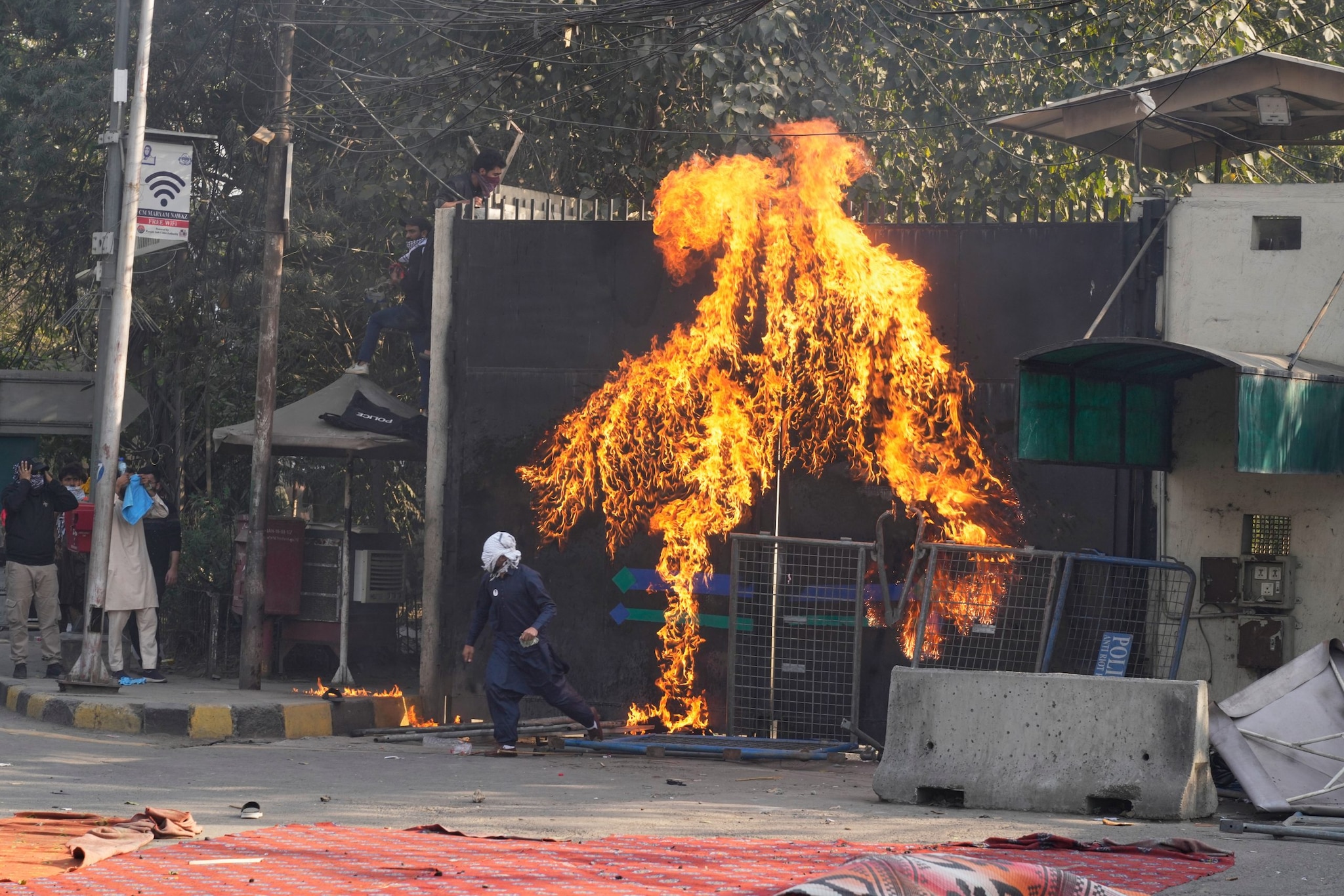
The steel shutters of the American Consulate in Karachi have become more than just a security measure. They are a monument to a failing strategy. By ordering the departure of non-emergency staff and their families from Karachi and Lahore, the State Department has effectively admitted that its influence in Pakistan has been severed, if not shattered. This is not merely a precautionary bureaucratic maneuver. It is a tacit acknowledgment that the regional firestorm ignited by the hostilities between Washington and Tehran has rendered traditional diplomacy unsustainable in the shadow of widespread, violent protest.
For those of us who have tracked the ebb and flow of American diplomatic footprints in South Asia for decades, the silence currently echoing through those consulate corridors is deafening. When the Marines were forced to open fire on protesters breaching the outer perimeter in Karachi earlier this week, the era of open-door diplomacy in Pakistan effectively expired. The withdrawal of staff is the final chapter of that transition. It signals a shift from engagement to containment, from building bridges to merely holding the remaining ground at the embassy in Islamabad.
The mechanics of this withdrawal are brutally simple. When the Department of State triggers an "ordered departure," it is not asking for volunteers. It is enforcing a mandatory exit strategy designed to minimize the target profile of its personnel. These facilities in Karachi and Lahore are not just office buildings. They are, in the eyes of the local populace, the physical embodiment of American policy. As long as they remain staffed, they serve as magnets for fury in a country where the streets are currently dominated by anger over the recent strikes on Iran.
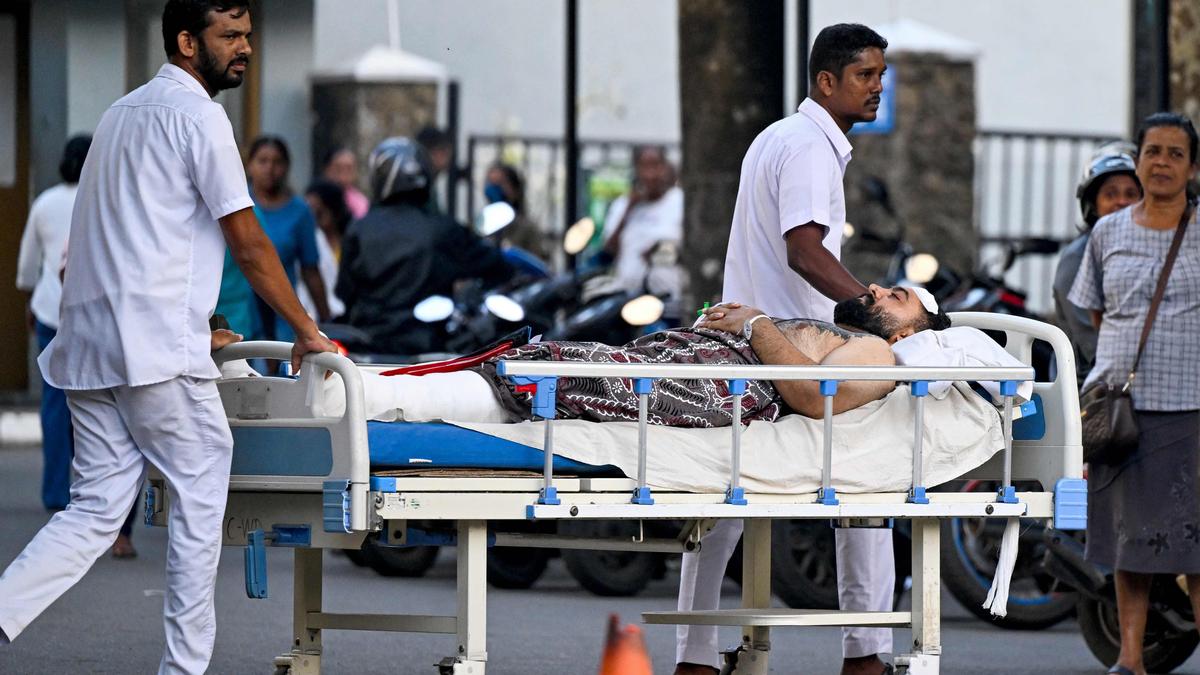
The security risk is no longer theoretical. It is measurable in the casualty counts—at least ten killed in Karachi alone. When protesters move from chanting slogans to torching perimeter defenses, the threshold for embassy survival is crossed. The State Department has no choice but to thin the herd. By keeping the embassy in Islamabad functional while effectively neutering the consulates, the US is telegraphing a clear message. It intends to maintain a minimal political channel with the Pakistani government while abandoning the broader societal and economic engagement that the consulates facilitated.
But what does this actually mean for the long term? The loss of consular presence is a strategic blow that few in Washington seem willing to address openly. Consulates are the primary engines of soft power. They process the visas that bring students and business leaders to the United States. They facilitate the ground-level connections that prevent diplomatic relationships from becoming purely transactional. When you close these doors, you are not just evacuating staff. You are shutting down the pipeline of human connection. You are ceding the public narrative to those who want the relationship to fail.
The history of American diplomatic presence in volatile regions suggests that once these gates close, they rarely reopen in their previous form. We saw this in the Middle East over the last decade. A temporary suspension of services often calcifies into a permanent, skeletal presence. The staff will be replaced by remote contractors, if they are replaced at all. The direct oversight of consular affairs will be centralized, pushing the point of failure further away from the local reality. The personal relationships that diplomats rely on to navigate complex political landscapes are built over years of coffee and conversation in Karachi, not over secure video calls from the safety of an embassy enclave in Islamabad.
Pakistan finds itself caught in an impossible position. It is trapped between its historical security partnership with the United States and the mounting pressure from its own population, which feels a visceral, religious, and cultural affinity with the Iranian state. This is not a new tension, but it has entered a more dangerous phase. By forcing the hand of the US consulate, the protesters have essentially dictated the terms of diplomatic engagement. They have shown that they can render the American presence in their cities untenable. This success will likely embolden groups that have long sought to isolate the country from Western influence.
There is a cold reality to the risk assessment that drove this decision. The State Department is prioritizing the immediate physical safety of its personnel over the continuity of its mission. Any veteran of the diplomatic service will tell you that this is the correct choice, even if it is a painful one. A dead diplomat is a failure of policy. A closed consulate is merely a setback. The calculation is binary. But we must be honest about what is being traded away. The cost of this retreat is measured in the loss of long-term leverage.
In the hallways of the embassy in Islamabad, there is a frantic effort to manage the optics. The official line remains that this is a temporary, security-driven pause. They insist that operations will resume once the environment stabilizes. But stability in this part of the world is a luxury that has been in short supply for years. The conflict with Iran is not a skirmish that will resolve in a few weeks of cooling-off periods. It is a fundamental realignment of the regional order. If the United States is at war—or in a state of sustained, high-intensity hostility—with a neighboring power, the conditions required for a functioning diplomatic presence in a country like Pakistan may not exist for the foreseeable future.
Consider the role of the consulate in Karachi. It has long functioned as the commercial heart of the US presence. It handled the concerns of the business community, the cultural exchanges, and the day-to-day administrative burdens that keep a relationship running. When that is gutted, the relationship shifts to the military and intelligence spheres. That is an inherently unstable foundation. When your only remaining links are through intelligence officers and military attachés, you lose the ability to speak to the society you are supposedly engaging with. You end up talking only to the security apparatus, which is often the least representative voice in the room.
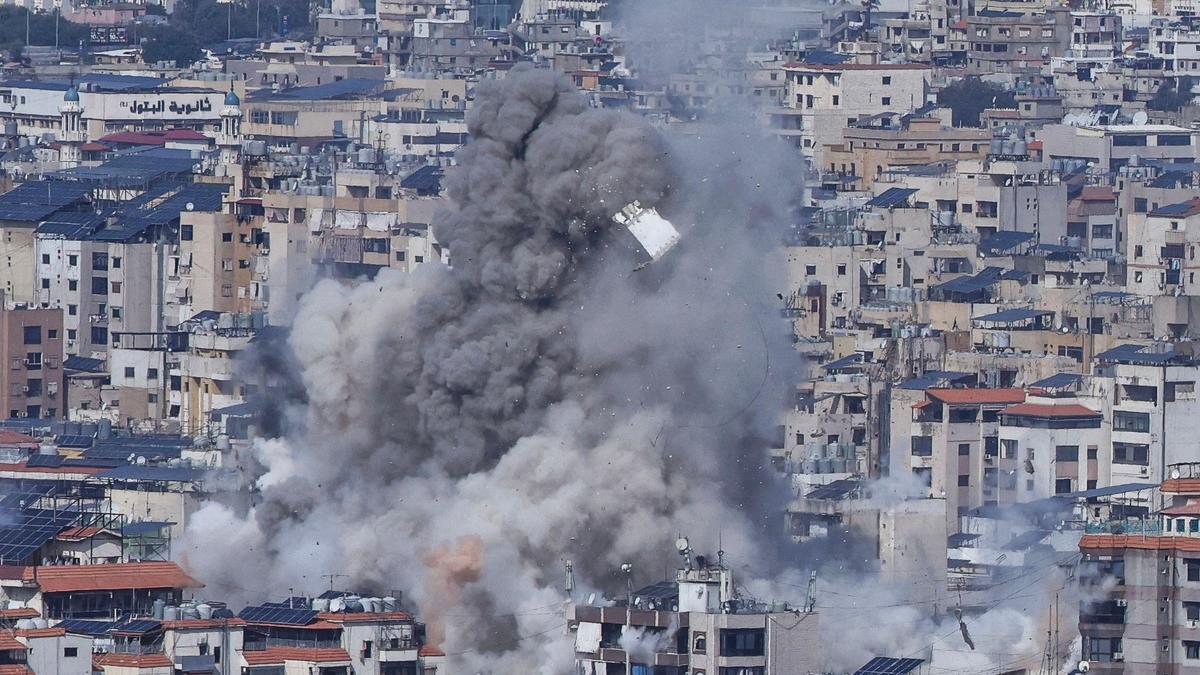
The irony of the current situation is that the protest was triggered by actions taken far from the streets of Karachi. The strikes on Iranian targets were a strategic necessity from the perspective of Washington, aimed at disrupting nuclear enrichment and missile production. But in the global arena, actions have a way of echoing in places the architects of policy never considered. The US policy team likely viewed the Iranian conflict through the lens of air superiority and naval power. They clearly failed to account for the impact on their own diplomatic footprint in nuclear-armed, politically volatile Pakistan.
We are witnessing a classic failure of coordination. The military arm of the state has acted without calculating the cost to the diplomatic arm. This is a common ailment in the machinery of government. The generals and the intelligence chiefs move on their objectives, and the diplomats are left to clean up the wreckage in the streets. When you disconnect these two arms, you create a hollow policy that can win a tactical fight but lose the broader strategic battle.
The response to this crisis has been remarkably uniform across all government platforms. The advice is to shelter in place, to maintain a low profile, to register with the Smart Traveler Enrollment Program. It is the language of crisis management, not the language of statecraft. There is no plan for how to rebuild the trust that has been burned to the ground. There is no vision for how to bridge the widening chasm between the Western narrative of the conflict and the reality on the ground in cities like Lahore and Karachi.
The decision to limit the mobility of US personnel is a confession of helplessness. When a superpower cannot guarantee the safety of its staff outside of fortified compounds, it has lost the ability to project power in the traditional sense. It has become a prisoner of its own security protocols. Every move becomes a risk assessment. Every interaction becomes a potential security breach. This is not how you influence a nation. This is how you survive in a hostile environment, waiting for the storm to pass.
The real danger here is that the storm is the new normal. The regional conflict is not going to disappear, and the domestic political pressure in Pakistan is only likely to intensify. The government in Islamabad is under immense strain, and it may find itself unable or unwilling to protect American missions if the protesters return in force. The withdrawal of non-emergency staff is the first step. If the violence continues or if the regional situation deteriorates further, the next step is a total evacuation.
We have seen this movie before. The slow-motion departure of diplomatic personnel is a classic signal of a failing relationship. It starts with the suspension of visa services. It moves to the evacuation of families. It culminates in a ghost embassy, a hollowed-out facility staffed by a skeleton crew, waiting for a final exit order that comes in the dead of night. If the State Department is not careful, that is the trajectory they are on.
The question that remains, one that the official briefings will not answer, is whether Washington actually cares about the loss of its consular presence in Pakistan. There is a school of thought in the current administration that views South Asia through a very narrow aperture, focused almost entirely on the Indo-Pacific and the containment of China. From that vantage point, Pakistan might be viewed as a secondary concern, a sideshow to the main event. If that is the case, then the closing of these consulates is not a tragedy. It is a feature of a new, more detached strategy.
But if the goal is to maintain influence in a region that is home to a nuclear-armed power with deep historical ties to both the Middle East and Central Asia, then this retreat is a disaster. It is a surrender of terrain. It is a decision to stop competing for the hearts and minds of the people, and to focus solely on the hard-power reality of missile trajectories and military bases. That is a grim way to conduct international affairs.
The empty desks in Karachi and Lahore are not just a logistical problem. They are a sign of the times. The world is becoming a more dangerous place for the men and women who represent the United States abroad. We are moving away from an age of engagement and into an age of retreat. The walls are going up, the staff is leaving, and the silence in the corridors is a warning that the era of open-door diplomacy is coming to a close. There is no going back to the way things were before the protests, before the gunfire, and before the shutters were pulled down. The only thing left to do is to see how much more ground will be lost before the final decision is made to turn out the lights entirely.