A ceiling fan spins lazily in a small café in Jakarta, cutting through the thick, humid air. On the television, muted but flickering with urgency, are images of fire over Isfahan and the jagged skyline of Tel Aviv. To a casual observer in Washington or London, these are the tactical coordinates of a necessary containment. To the man sitting under that fan, nursing a lukewarm coffee, they are something else entirely. They are a recurring nightmare.
He remembers his grandfather’s stories of "the company" and the "advisors"—men who arrived with maps and left with the soil. When he watches the United States and Israel coordinate strikes against Iran, he doesn’t see a surgical strike against a rogue nuclear program. He sees the heavy, invisible hand of a ghost that was supposed to have been exorcised decades ago. He sees the return of the Empire.
This is the pulse of the Global South. While Western analysts debate the efficacy of mid-range ballistic interceptors and the nuances of the Abraham Accords, a massive, interconnected geography—stretching from the Andes to the Mekong Delta—is reading a different script. They aren’t just watching a war. They are watching a worldview being enforced.
The Ledger of Broken Promises
For a diplomat in Brasilia or a student in Pretoria, the conflict isn’t an isolated event. It is a data point in a long, painful ledger. When the U.S. State Department speaks of a "rules-based international order," it sounds like music to Western ears. It promises stability. It promises a framework where right makes might.
But for countries that have spent the last century on the receiving end of those rules, the music is discordant.
Consider the hypothetical, yet representative, case of Maria, a trade analyst in Santiago. She watches the news and sees the swiftness with which sanctions are leveled against Tehran. She then looks at the years of stalled resolutions regarding the occupation of Palestinian territories. To her, the "rules" feel like a custom-tailored suit—designed to fit the powerful and constrict the rest. This isn’t just cynicism. It is a calculated observation of a double standard that has become the defining characteristic of 21st-century geopolitics.
The condemnation from the Global South regarding the US-Israeli campaign isn't necessarily an endorsement of the Iranian regime. Many of these nations find Tehran’s internal policies abhorrent. However, they fear the precedent of "pre-emptive" intervention more than they fear the target. They see a world where the sovereignty of a nation is conditional, subject to the strategic convenience of a few capitals in the North.
The Geography of Resentment
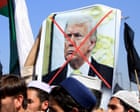
The term "Imperialist undertones" isn't a vintage buzzword dragged out from a 1970s university protest. It is a live wire.
In the corridors of the African Union, there is a palpable sense that the Middle East is being used as a laboratory for a new kind of warfare—one where high-tech drones and financial decoupling replace the boots on the ground, but the objective remains the same: hegemony. The resentment stems from the feeling that the Global South is expected to provide the chorus for a play they didn't write. They are asked to condemn, to sanction, and to suffer the resulting spikes in oil and grain prices, all to support a security architecture they had no hand in building.
There is a historical weight to this.
During the Cold War, the "Third World" was a chessboard. Today, the board has changed, but the players feel like pawns again. When the U.S. provides the intelligence and the munitions for Israeli strikes, it reinforces a narrative of a "Civilizational State" versus the "Outlier." But who defines the outlier? In the eyes of the Global South, the outlier is often whoever stands in the way of Western capital or regional dominance.
The Cost of the Moral High Ground
We often talk about the "cost of war" in terms of budgets and casualties. These are the hard facts. But there is a soft cost, a corrosive one, that is currently eating away at the foundations of Western influence. It is the cost of the moral high ground.
Every time a strike is justified in the name of "democracy" while simultaneously bypassing international bodies like the UN, the currency of Western values devalues. It’s like inflation for the soul. The more you print the excuse, the less it’s worth.
In New Delhi, the conversation isn't about whether Iran is a "bad actor." The conversation is about strategic autonomy. If the U.S. can dismantle a regional power's infrastructure at will, what happens when India’s interests eventually diverge from Washington’s? What happens when Indonesia’s resource nationalism clashes with Western market demands? The war in Iran is seen as a cautionary tale: this is what happens when you don't have a nuclear deterrent, and this is what happens when you challenge the status quo.
The Architecture of the New Resistance
Something is shifting. The condemnation we see today is different from the protests of the past. It is more organized. It is more economic.
The rise of the BRICS+ bloc isn't just a financial arrangement; it’s a lifeboat. When the Global South watches the U.S. weaponize the dollar against Iran, they don't just see a strike against a foe. They see a vulnerability in their own pockets. The push for "de-dollarization" isn't a fringe economic theory anymore; it’s a national security strategy for half the planet.
Imagine a room full of architects. The Western architects are trying to repair an old, grand mansion. The architects from the Global South are in the backyard, starting to pour the concrete for a completely different building. They aren't trying to burn the mansion down; they just don't want to live in the basement anymore.
This shift is fueled by a profound sense of exhaustion. Exhaustion with the "exceptionalism" that allows one nation to possess enough nuclear warheads to end the world while threatening war to prevent another from even developing the capacity for one. The logic is sound from a security standpoint, but it is a hard sell to a world that remembers Hiroshima and the clandestine tests in the Pacific.
The Invisible Stakes
What is truly at stake in the deserts of the Middle East is the soul of the next century.
If the U.S. and Israel continue to operate outside the consensus of the majority of the world’s population, they may win the battle and lose the planet. You can destroy a centrifuge with a missile. You can’t destroy a feeling with a drone. And the feeling currently saturating the Global South is one of profound, righteous alienation.
They see the carnage in Gaza. They see the precision strikes in Iran. And then they see the West’s silence when their own borders are crossed or their own resources are extracted. It creates a vacuum. Into that vacuum steps China, steps Russia, steps a new, multipolar reality that the West is struggling to comprehend.
The man in Jakarta finishes his coffee. He turns off the television. He doesn't need to see the "Breaking News" banner to know how the story ends. He’s seen the reruns. He knows that when the smoke clears, the people on the ground will be left to pick up the pieces, while the men in the high-backed chairs in the North prepare for the next move on the map.
But this time, the map is being redrawn by the very people who were once just the background.
The ghost of the Empire is still haunting the halls of power, but the world is no longer afraid of the dark. They are turning on the lights, and they don't like what they see. The real war isn't just between missiles and interceptors; it is between a dying idea of a single, centered world and the messy, vibrant, and defiant reality of a world that refuses to be centered anymore.
The silence that follows a bomb is never truly silent. It is filled with the whispers of a thousand cities, and right now, those whispers are becoming a roar.